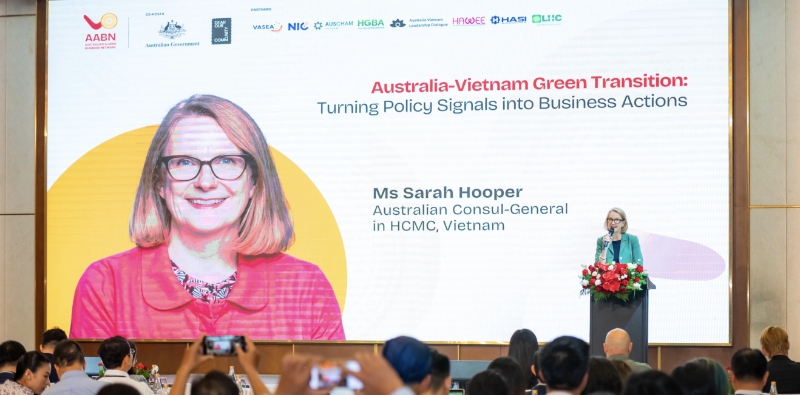
Australia has provided AUD 75 million for Vietnam’s green transition, according to an announcement by Ms. Sarah Hooper, Australian Consul General in Ho Chi Minh City, at the Vietnam–Australia Green Transition Forum 2026, held on April 9.
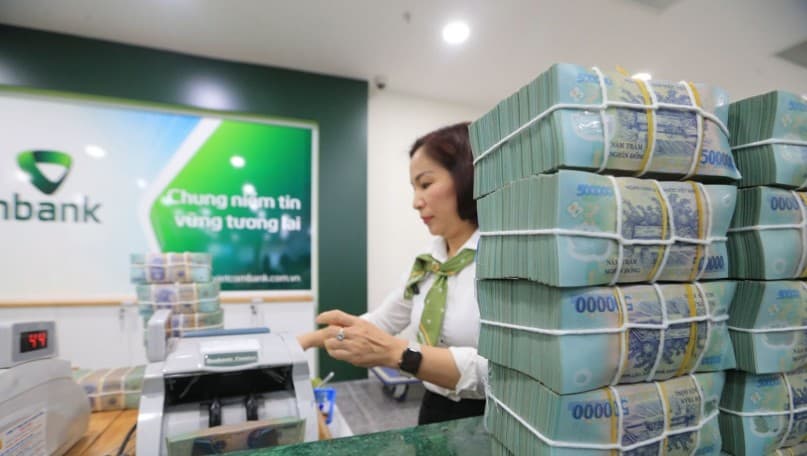
The fund, arranged through Export Finance Australia and on-lent via VPBank, is designed to finance sustainable infrastructure across Vietnam.
“Through Export Finance Australia, we have provided an AUD 75 million on-lending facility to VP Bank to finance sustainable, critical and infrastructure projects across Vietnam,” Ms. Hooper confirmed.
At the same time, Australia’s Southeast Asia Economic Strategy to 2040 identifies Vietnam as a priority partner in key sectors such as clean energy and sustainable agriculture. Beyond financing, Australia is expanding development initiatives such as Aus4Growth and Aus4Innovation, which support economic reform, digital transformation, and clean energy cooperation.
In the agricultural sector, Australian-backed projects are applying satellite data and artificial intelligence in the Mekong Delta to reduce chemical use and improve productivity. These initiatives have helped cut more than 193,000 tons of CO₂ emissions, while creating thousands of jobs.
Vietnam has committed to achieving net-zero emissions by 2050, with its Power Development Plan VIII prioritising renewable energy, energy storage, and a gradual phase-out of coal-fired power.
Amid increasing pressure from global supply chains to enhance carbon accountability and sustainability, clean energy and data transparency are emerging as key drivers of competitiveness.
Unlocking green transition
Vietnam is expected to mobilise more than $300 billion for climate finance and energy transition in the coming years, with a significant share anticipated from the private sector. However, while capital is available, the challenge lies in unlocking and effectively deploying these resources.
On the panelist “Unlock green transition policies: New contracts, new capital, new competitive advantage”, policymakers, investors, and market experts discussed how to bridge the gap between capital supply and project readiness.
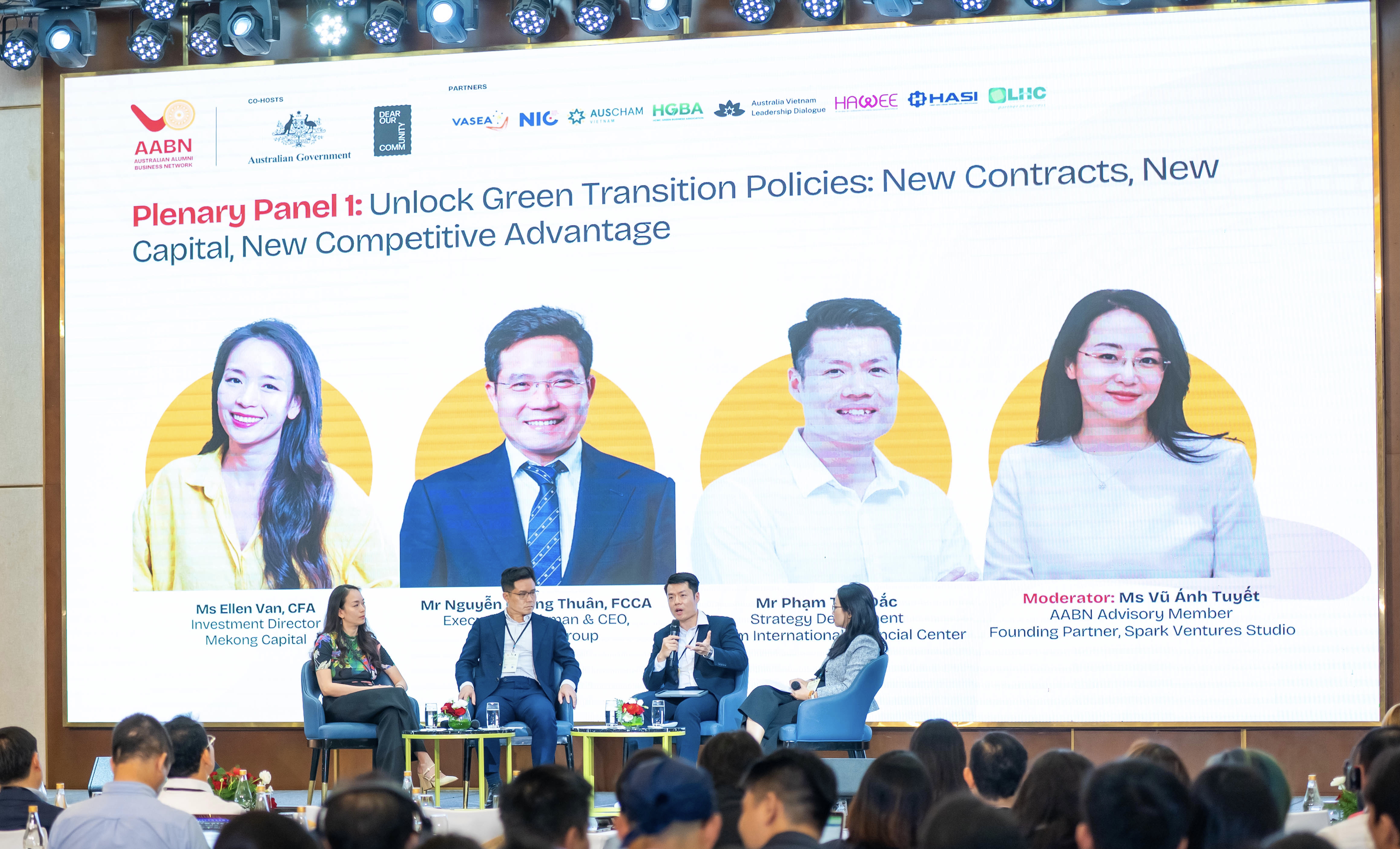
Mr. Pham Tien Dac, from the Strategy Department at Vietnam's International Financial Center, highlighted that the newly established institution, launched in early 2026, is expected to play a pivotal role in attracting international capital into Vietnam’s next phase of growth, particularly in green finance.
According to the IFC, creating a more open and investor-friendly environment will be key. This includes streamlining administrative procedures, shortening licensing timelines to as little as five to seven days, and offering greater flexibility in foreign exchange management. Sustainable finance has been identified as a core pillar, alongside plans to introduce sandbox mechanisms to support innovation in financial and green technologies.
From a market perspective, Mr Nguyen Quang Thuan, Executive Chairman & CEO at Fiin Ratings Group, pointed out that while demand for green capital in Vietnam is substantial, regulatory frameworks remain incomplete. In particular, the absence of a fully operational green taxonomy continues to pose challenges for both issuers and investors.
As a result, many transactions still rely on international standards, such as Green Bond Principles, to ensure transparency and meet global investor expectations. Policy clarity, including tax incentives, capital controls, and legal frameworks aligned with common law will be critical in scaling up capital inflows. Notably, international experience suggests that green finance does not necessarily come with a lower cost of capital. Even in developed markets, cost advantages have yet to be clearly demonstrated, and businesses should therefore not expect “cheap capital” when pursuing green projects.
Big opportunities, coordinated action needed
Investor sentiment towards Vietnam remains positive. However, as noted by Ms. Ellen Van, Investment Director at Mekong Capital, a key issue is that “capital is available but not being deployed”. This hesitation stems from a disconnect between investors’ expectations and the readiness of local businesses. Investors often require high levels of transparency, robust data systems, and clear ESG reporting, which many companies in Vietnam are still in the process of developing.
Bridging this gap requires more direct engagement. Bringing investors closer to on-the-ground realities can help build trust and unlock investment decisions. At the same time, companies must proactively improve governance, financial transparency, and their ability to substantiate sustainability claims with credible data.
Another important point raised during the discussion is that green finance should not be equated with cheaper capital. Evidence from global markets suggests that “green premiums” remain limited. Instead, the real value lies in accessing high-quality, long-term funding and enhancing competitiveness.
Panellists also emphasised a shift in thinking from “green” to “transition”. For many industries in Vietnam, particularly manufacturing, achieving fully green standards immediately may not be feasible. Instead, incremental improvements such as energy efficiency upgrades or waste heat recovery should be recognised as meaningful steps in the transition process.
Businesses were advised to view green transformation as a long-term investment rather than a short-term cost. Importantly, without tangible green or transition assets, access to green finance will remain limited.
Concluding the session, speakers agreed that Vietnam is well positioned to attract global capital for its green transition, given its strong growth outlook and strategic role in global supply chains. However, realising this potential will require coordinated efforts across policy, financial markets, and corporate readiness, with transparency and trust serving as key enablers.
The Vietnam–Australia Green Transition Forum 2026, organised by the Australian Alumni Business Network, brought together policymakers, businesses, investors, and researchers from both countries to explore cooperation opportunities, as Vietnam accelerates its transition towards low-carbon, innovation-driven growth.
The forum aims to translate strategic alignment into practical collaboration by connecting Australian expertise with Vietnam’s growing market, while leveraging a network of more than 160,000 Australian alumni in Vietnam to facilitate knowledge exchange, investment dialogue, and business partnerships.
According to organisers, alumni play an important role in bridging policy and business practice, as well as linking research outcomes with market demand. The event gathered senior representatives from government, industry, investment, and research institutions, highlighting growing momentum in Vietnam - Australia cooperation on green transition and sustainable development.