VIETNAM CHAMBER OF COMMERCE AND INDUSTRY
Liên Đoàn Thương Mại Và Công Nghiệp Việt Nam
Thu, Dec 25, 2025, 10:23:00

Integrated Facility Management (IFM) is emerging as a strategic tool, not only optimizing costs but also ensuring consistency and scalability, particularly for businesses operating chain-wide portfolios.
Recently, Talentnet revealed that many manufacturers in Vietnam are facing an unprecedented labor shortage, particularly in technical and skilled roles.
Accordingly, 45% of FDI firms and 46% of domestic and JV companies cite a shortage of skilled labor as a major challenge; 65% of FDI businesses struggle to retain employees, and 39% have limited access to training programs.
This lack of qualified personnel, coupled with increasingly shifting workforce expectations, is pressuring operations, and companies report difficulties recruiting and a rising gap between operational demands and workforce capabilities.
IFM: A practical solution for businesses
With this model, businesses work with a single partner that has complete expertise and takes full responsibility for recruitment, training technical teams, and managing/overseeing service contractors, helping to ensure seamless operations, reducing administrative burdens, and enhancing long-term efficiency.
IFM is a comprehensive operating model that integrates hard and soft services under a unified management structure led by a dedicated manager. Technical services (MEP or mechanical-electrical-plumbing systems, fire safety, and energy management) are available alongside support services, including general services, security, cleaning, landscaping, and pest control.
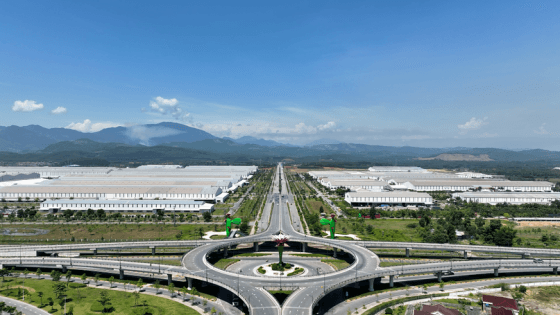
According to Luca Vadala, national head of business development, IFM Services, Savills Vietnam, by consolidating multiple service streams into a single management framework, IFM helps reduce administrative overlap, improve operational efficiency, extend asset life cycles, and minimize downtime. In industrial parks and multi-tenant buildings, this integrated approach is critical to ensuring uninterrupted business operations for occupiers.

The shift from in-house to outsourced models
Operational models across the facilities management (FM) sector are shifting. In-house FM holds 58% yet is a model in gradual decline as organizations reassess efficiency and workforce constraints.
In contrast, outsourced FM models, IFM included account for 42% and are expanding at a 7.8% CAGR, underscoring agrowing preference for professional, externally managed solutions.
IFM: Core business benefits
Single partner, unified control: Integrating hard and soft services under one contract simplifies management, reduces vendor overlaps, accelerates response times and ensures consistent service standards across assets.
Measurable cost efficiency: Clients typically achieve 8-15% OPEX (operational expenditure) savings through vendor consolidation, preventive maintenance, energy-efficiency programs, and SLA-driven performance management.
Strong EHS (environmental, health, and safety) and regulatory compliance: This is particularly critical for industrial parks and factories, where adherence to ISO standards, fire safety regulations,environmental audits and risk-mitigation protocols is non-negotiable.
Digital transparency and data-driven decisions: Through CAFM and P3 platforms, clients gain real-time visibility into incidents, inspections, maintenance schedules, work orders, utilities consumption and KPI performance, enabling proactive management and long-term optimization.