VIETNAM CHAMBER OF COMMERCE AND INDUSTRY
Liên Đoàn Thương Mại Và Công Nghiệp Việt Nam
Tue, Jan 20, 2026, 16:31:00
Export reopening fuels hopes of acceleration
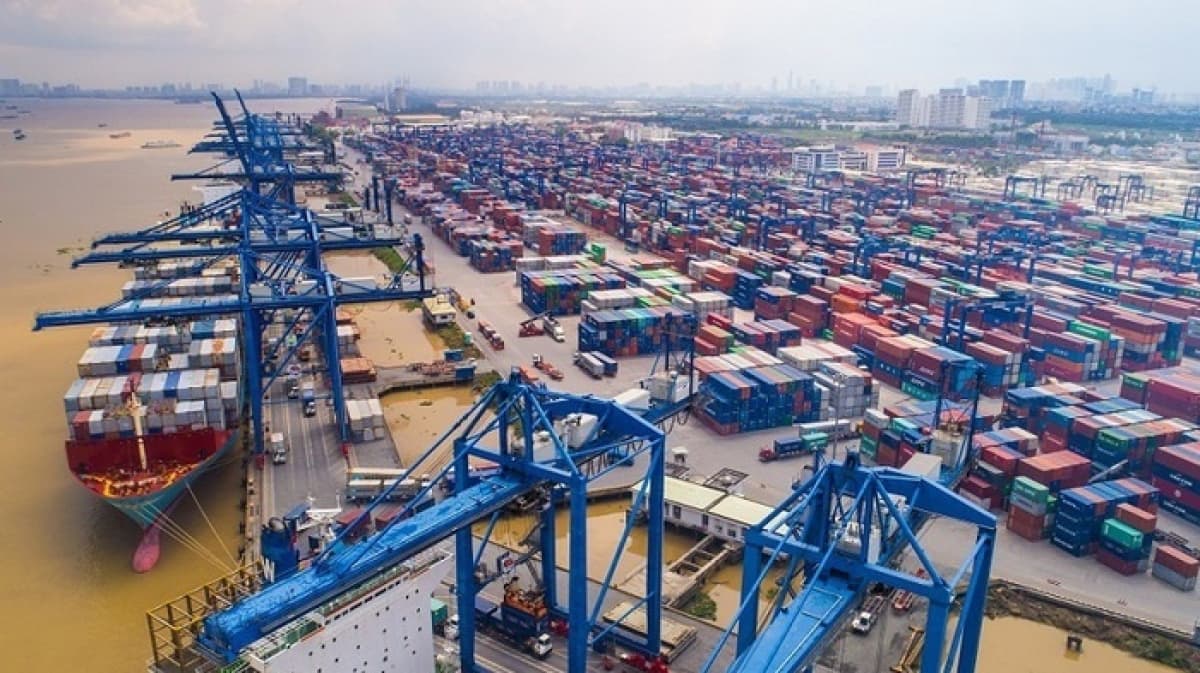
Vietnam Customs data shows the country's export turnover in 2025 reached $470.59 billion, up 15.9% year-on-year - a notable increase amid an incomplete recovery in global demand.
Industrial goods continued to play a key role, especially electronics, machinery and equipment, textiles, footwear, and wooden products.
Specifically, wood exports were estimated at $17.3 billion. Although the figure remains far from the $20 billion export target for 2025 set by the Government under Decision No. 327/QĐ-TTg approving the Project on Sustainable and Efficient Development of the Wood Processing Industry for the 2021-2030 period, it still reflects strong efforts by wood enterprises amid pressure from U.S. reciprocal tax policies, as well as anti-dumping and anti-trade fraud measures.
 Wood production in Vietnam. Photo courtesy of VnEconomy magazine.
“In August 2025, when the U.S. imposed a 20% reciprocal tariff on processed wood products instead of the expected 0%, many wood exporters were worried at first, but they quickly found flexible solutions to maintain their markets and ensure business efficiency,” a representative of the Vietnam Timber and Forest Products Association (VIFOREST) said.
The Prime Minister's Decision 327 sets a goal of reaching approximately $25 billion in wood and wood product exports by 2030. The wood processing industry is expected to become an important economic sector, build and develop reputable Vietnamese wood product brands in both domestic and international markets, and position Vietnam among the world’s leading countries in the production, processing, and export of wood and wood products.
To achieve this goal, wood enterprises need to accelerate strongly in 2026 and reinforce growth confidence. One important factor is the U.S. decision to postpone its planned tariff increase on wood products from 2026 to 2027.
Previously, in September 2025, President Donald Trump ordered new tariffs of 25% on kitchen cabinets and upholstered furniture. These tariffs were initially scheduled to take effect in October 2025 and, under the original plan, would rise to 50% and 30%, respectively, in 2026.
Capital flows only to strong companies
Even so, movements in wood-sector stocks have not met investor expectations. Over a one-month period, only PTB of Phu Tai JSC recorded a double-digit gain of 20.47%.
Three stocks - ACG of An Cuong Wood Working JSC, GTA of Thuan An Wood Processing JSC, and SAV of Savimex Corporation - posted modest increases of 4.41%, 2.59%, and 0.77%, respectively.
By contrast, GDT of Duc Thanh Wood Processing JSC and TTF of Truong Thanh Furniture Corporation down went 6.21% and 16.62%. Since the beginning of 2026, PTB has remained the most impressive name, rising more than 10%.
Clearly, despite positive supportive information, the divergence among wood-sector stocks shows that smart money in the stock market is selectively choosing firms with solid financial foundations and clear supporting catalysts.
PTB - the strongest performer in the group - released preliminary full-year 2025 business results early. In Q4/2025 alone, the company recorded revenue of VND2.1 trillion ($79.94 million), up 10% year-on-year, while pre-tax profit was estimated at VND157 billion ($5.98 million), up 29%.
For full-year 2025, PTB achieved revenue of VND7.3 trillion ($277.93 million), up 14%, and pre-tax profit of VND634 billion ($24.14 million), up 35% year-on-year. This is also the highest pre-tax profit in the past four years for Phu Tai, second only to the record level of around VND650 billion achieved in 2021.
Vietcap Securities attributed these positive results to a lighter-than-expected impact from U.S. tariffs and a VND16 billion ($609,150) reversal of bad debt provisions related to Noble House.
Moreover, looking ahead to 2026, PTB has already secured orders for Q1/2026, supported by the aforementioned U.S. tariff postponement.
Notably, for 2026, PTB targets revenue of VND8.79 trillion ($334.65 million), up about 20% from 2025, and pre-tax profit of VND760 billion ($28.93 million), also a 20% increase. If achieved, these would be the highest revenue and profit levels in the company’s history.
As for ACG of An Cuong Wood Working JSC, although it continues to export to the U.S., domestic sales play the main role and drive the company’s business performance. The company’s operations are closely tied to movements in Vietnam’s construction and real estate markets.
Cumulatively for the first nine months of 2025, ACG recorded net revenue of VND2.94 trillion ($111.94 million) and after-tax profit of VND358.3 billion ($13.64 million), up 6% and 9% year-on-year, respectively. With these results, the company fulfilled 73% of its revenue target and 80% of its profit target for the full year.
Meanwhile, Savimex Corporation (SAV) also has a high proportion of exports to the U.S. relative to revenue, but its financial foundation is weaker. In the first half of 2025, Savimex reported a loss of nearly VND5.8 billion ($220,830).
In its explanation, the company said that information surrounding U.S. tariffs negatively affected the market value of its financial investments, leading to increased provisioning costs as of end-June.
Thanks to its after-tax profit of VND17 billion ($647,250) for Q3/2025 (up 59% compared to Q3/2024), Savimex recorded nine-month profit of VND11.3 billion in 2025. However, this figure still represented a sharp decline of 77% compared with the same period last year.