
VIETNAM CHAMBER OF COMMERCE AND INDUSTRY
Liên Đoàn Thương Mại Và Công Nghiệp Việt Nam
Wed, Sep 16, 2026, 15:05:00
This reality is putting pressure on VNS to find a new direction amid the rise of ride-hailing tech taxis, which are gradually replacing traditional taxis.
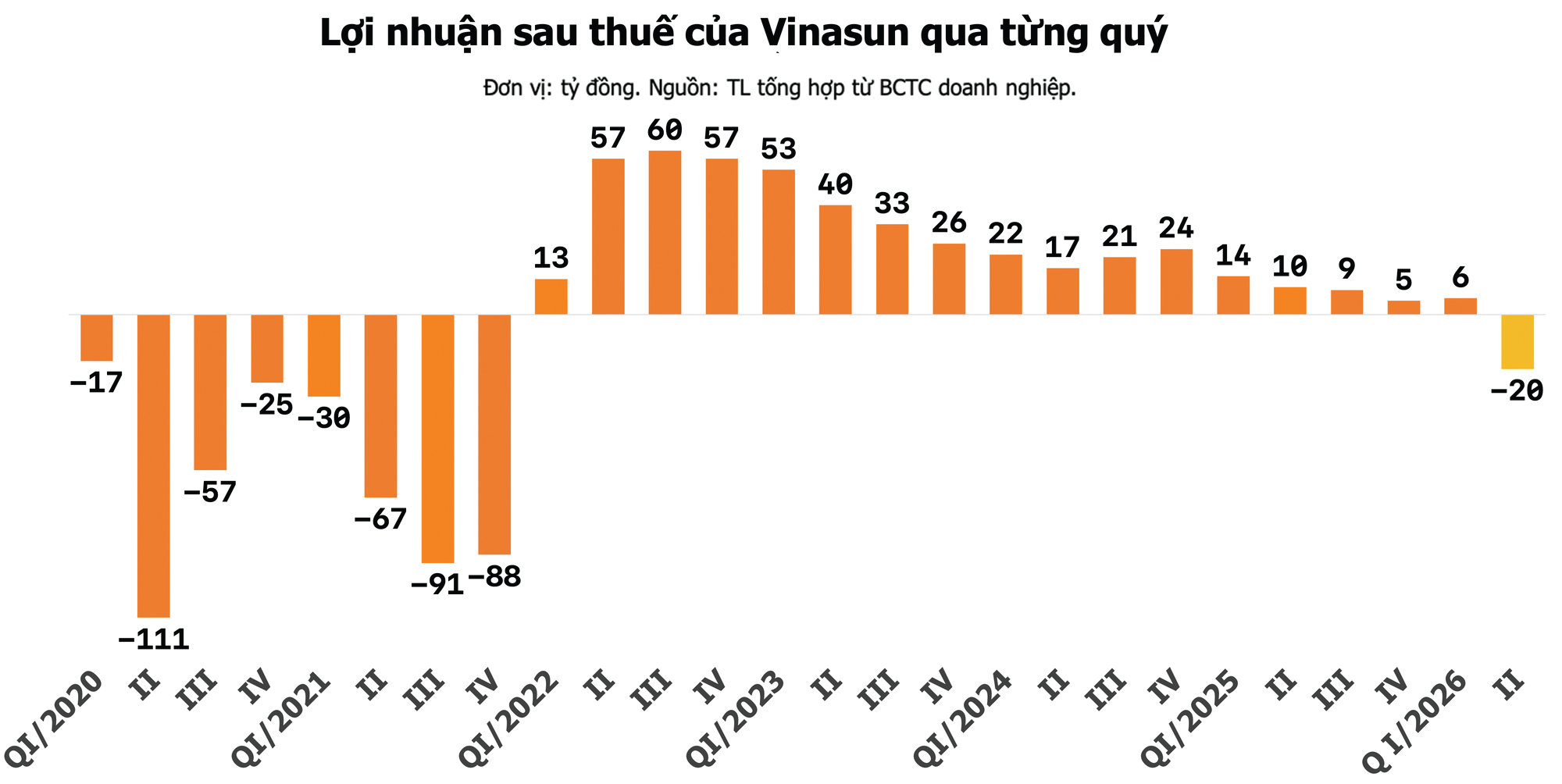
Vinasun's net profit after tax across quarters.
Back in the Red
According to its Q2/2026 financial report, VNS recorded net revenue of 194.3 billion VND, down over 10%, and a net loss of more than 20 billion VND. Cumulatively in the first 6 months of this year, VNS recorded net revenue of over 419 billion VND, down 7%, and a net loss of nearly 14 billion VND. For 2026, VNS set a revenue target of 903 billion VND and a profit after tax of 32 billion VND. As such, VNS is unlikely to meet its business plan for this year.
This is not the first time VNS has reported a loss. Prior to Q4/2021, VNS suffered net losses for 8 consecutive quarters and had to downsize its operations. In 2025, although the company was not in the red, revenue reached only 882 billion VND—the lowest level in 17 years of operation. In an explanatory document sent to the State Securities Commission and the Ho Chi Minh City Stock Exchange on August 28, 2026, VNS stated that despite falling revenue, the company continued to maintain support policies for its drivers. These factors contributed to the decline in business performance for the first half of this year compared to the same period.
In reality, VNS's business results were also affected by several other factors. High fuel costs created a disadvantage for VNS as it still operates a fleet mostly running on gasoline, while competitors hold a major edge by using electric vehicles and tech-based platforms.
Stock Falls Below Book Value
During the trading session on September 8, VNS stock traded around 6,400 VND/share, its lowest level in 4 years. The stock price dropped below book value, driving the company's market capitalization down to under 500 billion VND. Recently, the Ho Chi Minh City Stock Exchange (HoSE) issued a notice adding VNS shares to the list of securities ineligible for margin trading.
Following these developments, major shareholders accompanying VNS have repeatedly registered to sell their shares. Among them, Taurus Consulting Co., Ltd. recently reported on its share transactions in VNS. Specifically, from July 21, 2026, to August 18, 2026, this company sold 166,600 VNS shares out of the more than 2.5 million shares registered for sale, equivalent to 6.6%. Immediately after, the company registered to sell its remaining 1 million VNS shares to restructure its investment portfolio. The transaction is expected to take place from August 27, 2026, to September 24, 2026. If successful, the enterprise will no longer be a major shareholder in VNS.
Changing to Find an Exit
Competitive pressure in the taxi market is growing as the tech ride-hailing market continues to expand. According to Mordor Intelligence, in Q2/2026, Xanh SM held 54.51% of the 4-wheel ride-hailing market share in Vietnam, followed by Grab at 40.92% and Be at 4.57%... This dramatic shift has pushed traditional taxi companies, including VNS, into a difficult position, forcing them to reform their operational methods.
VNS was once a traditional taxi operator holding a top market position in the Southern region. At its peak, the company had over 17,000 employees (mostly drivers) and revenue exceeding 4,500 billion VND. Competitive pressure from ride-hailing apps in recent years has caused VNS's business results to fall further behind.
VNS management forecasts that 2026 will remain a challenging year, driven by consumer spending cuts and rivalry with industry competitors, marking a distinct lag by VNS relative to the taxi transport market structure.
Mr. Tran Anh Minh, Deputy General Director of VNS, noted that the market share race with tech ride-hailing companies has dragged on for years, with competition intensifying year after year. VNS will face numerous hurdles, but it will focus on its top goal of profitability. Currently, VNS is seeking and developing new business projects to ensure sustained operations and a return to profitability.
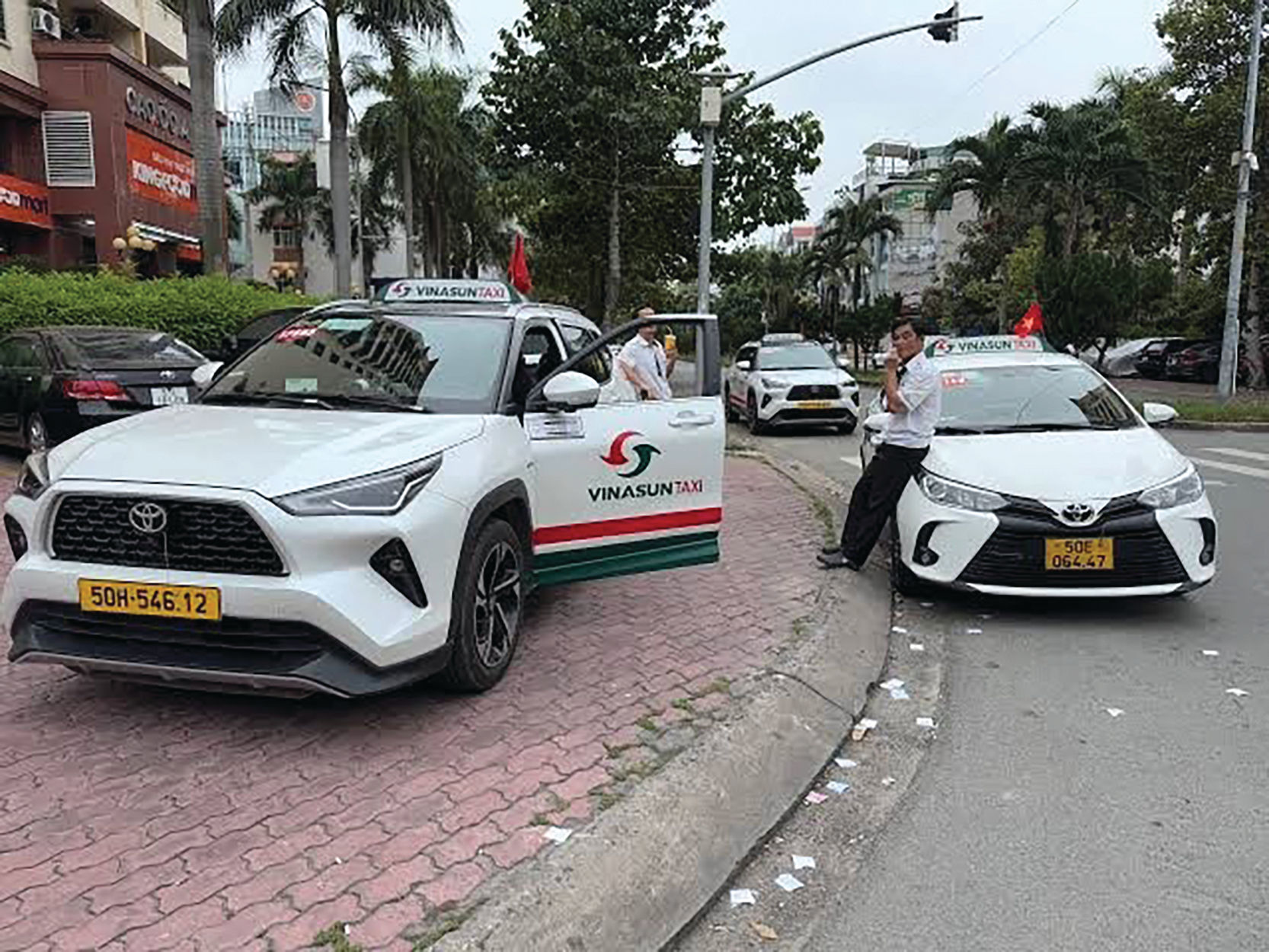
Beside its traditional core operations of taxi services and contracted passenger transport, VNS is pursuing new partnership opportunities in transportation, technology, consumer goods, and payments. The company plans to invest in over 300 new vehicles this year, focusing on hybrid and electric models to expand its fleet to over 2,000 vehicles, aiming to bring the business back into profit.
This represents a major hurdle for VNS as it shifts toward a new strategy amid today's intense market competition.