VIETNAM CHAMBER OF COMMERCE AND INDUSTRY
Liên Đoàn Thương Mại Và Công Nghiệp Việt Nam
Fri, Oct 20, 2023, 08:01:00
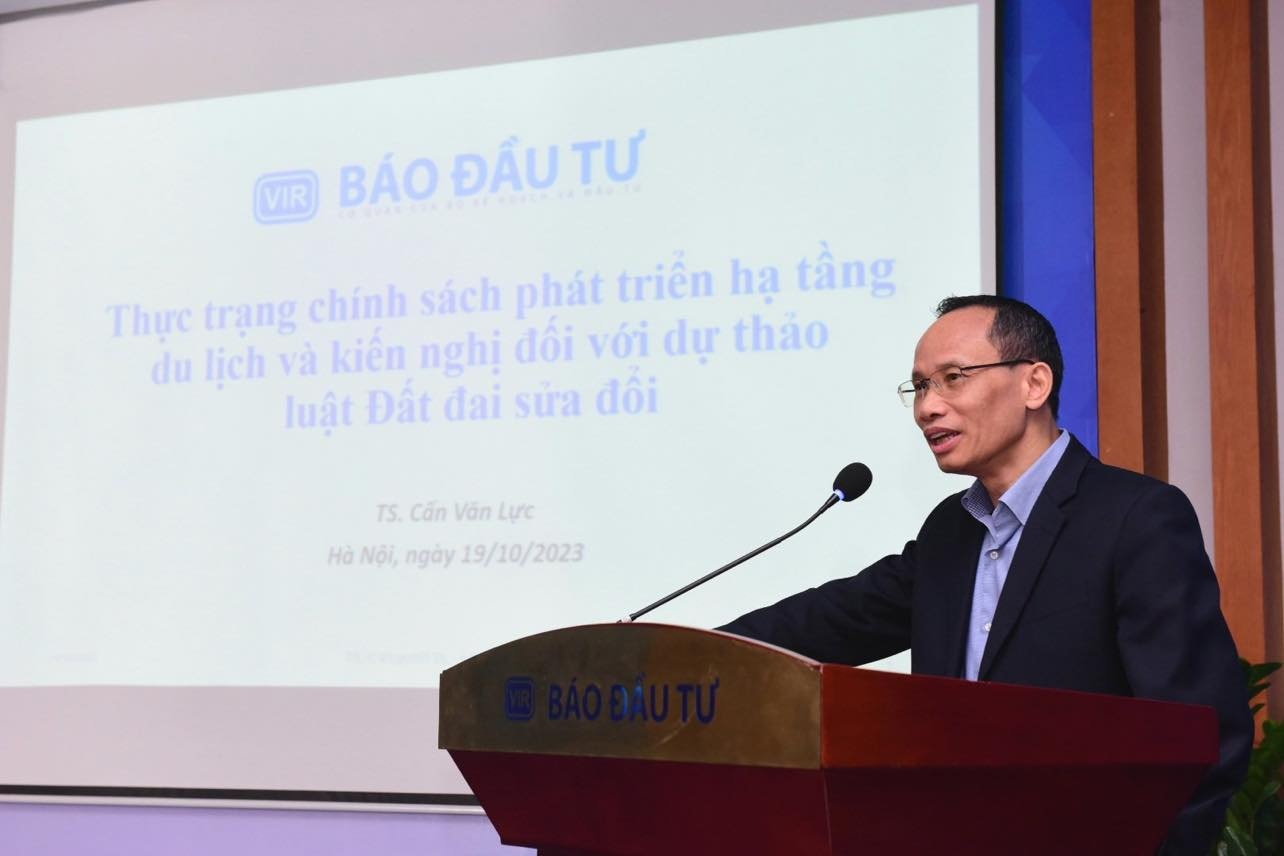
According to economist Can Van Luc, Resolution No.08/TW of the Vietnam Communist Party regarding the elevation of tourism into a spearhead economic sector explicitly underscores a pivotal task and solution: to elevate tourism into a spearhead economic sector, and by the year 2030, draw in 47-50 million international tourists to Vietnam, contributing approximately 14-15 per cent to the GDP.
"Vietnam stands at a moderately competitive level when it comes to tourism infrastructure, encompassing aspects like restaurants, hotels, resorts, and economic security," Luc said
However, to attain its ambitions of joining the top 30 global tourist destinations, a pivotal elevation in tourism infrastructure is imperative.
"In the post-Covid-19 era, tourists are especially concerned about their experiences related to accommodation and transportation," Luc said.
Despite significant growth, Vietnam's lodging infrastructure has been progressing at a relatively leisurely pace. As of the close of 2022, the total number of tourism accommodation facilities stood at 35,000, reflecting a 16.7 per cent increase compared to 2019. Furthermore, the aggregate room count reached 700,000 rooms in 2022, marking a 7.7 per cent upturn from the end of 2019.
The majority of these accommodation facilities are either of a 3-star rating or remain unclassified. Shockingly, a staggering 82.7 per cent of these establishments at the close of 2022 held a 3-star rating or remained unclassified, signifying that they fell short of the rating standards.
Premium-grade accommodations constituted a comparatively smaller fraction, with 5-star rated establishments accounting for 10.7 per cent and 4-star rated entities representing 6.6 per cent.
The discernible challenge that Vietnam faces is not only the quantitative expansion of its hospitality offerings but also the qualitative upliftment of these facilities. This issue becomes more pertinent as the country seeks to draw in a more diverse range of tourists, each with unique preferences and requirements. In response, there is a compelling demand for increased investment and renovation in tourism accommodation and services.
“One of the major roadblocks is the lack of a specific and detailed policy framework supporting the tourism industry,” Luc said.
He also emphasised the need for clear incentives for the sector, which are currently lacking in key laws and regulations like the 2020 Law on Investment and the 2020 Public-Private Partnership Law.
Moreover, the absence of a competitive land allocation process for tourism projects is a noteworthy concern. Vietnam's current regulations don't allow tourism businesses to acquire land through competitive bidding for land-use rights, a situation outlined Decree No. 25/2020/ND-CP, in February 2020.
“Furthermore, there is an aspiration for Vietnam to carve its niche as a sustainable and high-quality tourism destination, with a focus on offering memorable experiences to travellers. To attain these goals, the elevation of tourism infrastructure is unequivocally necessary,” Luc added.
Dr. Do Thanh Trung, advisor to Phuc Khang Corporation's Board of Directors, underscored the pivotal role of land legislation within Vietnam's legal framework.
“This legislation has far-reaching implications for various stakeholders, from the government and businesses to citizens, significantly influencing socioeconomic development, particularly in the tourism sector,” Trung said. "Vietnam possesses substantial potential for tourism development. However, the existing infrastructure may not be commensurate with this potential. There's an urgent need to create better conditions for the growth of tourism-related real estate projects. After all, a competitive advantage alone, without a developmental platform, might be challenging."
Furthermore, he highlighted the necessity for an appropriate policy framework that facilitates land allocation for tourism development and the essential conditions required to include tourism lands within the 30 cases in which the state can requisition land for economic development.