VIETNAM CHAMBER OF COMMERCE AND INDUSTRY
Liên Đoàn Thương Mại Và Công Nghiệp Việt Nam
Tue, Oct 20, 2026, 16:23:00

Two years ago, the lifestyle trend emerged as a way for shopping malls to retain consumers amid growing competition from e-commerce. Food and beverage (F&B), entertainment, beauty and sports offerings were added to turn shopping into a more extended experience.
By 2026, the trend is entering a new phase. Lifestyle is not only reshaping tenant mixes within shopping malls but, alongside urbanization and infrastructure development, is beginning to influence where projects are located across cities.
Avison Young said in its third-quarter 2026 market report that retail activity in major cities was gradually expanding beyond central areas as retailers sought locations with large populations, good connectivity and long-term growth potential.
Over the medium and long term, the market is expected to develop into a polycentric model, with projects offering large catchment areas, convenient transport links and integrated retail concepts better positioned to grow.
In other words, shopping malls are following where people live, work and travel.
Infrastructure redraws the retail map
Hanoi illustrates how retail development is increasingly following new residential communities.
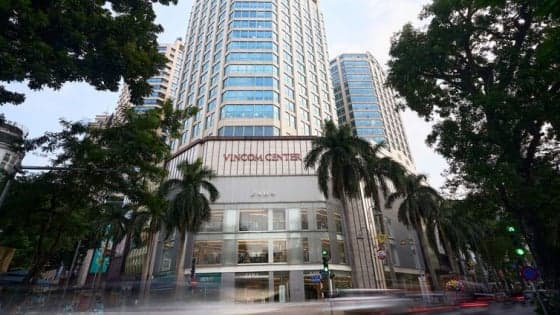
In July 2026, Hanoi Centre officially opened, adding more than 41,000 square metres of retail space and nearly 200 brands in the city center. A month later, Vincom Plaza Dan Phuong, spanning nearly 27,000 square metres, began operating at Vinhomes Wonder City, expanding modern retail supply to the western outskirts.
Future supply is set to extend this trend. Hanoi Takashimaya S.C is expected to open in autumn 2027, while THISO Mall Tay Ho Tay is under development at Starlake, with a total area of around 52,500 square metres.
According to Avison Young, demand for retail space in Hanoi is gradually spreading westward and into new urban areas, supported by population growth, improved infrastructure and a more diverse supply of modern retail facilities. Fashion, F&B, supermarkets, entertainment and family services are leading leasing demand.
The shift comes amid a substantial gap in rental costs between central and outlying areas. In the third quarter of 2026, rents in central Hanoi ranged from $50 to $230 per square metre per month, with occupancy at 92%. Outside the center, rents stood at $20-$80 per square metre per month, while occupancy was 84%.
The rental gap gives projects outside the urban core more room to allocate space to F&B, entertainment and family services, rather than focusing solely on maximizing retail selling space.
Ho Chi Minh City is also moving towards a polycentric retail model, although population shifts are not the only driver.
Avison Young recorded retail rents of $75-$300 per square metre per month in central areas in the third quarter, with occupancy at 93%. Outside the center, rents ranged from $15 to $93 per square metre per month, while occupancy was 82%.
Following the city's administrative boundary expansion, the consultancy said Ho Chi Minh City's retail market was shifting from a center-focused structure towards a polycentric model. The former Binh Duong and Ba Ria-Vung Tau areas (now part of HCMC after their mergers last July) could emerge as new retail hubs, driven by urbanization, population growth, industrial activity and tourism.
Another force is also gaining traction: public transport infrastructure.
Cushman & Wakefield said projects along Ho Chi Minh City's Metro Line 1 had begun to benefit after the line entered service, with shopping malls recording higher footfall and improved occupancy rates.
Retail is among the property segments that can benefit earliest from transit-oriented development (TOD), particularly around interchange stations, central stations and terminal stations, the consultancy said. Passenger flows can generate additional shopping visits and make these locations more attractive to brands.
This suggests that shopping malls are following not only where people live but also where they travel.
Cushman & Wakefield cited the experience of Tokyo, Hong Kong, Singapore and Seoul, where metro networks have helped create multiple satellite business districts along public transport corridors, reducing reliance on a single traditional central business district (CBD).
Ho Chi Minh City is still at an early stage of this process. However, areas along Metro Line 1, including Thao Dien, An Phu, the Saigon Hi-Tech Park and the Vietnam National University Ho Chi Minh City area, have the potential to become new employment, commercial and service centers, provided they attract residents and businesses and develop sufficiently diverse economic ecosystems, Cushman & Wakefield said.
Future retail advantages may therefore be measured not only by distance from the city center but also by accessibility and the volume of people that transport infrastructure can bring.
From shopping destinations to lifestyle spaces
While Hanoi and Ho Chi Minh City illustrate the geographical shift in retail, Danang highlights another change: what consumers want from a shopping mall.
In the third quarter of 2026, Aeon Mall Danang opened, adding around 30,000 square metres of new retail space. Market-wide occupancy remained at around 86%, while projects in prime locations recorded rates above 90%. F&B, health and beauty, and convenience retail were the main drivers of leasing demand.
Avison Young noted that demand for retail space was increasingly driven by consumer preferences for experiences, wellness and amenities supporting everyday life.
F&B continued to dominate, followed by sportswear, athleisure, outdoor products, health and beauty services, pharmacies, cosmetics and personal care.
The distinction between going shopping and going out for leisure is becoming increasingly blurred. Shopping malls must become places where consumers can eat, shop, exercise, seek beauty treatments, enjoy entertainment and socialize in a single trip.
Competition is likely to intensify as Avison Young forecasts that Danang could add another 150,000-200,000 square meters of retail space by 2030, including Aeon Mall Hoa Xuan and commercial podiums in new developments.
As supply expands, adding tens of thousands of square meters will no longer guarantee success. Avison Young said the market was shifting from competition based on scale towards quality and the ability to deliver experiences. Projects are expected to place greater emphasis on tenant mix, F&B, entertainment, lifestyle offerings, community events and amenities to increase footfall and the time visitors spend on site.
Vietnam's retail map is thus evolving alongside the restructuring of its cities. In Hanoi, projects are following new residential communities. In Ho Chi Minh City, metro lines could generate new passenger flows and commercial hubs, while Danang illustrates how retail is becoming more closely integrated with experiences and everyday life.
As goods become increasingly easy to buy online, the competitive advantage of physical retail may ultimately come down to two factors: being close enough for consumers to access conveniently and attractive enough to make them want to stay longer.