VIETNAM CHAMBER OF COMMERCE AND INDUSTRY
Liên Đoàn Thương Mại Và Công Nghiệp Việt Nam
Wed, Sep 23, 2026, 16:20:00
Logistics beyond administrative boundaries
Speaking at the seventh Regional Logistics Forum 2026, themed “Creating New Growth Space for Logistics in the Red River Delta,” in the northern port city of Hai Phong on Monday, Deputy Prime Minister Ho Quoc Dung said the region has significant advantages for developing its logistics sector.
The Red River Delta comprises 11 provinces and cities, covering more than 26,000 square kilometers and home to about 23 million people. It accounts for more than 29% of Vietnam’s GDP, making it a major market for the supply and consumption of goods and a key logistics market in Vietnam and beyond.

However, Dung noted that the region’s logistics sector still faces a number of constraints. Land suitable for warehouses, yards, cargo transshipment facilities and logistics centers remains limited, while most warehousing facilities are small or medium-sized and fragmented.
Inland container depots are not yet clearly integrated with seaports, while supporting logistics infrastructure remains underdeveloped. Rail links to seaports and border gates are also incomplete, and coordination among different modes of transport is still limited.
These constraints require a shift in approach, from providing support to actively shaping development, with the aim of turning logistics into a key economic sector, the Deputy PM said, adding the region should prioritize the development of large-scale, interregional logistics hubs that are seamlessly connected to domestic and international distribution networks.
A key priority, the deputy prime minister noted, is the development of coordinated, well-planned logistics infrastructure aligned with national, regional and local transport networks. This includes strengthening road, rail, maritime, inland waterway and air connections, with particular emphasis on rail transport.
The official also stressed that economic, business and logistics activities do not follow administrative boundaries. Local governments therefore cannot develop self-contained logistics systems and must instead coordinate, connect and share infrastructure.
Under the development framework outlined at the forum, Hanoi is expected to strengthen its role as a regional hub for distribution, consumption, finance and trade, as well as a major northern air logistics hub.
Hai Phong will further develop its role as a major trade gateway and establish an international logistics center linked to large-scale seaports, to connect with global supply chains. Meanwhile, Quang Ninh will capitalize on its border-gate and cross-border trade advantages, alongside its maritime economy and international logistics potential.
This approach was echoed by Ho Sy Hung, president of the Vietnam Chamber of Commerce and Industry (VCCI), who said the Politburo's Resolution 27-NQ/TW, dated August 28, 2026, marked a shift away from viewing local economies as separate entities toward a unified regional economic space. Under this model, each locality is assigned a role based on its functions, advantages and position within a common value chain.

Lach Huyen at the center of a new logistics ecosystem
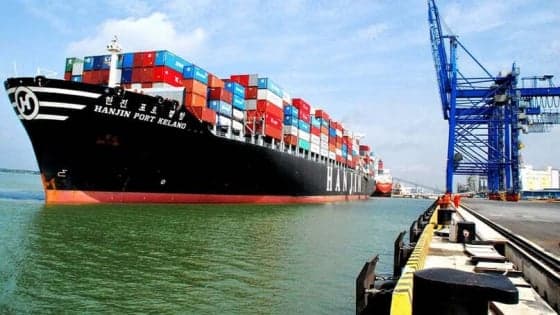
Within this structure, the seaport system is seen as a critical link. Deputy PM Dung called for priority development of major gateway ports, including Lach Huyen and Nam Do Son in Hai Phong and Cai Mep-Thi Vai in Ho Chi Minh City, alongside administrative reforms and investment in international transshipment infrastructure. He also called for efforts to attract major shipping lines, international port operators and distribution centers operated by multinational corporations.
Le Ngoc Chau, Party chief of Hai Phong, said the city is prioritizing seamless connections among seaports, airports, railways and logistics centers, while accelerating digitalization, automation and the green transition.

Hai Phong will continue to develop strategic infrastructure, including the Nam Do Son deep-water port, Lach Huyen International Gateway Port, the Lao Cai-Hanoi-Hai Phong railway, expressway networks linked to Gia Binh International Airport in the neighboring city of Bac Ninh, as well as east-west transport corridors and the city’s ring roads.
The city also plans to develop logistics centers, a free trade zone, economic and industrial zones, and deep-water seaports, while attracting strategic investors and multinational corporations with global management capabilities. The goal is to build an integrated ecosystem connecting industrial activity with logistics services.
At the regional level, Dung called on localities, once their master plans are approved, to quickly incorporate the infrastructure and land-use requirements needed to establish logistics centers large enough to provide international-standard services. At the same time, fragmented and overlapping investments that could lead to waste should be avoided.
The approach places logistics development within a broader link between production, transportation and distribution. According to VCCI president Hung, logistics cannot develop in isolation from manufacturing and trade. The sector needs to be integrated into individual industry value chains, with specialized and professional logistics models tailored to the characteristics of each sector.
Alongside infrastructure development, digital transformation and green logistics are emerging as new priorities. The Deputy PM called for the development of a logistics data exchange platform, greater data connectivity and sharing, and closer coordination among localities. He also called for the development of smart, green and sustainable logistics models and participation in the creation of international green transport corridors.
Meanwhile, the VCCI president said investors are increasingly focused on infrastructure quality, connectivity, supply reliability, digital capabilities, environmental standards and institutional quality. Logistics, he said, is no longer simply a cost associated with transportation or supply-chain operations, but has become part of a country’s overall competitiveness.
For Hai Phong, logistics and port services are identified as key growth drivers in the city’s next phase of development, alongside the improvement of strategic infrastructure, the expansion of development space and the creation of an integrated industrial-logistics ecosystem.
The challenge for the Red River Delta, therefore, is not simply to build more logistics facilities. It is to establish an interconnected system linking localities, transport modes, seaports, logistics hubs and supply chains. Within that broader regional logistics landscape, Lach Huyen and other strategic infrastructure of Hai Phong are positioned as critical components of a much larger interregional network.