
VIETNAM CHAMBER OF COMMERCE AND INDUSTRY
Liên Đoàn Thương Mại Và Công Nghiệp Việt Nam
Fri, Jul 17, 2026, 08:33:00
The market has nearly tripled in size over the past decade, expanding from $3.4 billion in 2015 to around $7 billion in 2023. Industry estimates now suggest total market value could reach between $13 billion and $15 billion by the end of the decade, positioning Vietnam among the region's fastest-growing pharmaceutical markets.
The growth story reflects a broader transformation of the country's healthcare industry, which is shifting from a fragmented base of low-tech manufacturers toward a more sophisticated ecosystem increasingly focused on international production standards and high-value medicines.
According to the report, Vietnam's pharmaceutical market remains heavily concentrated in the ethical drugs (ETC) segment, or hospital channel, which accounts for roughly 70% to 76% of total consumption. The segment is currently expanding at an annual rate of around 12%, significantly outpacing the 8% growth seen in the over-the-counter (OTC) retail pharmacy market.
The divergence underscores the country's growing reliance on public healthcare services and the rapid expansion of health insurance coverage. Vietnam's universal healthcare program now covers approximately 95.2% of the population, achieving a national target five years ahead of schedule.
The expanding healthcare system, combined with rising incomes and greater awareness of chronic diseases, is driving a structural increase in pharmaceutical consumption.
Per capita spending on medicines is forecast to rise from around $65 in 2025 to more than $90 by 2030.
Patent cliff opens new opportunities
One of the most significant catalysts for the sector is the global "patent cliff," a period extending through 2030 during which drugs with combined annual sales of around $207 billion are expected to lose patent protection.
For Vietnamese pharmaceutical companies, the expiration of these patents creates a rare opportunity to manufacture high-tech generics and biosimilars capable of replacing more expensive imported drugs.
To capitalize on this opportunity, Vietnam enacted an amended Law on Pharmacy, which took effect on July 1, 2025. The legislation streamlines drug registration procedures and provides incentives for domestic manufacturers producing advanced generic medicines and biosimilars.
At the same time, new procurement regulations have increased the competitive advantage of local companies capable of meeting international manufacturing standards.
Under Circular 03/2024, medicines produced in facilities certified under EU-GMP or Japan-GMP standards are granted preferential access to Group 1 and Group 2 public tenders, which account for roughly 60% of total procurement value in the hospital channel.
Foreign investors rush in
The push toward higher manufacturing standards has sparked a wave of mergers and acquisitions as multinational pharmaceutical companies seek to strengthen their presence in Vietnam under a broader "China+1" supply-chain diversification strategy.
The first half of 2026 was marked by a landmark transaction in which China's Livzon Pharmaceutical acquired a 67.87% stake in Imexpharm for approximately VND6 trillion ($228.5 million). The deal follows earlier strategic investments by Japan's Taisho Holdings, which controls 51% of DHG Pharma, and Germany's Stada, which integrated Pymepharco into its global operations.
Industry estimates suggest that five to seven healthcare and pharmaceutical M&A deals worth more than $100 million each could emerge during 2026-2027. By 2030, foreign-invested companies could control 40-50% of the domestic pharmaceutical market, reshaping the industry's competitive landscape.
Investor interest is concentrated in a relatively small group of companies. Of Vietnam's approximately 288 pharmaceutical factories, only an estimated 20 to 30 facilities currently meet stringent EU-GMP standards, making them highly valuable assets in an increasingly competitive market.
Aging population reshapes demand
Long-term demand is also being supported by profound demographic changes. Vietnam is among the world's fastest-aging societies, with the population aged 60 and above expected to increase from 13.9% in 2023 to more than 25% by 2050.
The country is projected to transition from its current "golden population" phase to a super-aged society by 2074.
As the population ages, non-communicable diseases, including cardiovascular illnesses, diabetes, and cancer, now account for roughly 77% to 80% of all deaths in Vietnam, fundamentally reshaping healthcare demand and driving sustained growth in pharmaceutical spending.
Notably, prescription drugs have emerged as the industry's primary growth engine. Vietnam's prescription drug market is forecast to increase from VND127.9 trillion ($4.87 billion) in 2025 to VND187.7 trillion ($7.15 billion) by 2030, before reaching VND260 trillion ($9.9 billion) by 2035.
Prescription medicines are expected to account for 79.2% of the total pharmaceutical market by 2035, up from 76.6% in 2025, supported by broader health insurance coverage and improving access to healthcare services.
Pharmacy chains gain ground
The retail landscape is also undergoing significant transformation as modern pharmacy chains steadily displace traditional family-run drugstores.
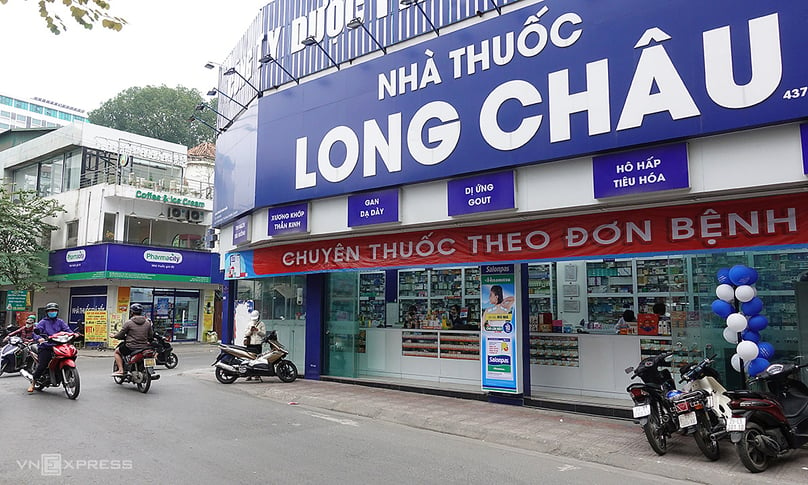
Modern chains now account for around 16% of the market, led by FPT Long Chau, which operated 2,417 stores as of late 2025 and controlled more than one-quarter of Vietnam's retail pharmacy market. Its rival, Pharmacity, had approximately 1,040 stores nationwide.
For local drugmakers, the next phase of competition will depend less on scale and more on technological capabilities. Companies investing in EU-GMP plants, research and development, and higher-value specialty medicines are expected to capture a greater share of the rapidly expanding market, while firms that fail to upgrade risk losing ground in an industry increasingly shaped by quality standards and foreign competition.
Heavy dependence on imported inputs
Despite the industry's strong growth prospects, one of its biggest vulnerabilities remains its dependence on imported raw materials.
Vietnam imports between 80% and 90% of the active pharmaceutical ingredients (APIs) used in domestic drug production, with nearly 90% of those imports sourced from China and India.
The reliance leaves manufacturers exposed to currency volatility, supply-chain disruptions, and geopolitical risks, while production costs remain 20% to 25% higher than those of competitors in China and India.
To address these challenges, the Vietnamese government has set ambitious targets of meeting 80% of domestic pharmaceutical demand through local production by 2030 and achieving self-sufficiency in 20% to 30% of required active pharmaceutical ingredients.
Achieving those goals will require substantial investment in chemical manufacturing capacity, research and development, and supporting infrastructure. Authorities are seeking to accelerate the process through initiatives such as the Thai Binh Bio-Pharma Industrial Park and other specialized pharmaceutical clusters.