VIETNAM CHAMBER OF COMMERCE AND INDUSTRY
Liên Đoàn Thương Mại Và Công Nghiệp Việt Nam
Fri, Aug 14, 2026, 15:17:00
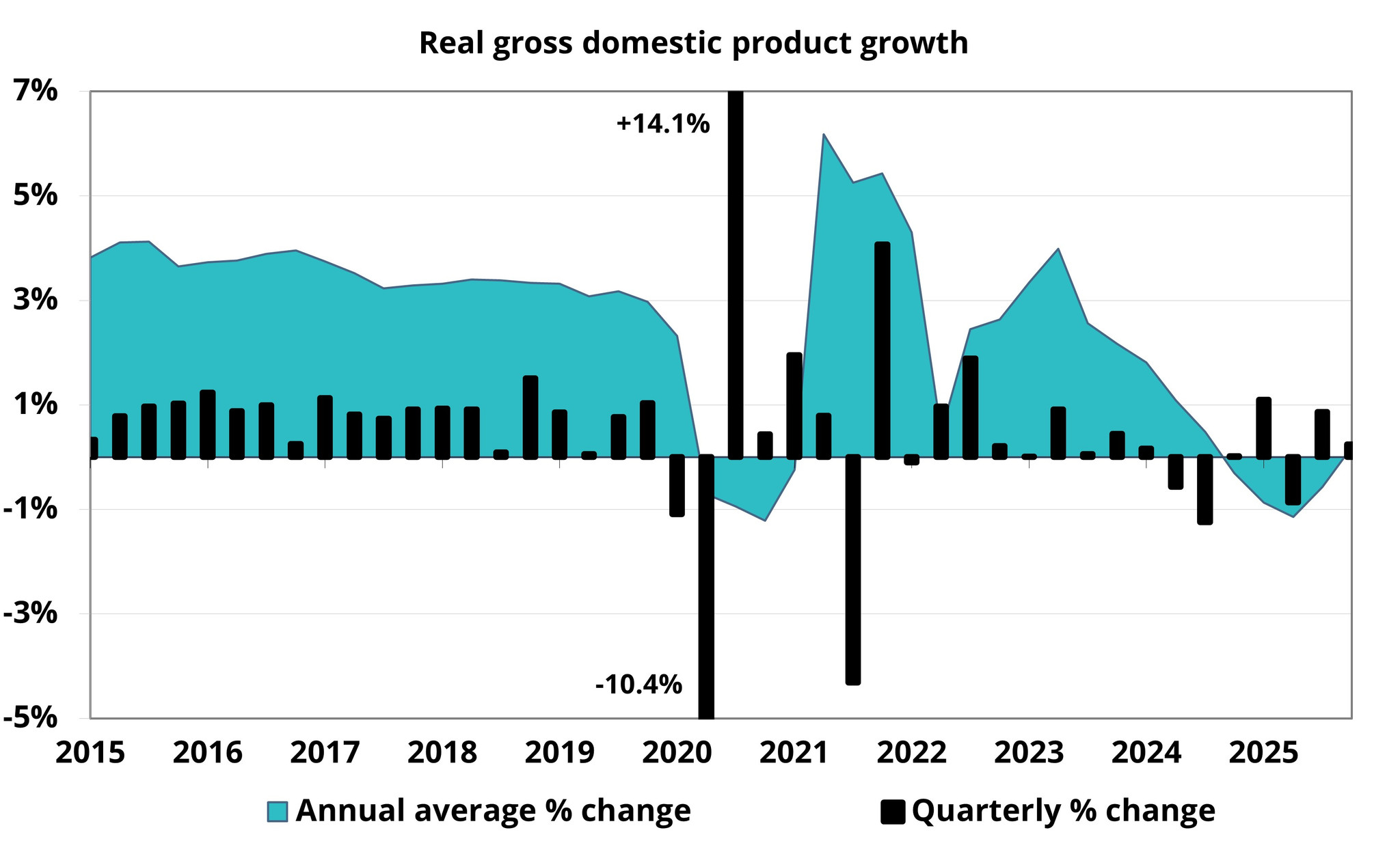 New Zealand's economy is entering a recovery cycle following a period of sluggish growth. Photo: Parliament of New Zealand]
Vietnam’s GDP grew by 8.18% in the first half of 2026, placing it among the fastest-growing economies globally, while the Government has set a double-digit growth target for the entire year. Meanwhile, New Zealand is recovering from a period of weak growth. The IMF projects this economy to grow by approximately 2% in 2026 and 2.7% in 2027, driven by gradual improvements in consumption and investment.
The differences in scale, structure, and growth drivers also create complementary opportunities between the two economies.
According to Mr. Raf Manji, Senior Fellow at the Institute for Indo-Pacific Affairs (IIPA) and former Senior Fellow at the Asia New Zealand Foundation, Vietnam and New Zealand share many common interests as open economies.
“As open economies and CPTPP members, it is crucial for both nations to jointly emphasize the value of free and fair trade, while continuously reviewing ways to enhance it,” Mr. Raf Manji stressed.
The institutional framework for this direction is relatively comprehensive. Vietnam and New Zealand are co-members of CPTPP, RCEP, and AANZFTA. In 2026, Vietnam serves as the Chair of the CPTPP Commission, focusing on promoting implementation efficiency, upgrading the agreement, and expanding connectivity with partners.
Framework In Place, Measurable Results Needed
In the Joint Statement on upgrading relations to a Comprehensive Strategic Partnership in 2025, economy, trade, and investment were designated as key pillars. The two countries set a target to raise two-way trade to $3 billion in 2026, while committing to address issues related to standards, market access, and trade facilitation.
Mr. Manji noted that merchandise trade between the two countries has made progress, yet barriers for certain goods still require ongoing resolution.
“Setting trade volume targets is practical, but achieving them depends on various factors such as domestic demand and international competition,” Mr. Manji noted.
According to Mr. Manji, the Strategic Partnership established in 2020 laid the foundation for bilateral cooperation, while the upgrade to a Comprehensive Strategic Partnership in 2025 opened up room to set broader economic, technological, and technical goals.
This is a notable aspect of Vietnam - New Zealand economic relations. The three frameworks—CPTPP, RCEP, and AANZFTA—have significantly reduced tariff barriers. Consequently, future growth potential increasingly lies in more specific issues such as quarantine, standards, certification, logistics, market access, and the capacity of enterprises on both sides to find suitable partners.

New Zealand fruit is displayed for sale at Co.opmart Supermarket. Photo: Co.opmart
New Zealand holds strong advantages in agriculture, food, and agri-forestry products. However, according to Mr. Manji, if trade relations merely revolve around increasing the volume of existing goods, growth potential will be limited. A more noteworthy approach is to co-develop technologies and new products in areas where both countries possess complementary strengths.
In Search of New Growth Pillars
Agriculture represents one of the sectors with the clearest cooperative potential. Vietnam boasts large-scale production and an increasingly important position in international agricultural supply chains. New Zealand possesses expertise in agricultural technology, supply chain management, and standards systems.
According to Mr. Manji, both sides can advance further in traceability, information systems, price discovery, as well as emerging markets related to carbon and biodiversity.
This cooperative direction gains further momentum as Vietnam incrementally builds new components of its green market. On June 29, the domestic carbon trading platform officially commenced operations and recorded its first greenhouse gas emission quota transactions.
Mr. Manji also envisions potential to expand cooperation into energy, maritime, and space technology.
In water resources, the two countries have established a technical cooperation foundation in risk management and dam safety. This experience could serve as a springboard to broaden exchanges on infrastructure resilience and resource management in the context of climate change.
Space technology represents a newer avenue. According to Mr. Manji, New Zealand’s developing capabilities in this sector could align with Vietnam’s demand for Earth observation, environmental monitoring, and maritime space management. For an economy with a long coastline and a strong orientation toward marine economic development like Vietnam, these technologies could add another layer of cooperation beyond traditional trade in goods.
Education continues to be a vital pillar. Unlike trade in goods, where market size and demand impose certain limits, cooperation in training, research, and technology has the potential to generate new capabilities for both sides.
The common denominator across these sectors is a shift from asking “what more can we sell to each other?” to “what can we develop together?”.
New Zealand Business Perspective on Vietnam
From a business standpoint, another challenge lies in market familiarity. According to Mr. Manji, Vietnam remains a relatively unfamiliar market for many New Zealand businesses, despite growing interest and engagement.
“The better New Zealand businesses understand the Vietnamese market—its scale and growth trajectory—the more actively they will participate,” he observed.
Air connectivity serves as a prime example. He expressed hope that the restoration of direct flights between the two countries, if implemented, could support tourism, cargo transport, and, most importantly, help the business community access the market directly.
For New Zealand, the long-term challenge is boosting productivity and finding external growth sources beyond traditional export sectors. Vietnam offers a larger market size, rapid growth, and an expanding manufacturing base. Conversely, New Zealand possesses strengths that Vietnam requires in high-tech agriculture, education, resource management, and specialized technology fields. Therefore, the largest gap lies between recognized potential and the actual level of cooperation between businesses in both countries.
Following the upgrade to a Comprehensive Strategic Partnership, the core task is no longer establishing new framework agreements. The more practical task is improving connectivity, removing remaining market barriers, and bringing businesses, universities, research institutes, and technology developers from both nations closer together.