VIETNAM CHAMBER OF COMMERCE AND INDUSTRY
Liên Đoàn Thương Mại Và Công Nghiệp Việt Nam
Thu, Aug 28, 2025, 11:31:00
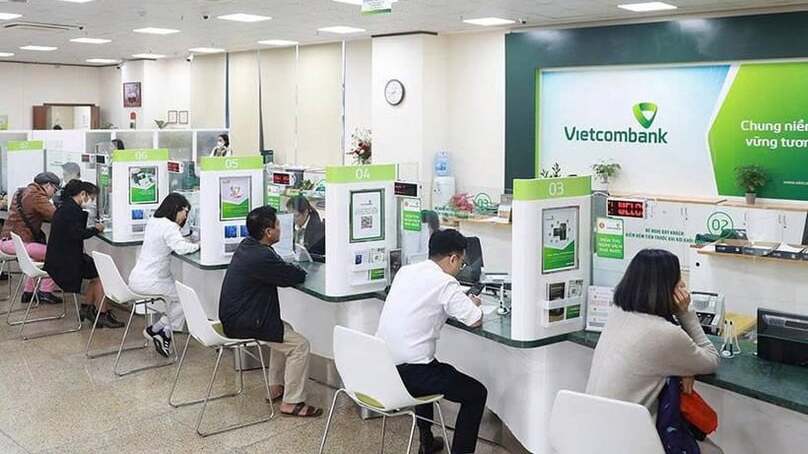 At a transaction office of Vietcombank. Photo courtesy of VNA.
Under Circular No. 23/2025/TT-NHNN dated August 12, 2025, which amends Circular No. 30/2019/TT-NHNN on the implementation of required reserves of credit institutions and foreign bank branches, credit institutions as mandatory transferees of commercial banks placed under special control will benefit from the policy.
Beneficiaries include Vietcombank, Military Bank (MB), VPBank, and HDBank, which have been active participants in the SBV’s restructuring program.
Banking experts agree that the SBV’s decision to cut the ratio by 50% for credit institutions taking over weak banks is a strategic liquidity boost for the four receiving lenders. The policy not only eases funding costs but also strengthens liquidity, lowers capital expenses, and supports credit growth.
In practice, with their large deposit bases, each bank could free up trillions to dozens of trillions of dong (VND10 trillion = $379.22 million). This extra capital can reinforce liquidity buffers, expand lending capacity, reduce pressure to mobilize new deposits, cut funding costs, and widen profit margins.
With such resources, banks can grow credit without raising deposits, thereby stimulating the economy and aiding the restructuring of weaker lenders.
In October 2024 and early 2025, the SBV transferred four struggling lenders to stronger banks: CBBank to Vietcombank, OceanBank to MB, GPBank to VPBank and DongA Bank to HDBank.
These institutions had been under special control for years due to accumulated losses and bad debts. Following the transfer, they were renamed and rebranded, including VCBNeo (formerly CBBank), MBV (formerly OceanBank) and Vikki Bank (formerly DongA Bank).
From October 2025, the four banks are projected to release VND17.2-51.7 trillion ($662 million - $1.99 billion) depending on their deposit structures.
Vietcombank, with the largest deposit base in the sector, is expected to benefit the most from the circular. With customer deposits exceeding VND1.58 quadrillion ($59.92 billion) as of June 30, 2025, it could potentially unlock VND7.9-23.8 trillion in required reserves to support lending, invest in government bonds, and enhance capital adequacy.
MB could free up VND3.9-11.7 trillion, strengthening liquidity for small and medium-sized enterprise (SME) lending and providing a safety buffer for OceanBank’s balance sheet consolidation.
VPBank is forecast to release VND3-9 trillion, which could bolster retail and SME lending, easing funding pressure during GPBank’s acquisition. Meanwhile, HDBank expects an extra VND2.4-7.2 trillion to channel into high-yield sectors such as retail and aviation, supporting DongA Bank restructuring while sustaining growth and margins.
For the wider economy, the policy is expected to enhance liquidity, channel more capital into production and business, ease interest rate pressures and create momentum for growth. It is also seen as supporting public confidence in the banking system, accelerating the sector’s restructuring process and contributing to financial stability.