VIETNAM CHAMBER OF COMMERCE AND INDUSTRY
Liên Đoàn Thương Mại Và Công Nghiệp Việt Nam
Mon, Sep 14, 2026, 14:49:00

Vietnam's stock market has just gone through a lacklustre trading week, as expectations of an upgrade under FTSE Russell's classification from "frontier" to "secondary emerging" have become a key focus for domestic investors.
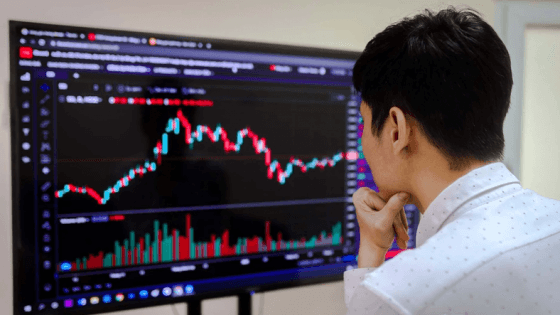
After three consecutive weeks of gains, the VN-Index ended its winning streak in the September 7-11 trading week as selling pressure intensified around key resistance levels.
The index came under heavy selling pressure at the start of the week, then recovered over the next three sessions on lower liquidity before coming under renewed heavy selling pressure in the final session. The index fell 3.12% for the week to 1,795.21 points, slipping below the psychological 1,800-point level.
A similar trend was seen among large-cap stocks. The VN30 index fell 2.43% to close at 1,936.69 points, below the resistance zone around 1,960 points, corresponding to the 200-day moving average.
Trading liquidity increased during the week, particularly in the final session. This is noteworthy because the rise in liquidity came alongside strong selling pressure rather than a surge in buying activity.
Alongside movements in the VN-Index, domestic and foreign capital flows also remained subdued. The latest data from Vietnam Securities Depository and Clearing Corporation (VSDC) showed that the number of domestic investor accounts increased by nearly 230,000 in August 2026, a slight rise from the previous month but still low compared with the average over the past year.
By contrast, the market added 2,445 foreign investor accounts in the first eight months of the year, twice the number recorded in the same period last year and more than the increase for the whole of 2025. Foreign institutional accounts alone rose by 137, or 2.3 times the year-earlier figure.
Foreign investors, however, remained net sellers of about VND1.4 trillion ($54 million) in August. Since the beginning of September, they have sold a net nearly VND2.2 trillion ($84.87 million).
Cautious capital flows
Vietnam's stock market is not alone in facing volatility, with global financial markets also seeing considerable swings in recent weeks.
Global equity funds saw net outflows of $15.52 billion in the week ended September 9, 2026. U.S. equity funds recorded net outflows of $32.27 billion, while money-market funds attracted $10.72 billion. The figures suggest investors are becoming more cautious and shifting part of their capital towards more liquid assets.
The volatility reflects a combination of economic and geopolitical factors. Tensions between the United States and Iran in the Middle East have raised concerns over energy supplies, making oil prices and inflation notable risks for the global economy. At the same time, tighter monetary policy in major economies has heightened concerns over funding costs, asset valuations, and global investment flows.
As uncertainty increases, investors tend to reduce their exposure to riskier assets and shift some capital towards highly liquid instruments, adding to selling pressure in stock markets.
Against a backdrop of more cautious global capital flows and reallocations across asset classes, the story of Vietnam's stock market upgrade has emerged as a notable focus.
VPS Securities expects an upgrade in FTSE Russell's September 2026 review to help Vietnam's stock market attract $2.6 billion from passive funds. That amount is equivalent to only about 0.75% of Vietnam's stock market capitalisation, particularly as the flows would be concentrated in a number of stocks eligible for inclusion in the relevant indices. VPS also expects the funds to be deployed into Vietnam's stock market in four phases.
The investment decisions of active funds, meanwhile, depend on a range of other factors. With major economies still facing uncertainties over inflation, interest rates and geopolitical tensions, international capital, as discussed above, tends to prioritize liquidity and risk management rather than significantly increasing allocations to emerging markets.
Therefore, even as the upgrade story raises expectations of foreign inflows, sustainably attracting active foreign institutional investment remains a challenge, at least under current global financial conditions.
Moreover, Vietnam's move out of the frontier-market category could prompt some funds that invest specifically in frontier-market indices to adjust their exposure to Vietnamese stocks. At the same time, capital from emerging-market funds may take additional time to be deployed in line with their rules and rebalancing schedules.
An upgrade, therefore, could lead to capital shifting between different groups of funds rather than immediately generating a sufficiently large amount of new money to drive the market higher.
On the domestic front, Vietnam's stock market is still seen as benefiting from factors including economic growth, a push for public investment, consumption and the earnings outlook for listed companies. However, relatively high deposit rates are also prompting investors to weigh whether to deploy capital into riskier assets.
According to the latest surveys, with VND1 billion ($38,580) in idle funds, savers can earn the highest online deposit rates of 7.6% a year for six-month terms, 7.8% for 12-month terms, and 7.5% for 18-month terms.
Bank deposits offer relatively stable returns, while stocks face the risks of price volatility and valuation corrections. Amid pressure from external tensions, capital is likely to favor safety.
SGI Capital said new money flowing into Vietnam's stock market is declining rapidly amid competition from bank deposits, where rates of 8-9% have become common for six- to 12-month terms. Funding raised by securities companies for margin lending is also becoming more expensive as they compete with other channels offering attractive returns, such as long-term credit and corporate bonds.
Rising inflation and interest rates, both in Vietnam and globally, and the possibility that they remain elevated will pose a major challenge to domestic capital flows, particularly for investors holding interest-rate-sensitive stocks with high margin exposure, SGI Capital said.
Drivers for the stock market
SHS Securities said the main drivers for Vietnam's stock market would include the market upgrade, foreign investors' net buying in line with the implementation roadmap, the state divestment plan, and the earnings outlook for the third quarter of 2026.
However, the market is likely to remain differentiated while liquidity has yet to recover. SHS said a broader combination of factors would be needed for liquidity to pick up again, including easing inflation and lower interest rates, sustained economic growth, and a return to a trade surplus.
At present, apart from real estate, banking and energy stocks, which continue to maintain growth trends, most other sectors remain in short- to medium-term correction and prolonged accumulation phases, offering few outstanding investment opportunities.
There are nevertheless many quality companies with strong growth prospects and P/E and P/B ratios below their historical levels, making valuations reasonable for consideration, SHS said. Investors can assess investment opportunities based on companies' and the economy's growth prospects, as well as expectations that the market will receive new investment flows.
From its perspective, SGI Capital said the coming months would be an important test for Vietnam's stock market as rising interest rates and global inflation, U.S. tariff risks and tighter liquidity conditions towards the end of the year compound the pressure.
Current conditions are bringing together the necessary ingredients for a potential downturn, with risks both domestically -- including high debt levels in the property and stock markets amid rising interest rates -- and externally. These could trigger a broad-based decline and a deleveraging cycle, potentially opening opportunities to invest in the best companies at valuations among the cheapest seen in years.
The sufficient condition, however, is to remain patient and keep purchasing power ready, SGI Capital said.
"Stock investment cannot be expected to deliver consistently high returns. There will be periods when the risk-return relationship is unfavorable, as well as periods when conditions are highly favorable and gains come more easily," SGI Capital said.
The firm said it continued to emphasize that the upward interest-rate trend would persist and become a major headwind for the stock market and asset classes.
"During unfavourable periods, being content with and patient about holding part of one's money in deposits can help avoid risks while preserving the ability to choose the best opportunities when difficulties reach their peak and gradually pass, paving the way for a new favourable cycle," SGI Capital recommended.
Taking a similarly cautious view, SSI Securities said September was an accumulation phase rather than the start of a new upcycle.
Therefore, a market rally around the FTSE upgrade event would be an opportunity to take profits and reduce exposure to high-beta stocks, although the brokerage maintained a positive medium-term view.
SSI Research said that in early September, the first wave of passive capital deployment under the upgrade process could support stocks included in FTSE baskets. As this support gradually fades, SSI favors rotating into stocks with solid earnings growth, as well as companies with high net cash positions, attractive dividend yields and defensive stocks such as utilities and power companies.
"We therefore maintain a cautious stance in September, while retaining a positive strategic view for the medium and long term as we move into late 2026 and early 2027," SSI said in a report.
"The next wave of capital deployment under the market upgrade process, together with the gradually recovering earnings cycle, reflects the market's transition from turning resources into growth in quantity to growth in quality, namely productivity and sustainable value," the report said.