VIETNAM CHAMBER OF COMMERCE AND INDUSTRY
Liên Đoàn Thương Mại Và Công Nghiệp Việt Nam
Mon, Jul 06, 2026, 16:41:00
The trend is emerging as one of the most significant shifts in Vietnam's construction industry during the current public investment cycle, according to corporate financial statements and industry participants.
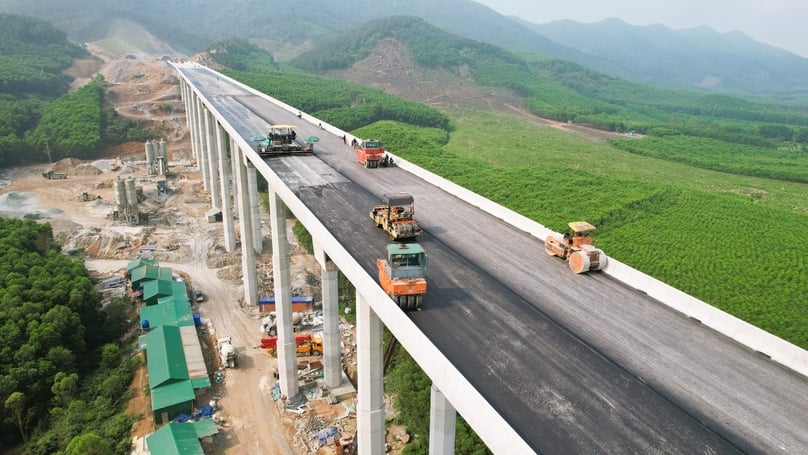
Ho Chi Minh City on July 1 broke ground on eight major infrastructure projects worth more than VND253 trillion ($9.62 billion). The launch followed a series of nationwide groundbreaking ceremonies organized by the government throughout 2025.
On December 19 alone, authorities simultaneously commenced construction on or inaugurated 234 projects across 34 provinces and cities with combined investment exceeding VND3,400 trillion ($129.27 million).
The wave of infrastructure development has intensified competition among contractors to strengthen execution capacity, particularly through investment in construction equipment needed to meet project schedules and improve competitiveness in future tenders.
The trend is reflected in the performance of companies supplying heavy-duty vehicles and construction equipment.
Vietnam Machinery Development Investment Corp (VVS), a distributor of Howo and Sitrak heavy trucks manufactured by China's Sinotruk, reported first-quarter 2026 vehicle sales revenue of more than VND2.7 trillion ($102.77 million), up about 144% from a year earlier. The company also distributes dump trucks, tractor heads, concrete mixers, trailers and other specialised vehicles used in infrastructure construction.
Hoang Huy Investment Services JSC (HHS), which distributes Dongfeng trucks, reported a more than 52% increase in revenue from vehicle and spare parts sales during the same period.
While rising equipment demand has benefited distributors, financial statements suggest construction contractors themselves are also positioning for a longer investment cycle by expanding or optimizing their machinery fleets.
Unlike revenue or profit, which reflect short-term business performance, changes in fixed assets can indicate future production capacity. Financial disclosures from listed construction companies show investment in machinery, equipment and specialized vehicles generally increased between early 2025 and the first quarter of 2026, although companies have adopted different capital allocation strategies.
Lizen JSC (LCG) and Deo Ca Traffic Infrastructure Investment JSC (HHV) recorded some of the largest increases in construction equipment assets.
At Lizen, the original value of machinery and equipment rose from about VND385 billion at the beginning of 2025 to more than VND519 billion ($19.73 million) by the end of the first quarter of 2026. Finance lease assets also increased from VND457 billion to nearly VND593 billion, indicating the company combined direct purchases with leasing to expand capacity.
HHV reported a similar trend, with machinery assets increasing from nearly VND79 billion to more than VND130 billion ($4.94 million) over the past year, while transport equipment rose from about VND97 billion to almost VND116 billion, largely through new investment.
By contrast, Vietnam Construction and Import-Export Joint Stock Corporation (Vinaconex, VCG) and Construction Corporation No.1 (CC1) adopted a more cautious approach focused on operational flexibility.
As of the end of the first quarter, Vinaconex continued to own machinery and transport equipment with original values of nearly VND1.58 trillion ($59.88 million) and VND1.41 trillion respectively.
Although those assets increased by around VND350 billion ($13.3 million) during 2025, the company made no significant new purchases in early 2026. Instead, financial statements show it leased construction equipment with an original value of approximately VND185 billion.
CC1 likewise maintained machinery assets at roughly VND111 billion ($4.22 million) while continuing to utilize finance lease assets valued at nearly VND100 billion.
The differing approaches suggest companies with already sizeable equipment fleets are prioritizing capital efficiency by combining owned and leased assets rather than expanding ownership aggressively.
Dat Phuong Group (DPG) has adopted another strategy.
The company invested more than VND73 billion ($2.78 million) in new machinery during 2025 and added another VND11 billion in the first quarter of 2026, bringing the original value of its machinery portfolio to over rVND1.29 trillion ($49.08 million).
Although the increase was relatively modest compared with peers, DPG generated about VND30.5 billion ($1.16 million) in equipment leasing revenue from two affiliated construction companies, indicating that construction machinery can also serve as an income-generating asset when utilization rates remain high.
Overall, company disclosures indicate that Vietnam's public investment program is encouraging contractors to build long-term execution capacity, although through different financing models. The common objective is to position for rising workloads from infrastructure projects over the coming years.
According to Alton, a manager at a Chinese construction company operating in Vietnam, shortages of construction equipment and machinery have been evident since late 2025.
"Many of our partners no longer have equipment available for lease, so we have considered relocating machinery from other markets into Vietnam or purchasing new equipment," he said.
"However, we only make new investment decisions if we have visibility on at least three years of continuous work."
The comments underscore the long investment cycle associated with construction equipment.
Unlike labor or construction materials, heavy machinery has an operational lifespan measured in years, while capital expenditure and depreciation are concentrated at the beginning of the asset's life. As a result, investment decisions reflect not only current project demand but also contractors' expectations for medium- and long-term workloads.
If Vietnam's infrastructure spending remains elevated long enough for companies to recover most of their capital costs, machinery acquired during the current cycle could continue supporting railway, industrial park, energy and urban infrastructure projects for years, strengthening the industry's execution capacity without requiring another large-scale investment cycle.
Such investment, however, remains inherently cyclical.
Foreign media reported in May 2024 that U.S. agricultural equipment dealers faced excess inventories after a surge in machinery purchases during 2022 and 2023, when high crop prices boosted farm incomes. Falling corn and soybean prices, coupled with elevated interest rates, subsequently weakened equipment demand.
Citing data from Sandhills Global, foreign media reported that inventories of high-horsepower tractors in the United States had risen 107% year-on-year by April 2024, forcing dealers to cut prices, reduce new orders, or auction surplus equipment.
Vietnam's current market conditions differ as public infrastructure investment continues to accelerate. Research firm Mordor Intelligence forecasts Vietnam's construction industry will expand from $80.6 billion in 2026 to $115.8 billion by 2031, representing average annual growth of 7.5%.
Whether today's investment in construction equipment ultimately delivers sustainable returns, however, will depend on contractors' ability to maintain project backlogs, secure new contracts, and keep equipment utilization at profitable levels.
While highways, airports and seaports are the most visible outcomes of public investment, the expansion of machinery and specialized equipment recorded on contractors' balance sheets may represent a less visible but equally important form of infrastructure capacity that will shape the industry's competitiveness in future investment cycles.