VIETNAM CHAMBER OF COMMERCE AND INDUSTRY
Liên Đoàn Thương Mại Và Công Nghiệp Việt Nam
Wed, Feb 25, 2026, 15:29:00
Broadly, their goals center on sustainable growth, land bank expansion, and a stronger focus on housing that meets genuine demand.
Vietnam’s macroeconomic outlook for 2026 is expected to remain positive, with both the broader economy and the property market benefiting from fresh growth drivers.
Industry reports and forecasts suggest the sector is entering a new phase of development, supported by improving urban infrastructure, continued capital inflows into residential and industrial real estate segments, a more transparent legal framework, and still-strong end-user demand.

The Ministry of Construction has said the market is moving into a restructuring phase, prioritizing reasonably priced commercial housing that addresses real needs, alongside efforts to refine the legal framework to strengthen oversight.
The government has also taken steps to cool speculative activity and promote sustainable development. Proposed new tax policies aimed at curbing speculation have been discussed, with the expectation of improving housing affordability for middle- and lower-income earners.
Against this backdrop, analysts say property developers must adjust business plans and long-term strategies to seize opportunities while mitigating market risks.
Ambitious targets take center stage
One notable feature of 2026 is the scale of growth targets set by many developers.
Taseco Land Investment JSC (Taseco Land) said at a year-end investor meeting in late 2025 that it was targeting revenue of VND12 trillion ($461.98 million) and net profit of about VND3 trillion ($115.5 million) in 2026 - roughly triple its estimated 2025 revenue and five times its profit. The figures underscore the company’s expectations of a strong market recovery.
Similarly, Nam Long Group said it expects annual sales in the coming years to range between VND20-30 trillion ($1.15 billion).
In 2026, Nam Long plans to sustain growth through key projects including Waterpoint Phase 1, Mizuki Park, Akari City and Nam Long II Central Lake, while preparing new phases for Elyse Island, An Zen Residences, VSIP Hai Phong, Waterpoint Phase 2, and Izumi Canaria.
Beyond Taseco Land and Nam Long, several other developers are also setting aggressive growth goals, emphasizing land bank expansion, higher revenue from ongoing projects, and stable cash flows through accelerated sales at projects with completed infrastructure.
Companies such as Saigonres and Kinh Bac City (KBC), along with other industrial park developers, are planning to expand and monetize strategic land reserves. KBC said it aims to hand over dozens of hectares of industrial land with signed contracts to foreign-invested enterprises and strategic partners in 2026.
Land banks and strategic projects
With competition intensifying, land banks are increasingly seen as a strategic asset. In 2026, expanding high-quality land reserves with clear legal status is a priority for many developers, as land underpins project execution, capital mobilization, and long-term growth strategies.
Alongside residential land, companies are placing greater emphasis on industrial land, where leasing and investment demand is rising on the back of public investment and foreign capital inflows.
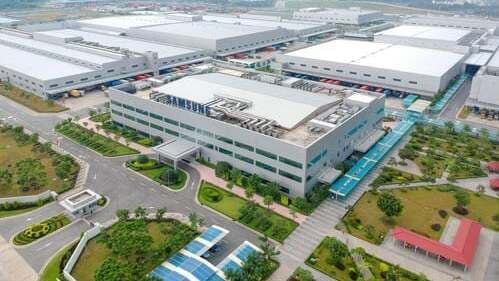
Industrial real estate is widely viewed as a breakout segment in 2026, not only due to strong demand but also because of the potential for asset value gains as logistics infrastructure and regional connectivity improve.
While traditional housing remains a core focus, many developers are reallocating part of their investment to faster-growing segments.
In industrial real estate, demand for factories, warehouses and industrial parks continues to increase as foreign investors expand operations in Vietnam, particularly in manufacturing, logistics and high-tech industries.
In the resort property segment, southern provinces with coastal and tourism advantages are being identified as promising markets. Integrated resort developments with high-end services and coastal urban projects are expected to attract substantial investment flows in 2026.
For residential property, the main objective is to meet real demand. Developers are increasingly focusing on affordable and lower-priced housing to match the purchasing power of most urban residents, especially in major cities such as Hanoi and Ho Chi Minh City.

Challenges remain
Despite the positive outlook, analysts and companies alike see significant challenges ahead.
First is tighter credit policy. The State Bank of Vietnam has lowered overall credit growth targets to manage systemic financial risks, particularly in sectors prone to asset bubbles such as real estate. This has pushed up funding costs and requires developers to adopt more flexible capital-raising strategies.
Second, a more transparent regulatory environment - covering project approvals, sales conditions and customer protection - while positive in the long term, is placing short-term pressure on project timelines.
Third, as the market is reshaped, smaller developers must enhance competitiveness through technology adoption, cost optimization, and product innovation. The use of technology in management, marketing, and transactions is emerging as a key trend to improve efficiency.
Overall, 2026 marks the start of a new phase for Vietnam’s property market, with a longer-term vision focused on stability and meeting genuine housing needs. Developers - from large players with strong land banks and finances to smaller firms - are adjusting strategies to fit the new landscape.
Ambitious revenue and profit targets reflect optimism about market potential, but analysts say the key challenge will be balancing growth ambitions with sustainable development, while avoiding overly dispersed investment.