VIETNAM CHAMBER OF COMMERCE AND INDUSTRY
Liên Đoàn Thương Mại Và Công Nghiệp Việt Nam
Mon, Apr 06, 2026, 11:05:00
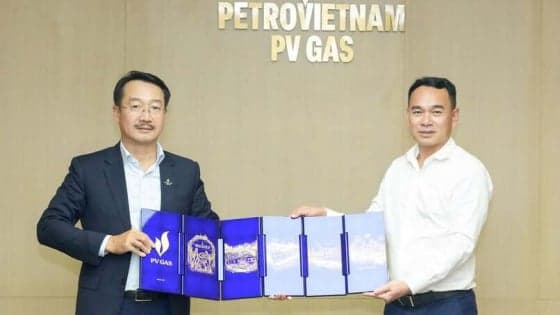
The deals, signed on Friday, mark a concrete move toward establishing an integrated LNG ecosystem, with PV Gas - a subsidiary of state-owned giant Petrovietnam - positioned at the center of the value chain spanning imports, storage, regasification and downstream distribution.
The agreements cover two key components.
Under a framework deal with EVN, PV Gas will supply regasified LNG from its planned Vung Ang Terminal (Ha Tinh province) to the Quang Trach power complex (Quang Tri province) in central Vietnam, including Quang Trach 2 and Quang Trach 3. Gas deliveries are scheduled to begin from April 2029.
 Nhon Trach 4 LNG power plant in Dong Nai province, southern Vietnam. Photo courtesy of Dau Tu (Investment) newspaper.
Separately, PV Gas signed an addendum to a long-term LNG sales contract with PV Power - another Petrovietnam subsidiary - to supply fuel for Nhon Trach 3 and 4, Vietnam’s first LNG-to-power project. The contract spans 25 years, providing visibility over fuel supply for the plant’s operations.
The agreements come as Vietnam faces declining domestic gas output and rising electricity demand, increasing the urgency of securing alternative fuel sources.
In central Vietnam, PV Gas is developing the North Central LNG Terminal at the Vung Ang Economic Zone (Ha Tinh province) designed as a large-scale hub supplying multiple power plants and industrial users.
The project’s first phase will have a capacity of one-three million tons of LNG per year, with total investment estimated at around VND26.7 trillion ($1.01 billion). It will span about 53 hectares of land and 426 hectares of water surface, with operations expected to begin between 2029 and 2030.
Beyond supplying Quang Trach 2 and 3, the terminal is intended to serve other projects such as Vung Ang 3 power plant and potential industrial customers, forming the backbone of a broader energy-industrial cluster in the north-central region.
By securing a 25-year LNG supply agreement, PV Gas and PV Power are establishing a fully integrated chain linking imported fuel to electricity generation. The project is expected to serve as a template for future LNG developments as Vietnam scales up gas-fired capacity.
Addressing the signing event, EVN general director Nguyen Anh Tuan said the agreements are critical for ensuring long-term fuel supply for LNG-fired power plants, particularly as domestic gas reserves decline and electricity demand continues to grow.
He added that LNG would play an increasingly important role in enhancing system flexibility, supporting renewable energy integration and maintaining grid stability.
PV Gas chairman Nguyen Thanh Binh described the agreements as a strategic step toward making imported LNG a primary fuel source for gas-fired power plants.
He said the EVN deal helps secure stable LNG offtake, reducing market risks, while the partnership with PV Power completes the supply chain for key power projects.
In a context of geopolitical uncertainty and tightening domestic gas supply, LNG is expected to account for a growing share of Vietnam’s energy mix, shifting from a supplementary role to a core component.