VIETNAM CHAMBER OF COMMERCE AND INDUSTRY
Liên Đoàn Thương Mại Và Công Nghiệp Việt Nam
Mon, Aug 04, 2025, 08:45:00
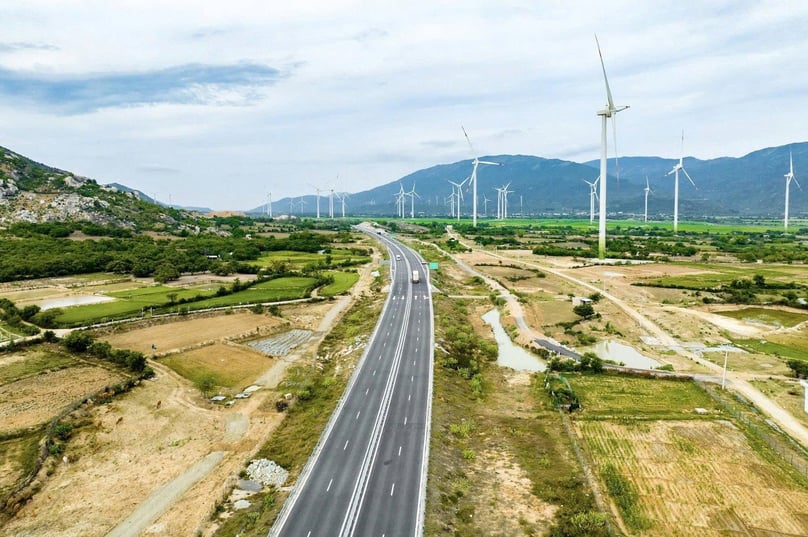
Deputy Prime Minister Tran Hong Ha recently chaired two meetings to assess investment plans for widening several sections of the expressway under the PPP framework. He tasked the Ministry of Construction with studying optimal, feasible solutions to avoid inefficiencies and waste.
While the Ministry of Finance and the Ministry of Construction generally agreed on the direction, they differed on investment phasing. Legal interpretations regarding the application of PPP in expanding state-funded projects also remain inconsistent.
Ha approved the construction ministry’s proposal to expand the entire eastern section. The ministry will collaborate with investors involved in three existing PPP sub-projects to explore expansion options.
For the remaining 15 public investment sub-projects, it will coordinate with relevant agencies to prepare investment plans under the PPP model.
The ministry must submit a detailed investment proposal to the Prime Minister by August 4, 2025, he said, adding that the report should outline the legal, economic, and political bases for the expansion, and propose an optimal investment scheme along with any special mechanisms or policies needed to expedite the implementation.
Should the expansion be carried out in phases, the ministry must provide clear explainations and a realistic implementation timeline to ensure the project is completed between 2026 and 2030, he demanded.
PPP investment helps reduce state budget burden
The North-South Expressway’s eastern section spans approximately 1,375 kilometers. Around 654 km, built between 2017 and 2020, are already in use. The remaining 721 km, constructed during 2021-2025, are scheduled for completion by 2026.
However, the limited width of some sections, with two or four lanes, has led to bottlenecks, safety concerns, and an inability to accommodate growing traffic demands driven by increased economic growth targets and updated national expressway standards.
In response, multiple private infrastructure developers have proposed expanding the expressway to six lanes under the PPP form. Advocates argue that this approach would ease pressure on the state budget, enhance private sector competitiveness, and ensure more efficient management of the state budget.
The construction ministry estimates that fully expanding over 1,200 km of the expressway’s eastern wing would require approximately VND152 trillion ($6 billion).
At its 2025 AGM in May, "tunnel king" Deo Ca Group chairman Ho Minh Hoang announced that the company had formally proposed to the Prime Minister an investment plan for over 1,100 km of the route, with a total cost of nearly VND152 trillion.
The group emphasized that PPPs could mobilize private capital and reduce fiscal strain while contributing to public revenues via toll collection and transparent auditing.
In June, Son Hai Group submitted a separate proposal to invest in upgrading 263 km of expressway from Hoai Nhon in former Binh Dinh province (now part of Gia Lai province after a merger) to Nha Trang in Khanh Hoa province under the PPP model, entirely with private capital. The company pledged to complete the project within 24 months and provide a 10-year maintenance guarantee.
According to the Vietnam Association of Road System Investors (VARSI), leveraging PPPs for major infrastructure projects such as the high-speed North-South railway and urban rail systems could free up state resources for projects in less-developed regions.