VIETNAM CHAMBER OF COMMERCE AND INDUSTRY
Liên Đoàn Thương Mại Và Công Nghiệp Việt Nam
Mon, May 22, 2023, 15:24:00
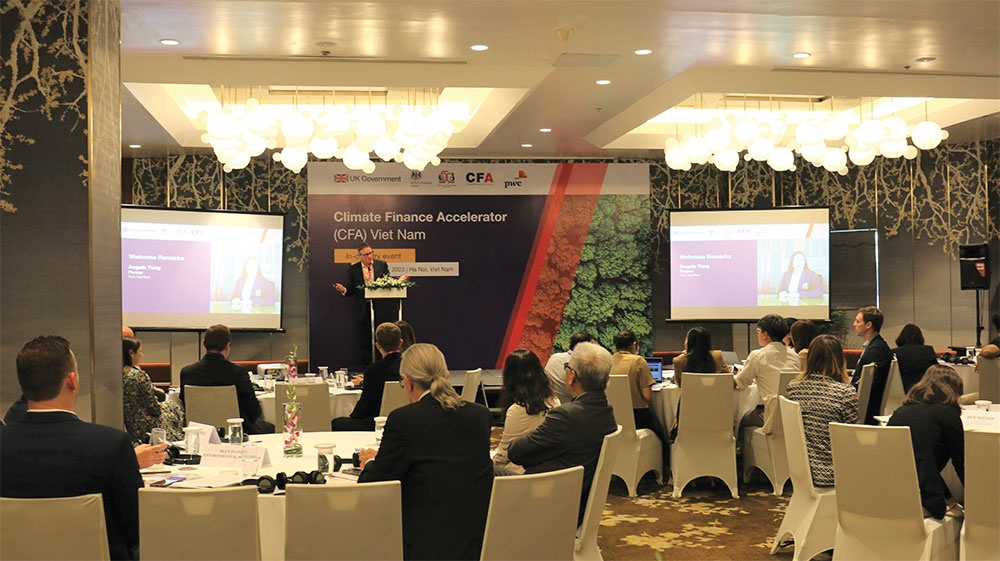
The programme (CFA), which has been supported by the UK government for several years, was launched by virtue of its early results. The initiative in Vietnam is being implemented by PwC Vietnam and the British Embassy.
| Variety of support on hand to boost green projects |
“The programme is about supporting private investors to mobilise capital in support of Vietnam delivering its Nationally Determined Contributions (NDCs). We focus on what we call bankable projects and support some of the most promising ones that meet the needs of the Vietnamese economy,” said Ian Milborrow, partner at PwC UK and CFA Global.
A call for proposals was launched in December last year. It targeted projects seeking between $5-100 million of capital, either equity or debt finance, and aligned to the objectives set out in Vietnam’s NDCs. Those that have the ability to scale and create a transformative impact on the economy were also prioritised. The programme received over 30 applications for support; nine projects were selected, covering eight different sectors, with a total investment requirement of over $500 million.
These projects underwent four months of capacity building in areas of financial and technical readiness, and environment, climate and social impact, delivered by Vietnamese and international experts.
Workshops took place over a period of two days earlier this month in Hanoi. The workshops saw the participation of 31 potential financiers, including international financial institutions, local banks, funds, and investment companies.
The nine projects received first-hand feedback and advice from the participants to strengthen their propositions in their journey towards investment. Milborrow hopes support will continue throughout 2023.
“We are looking for initiatives that are a bit more than ideas, or projects that have completed the first or second round of financing and are ready to take that milestone step,” Milborrow emphasised. “As per the requirements of UK government support for such activities, we want to support ventures that can deliver strong gender equality and social inclusion benefits. So, we ask our developers to articulate the nature of those impacts in the activities they are proposing.”
While the Vietnamese government has been accelerating the promotion of its green agenda, particularly in the last two years, green projects are still facing certain challenges in terms of financing, legal corridors, and market awareness.
According to Milborrow, some of these challenges are combining the attractiveness of local bank finance, perhaps at an attractive interest rate, and blending it with other sources of international capital or grant money to de-risk projects in their early stages. “Vietnamese banks are looking to build their own pipelines. But they need to get comfortable with the cash flows and risks of some of these climate finance initiatives,” he said.
Nevertheless, according to the global organising team, a distinctive factor is that Vietnamese projects are well positioned in a regional and global marketplace, even compared to other CFA countries that rely primarily on domestic finance. As Vietnam is already a market that has created a lot of excitement, Milborrow says, the key element now is in terms of building up the capacities of local commercial banks to increase their risk appetite. For the low-carbon projects, increased access to climate finance opportunities is the key reason for joining the programme.
Trung Pham, finance and operations director at Dat Bike, one of the nine ventures in CFA Vietnam’s current cohort, assessed that the programme is a great platform to help projects connect with funders, especially in the context of financing novel products in the market.
“While there’s no guarantee that we will find a financier, this initiative surely opens doors to new opportunities. It can either be new ideas in subsidising options or payment options to help customers. Either way, projects benefit,” Trung said.