VIETNAM CHAMBER OF COMMERCE AND INDUSTRY
Liên Đoàn Thương Mại Và Công Nghiệp Việt Nam
Wed, Sep 21, 2022, 08:34:00
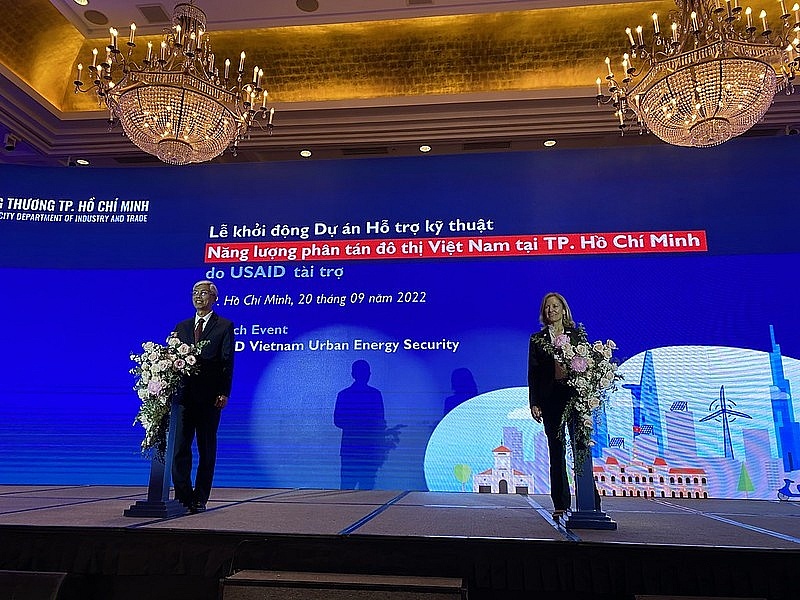
| The United States launches a $14 million project to help Ho Chi Minh City accelerate its green growth |
According to USAID's Vietnam Mission director Aler Grubbs, the US is at the forefront of supporting Vietnam’s transition to a clean, secure, and market-driven energy sector.
| “Through our latest energy project, we are proud to partner with Ho Chi Minh City to power its green growth through more renewable energy and energy efficiency solutions. Together, we will attract green investments that bring a cleaner environment and lower energy costs to residents and further cement Ho Chi Minh City’s role as a driver of Vietnam’s green economy,” said Grubbs. |
The US and Vietnam are approaching 10 years of comprehensive partnership, and this event demonstrates how the two countries work together to address a growing demand for cleaner and more reliable energy options.
The $14 million project, called USAID Vietnam Urban Energy Security, works with the Ho Chi Minh City and Danang to improve urban planning related to clean energy, mobilise investment, and integrate clean energy solutions into the power system.
These include rooftop solar, electric vehicles, and waste-to-energy solutions, along with other energy efficiency measures.
For Ho Chi Minh City, the project plans to deploy at least 400 megawatts of clean energy, mobilise at least $540 million in public and private investments, and take at least 15 innovative urban energy solutions to market.
This project builds on prior years of USAID assistance to Vietnam for its clean energy transition, according to USAID.
For instance, over the past five years, USAID's support for government regulators, banks, investors, and private sector developers has helped spur solar and wind investments in Vietnam totalling more than $300 million.
In addition, USAID supported the Vietnamese government in developing its Power Development Plan VIII, which sets the overarching vision and operating principles for Vietnam’s power sector from 2021 to 2030.
USAID also worked closely with the Ministry of Industry and Trade to develop minimum energy efficiency performance standards to reduce energy consumption in industrial production.