VIETNAM CHAMBER OF COMMERCE AND INDUSTRY
Liên Đoàn Thương Mại Và Công Nghiệp Việt Nam
Mon, Sep 07, 2026, 16:29:00
The amended Law on Maritime and Inland Waterways is open for public consultation before being submitted to the National Assembly this coming October. This law merges the maritime and inland waterway sectors for the first time, creating a unified legal framework that is expected to establish an integrated institutional foundation for the entire ecosystem—from rivers to the sea and from infrastructure to logistics.
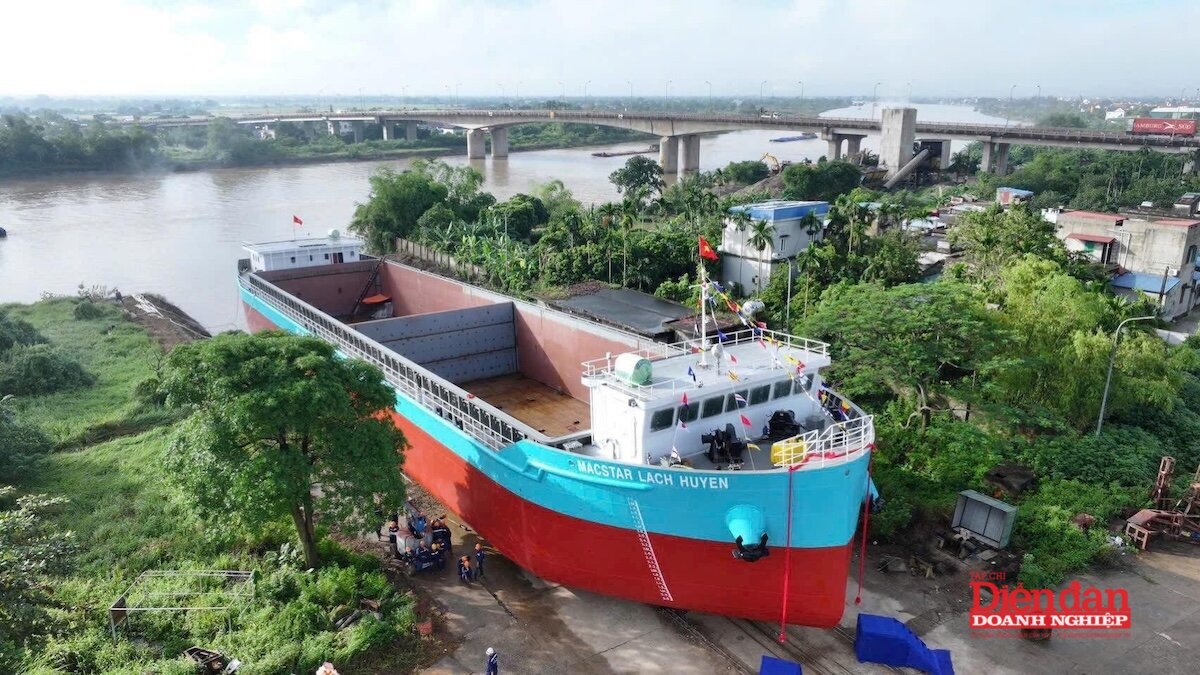
The draft amended law proposes tax and fee incentives to attract resources for shipbuilding industry development. Photo: Song Dao Shipbuilding Industry JSC
Experts and the business community emphasize the need for further review before submission to ensure that new policies effectively unlock resources and realize the goal of turning Vietnam into a strong maritime nation.
This requirement is increasingly urgent as central guidelines establish new directions for the national sea strategy. Resolution No. 20-NQ/TW dated July 28, 2026, marks a shift from mere resource exploitation and marine economic growth to comprehensive marine spatial development, identifying the maritime economy as a key pillar.
Earlier, Announcement No. 125-TB/VPTW dated July 18, 2026, on the conclusions of Party General Secretary and State President To Lam, stressed the requirement to develop a national maritime industry that is "Fast Enough—Strong Enough."
The Ministry of Construction is updating these central orientations into the draft law and other policies. Shipbuilding industry development is a critical strategy to enhance national maritime capabilities. The draft law proposes new provisions, including tax, fee, and investment incentives for shipbuilding enterprises to attract domestic and foreign resources.
Vietnam previously established a relatively synchronized system for shipbuilding and repairs capable of constructing large-tonnage vessels. However, prolonged restructuring challenges have prevented this capacity from being fully realized, while gaps remain in supporting industries. Associate Professor Dr. Pham Ngoc Linh, Vice President of the Vietnam Union of Science and Technology Associations, noted that although the shipbuilding sector—considered the backbone of the marine economy—has made significant restructuring efforts, it still faces challenges regarding capital, mastering high technologies, and attracting high-quality human resources for green and smart shipbuilding trends.
Meanwhile, as the economy expands rapidly, Vietnam's shipping fleet currently handles only about 5–8% of the import-export transport market share. Reliance on foreign shipping lines remains heavy on main long-haul routes to Europe, North America, and North Asia. Vietnam also lacks large-tonnage vessels to meet crude oil transport demands, continuing to rely heavily on external capacity for large and specialized ships.
Within the shipbuilding chain, local value creation is estimated at only 20–30%. Domestic materials, components, and equipment account for roughly 10–15%, while high-value items such as engines, propulsion systems, electrical-electronic systems, automation, specialized steel, and maritime equipment remain heavily dependent on imports.
According to Associate Professor Dr. Vu Ngoc Khiem, Chairman of the Vietnam Shipbuilding Industry Science and Technology Association (VISIA), Vietnam retains many capable enterprises and technical facilities in shipbuilding, mechanics, automation, logistics, and supporting industries. This forms an important foundation to continue restructuring, innovating technology, and exploring new growth avenues. The priority is not merely growing individual enterprises, but building a spirit of connectivity, cooperation, and mutual development across the entire sector.
Consequently, ecosystem-based thinking is being incorporated into the draft law. For the first time, the shipbuilding industry is assigned a dedicated chapter covering policies from research, design, new construction, and repair to supporting industries, human resources, and life-cycle services.
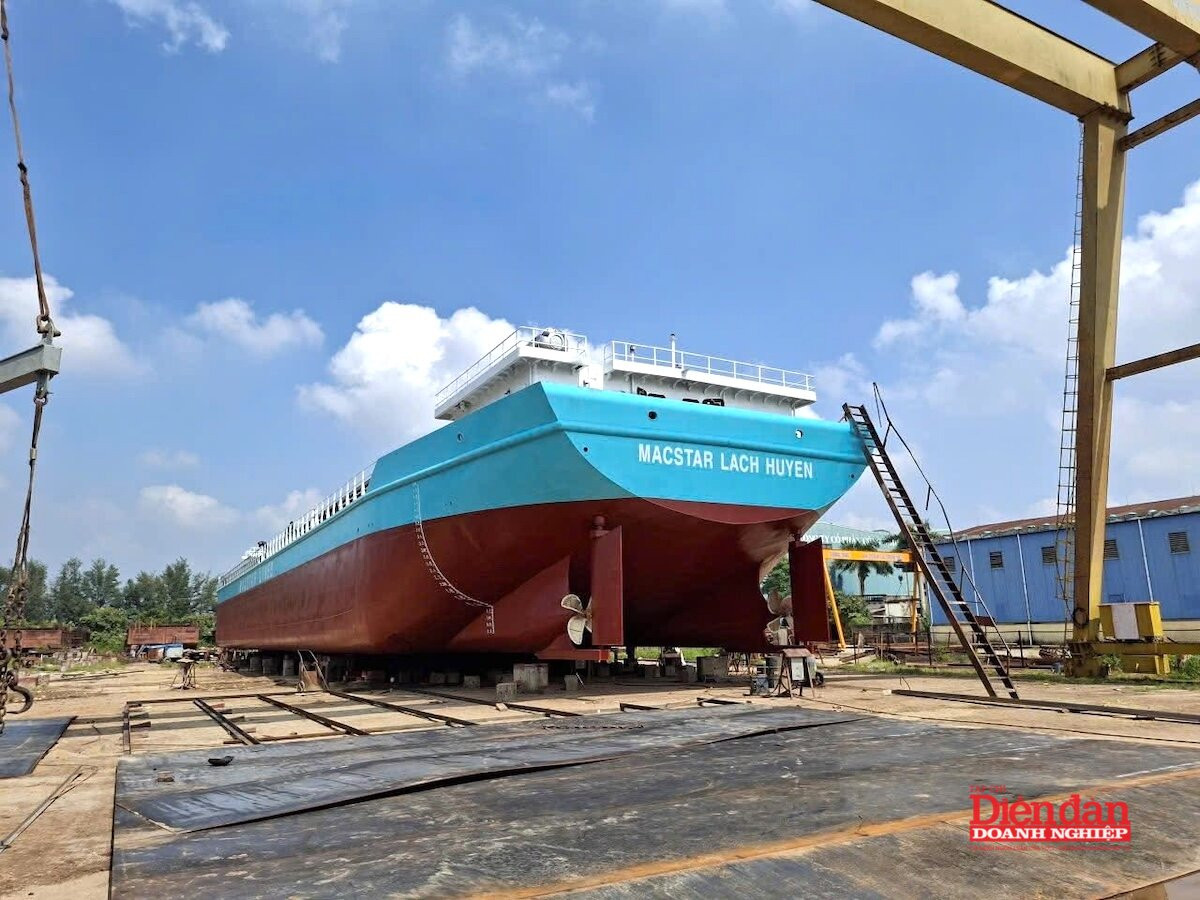
To increase local value creation, the shipbuilding industry must develop through ecosystem thinking. Photo: Song Dao Shipbuilding Industry JSC
Dr. Pham Hoai Chung, Vice Chairman of VISIA, emphasized that to increase locally mastered value, shipbuilding must evolve through ecosystem thinking—aligning construction and repair capabilities with shipowner needs and market demand, while advancing domestic design, technology, supporting industries, and supply chains. As all links develop together, shipbuilding capacity will translate into industrial capability, increasing localization rates and Vietnam's value share.
Concurring with this view, former Deputy Minister of Transport Nguyen Nhat noted that translating ecosystem thinking into operational capacity requires resolving industrial spatial planning. Actively planning industrial zones and clusters in key regions creates sufficient scale to attract investment. The state does not replace businesses, but it must provide spatial development, mechanisms, policies, and a favorable investment environment to drive supporting industries, equipment, and technical services.
From a business perspective, Mr. Nguyen Tien Dat, Deputy General Director of the Shipbuilding Industry Corporation (SBIC), stated that shipbuilding development can become a new growth engine, directly contributing to Vietnam's two-digit economic growth targets in the coming period.
Integrated into broader policies on fleet development, science and technology, and investment mobilization, the draft law's provisions aim to connect production capacity with transport, logistics, and maritime service needs, facilitating industrial clusters based on regional advantages. This approach steadily concretizes the strategic goal of enhancing marine economic self-reliance outlined in Resolution No. 20-NQ/TW and the directive for "Fast Enough—Strong Enough" maritime industry development.