VIETNAM CHAMBER OF COMMERCE AND INDUSTRY
Liên Đoàn Thương Mại Và Công Nghiệp Việt Nam
Mon, Jul 18, 2022, 15:36:00
| Top groups carving out new spaces |
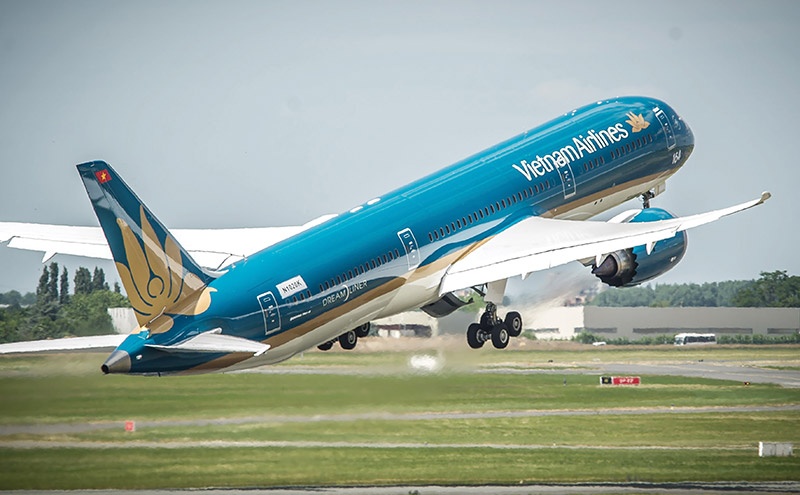
At a meeting held two weeks ago between the Ministry of Planning and Investment (MPI) and business associations in Vietnam, Bui Kim Thuy, a representative from the US-ASEAN Business Council, revealed that the world’s largest aerospace manufacturer Boeing is planning to build an aviation hub in Vietnam.
“They highly appreciate updated and favourable policies of Vietnam. The group has been working closely with Vietnamese authorities to enable this country to become a manufacturing hub, not only in the region but also one of the best and cut-edge ones in the world,” said Thuy.
The plan expects to significantly contribute to levelling up the aviation industry of Vietnam and lure dozens of manufacturing suppliers of Boeing to Vietnam, according to Thuy.
Last August, Boeing opened its first representative office in Hanoi to support the group’s growth objectives across its commercial aeroplane and services businesses.
In 2007, Boeing supplier MHI Aerospace Vietnam opened an aeroplane-related manufacturing facility in Hanoi. In 2014, MHI delivered the 1,000th set of 737 inboard flaps produced in Vietnam and also celebrated its investment in a newly-expanded facility. Boeing 777 and 777X doors are also assembled at this facility. And over a decade ago, Nikkiso Japan also opened a facility near Hanoi producing Boeing components.
Boeing considers Vietnam as an important market in Asia-Pacific, which is deemed the fastest-growing region in the world for air travel. Boeing continues to work with Vietnamese customers to identify the best solutions to their current and future fleet needs based on their strategies for growth and maintenance, according to Boeing Southeast Asia.
Along with Boeing, global tech giant Google is also mulling over plans to cultivate its projects in Vietnam. Currently, Google is considering moving orders for future smartphones to Vietnam to avoid risks posed by China’s pandemic lockdown, and ongoing trade tensions between the United States and China, according to DigiTimes of Taiwan.
Google was originally reported to be planning to produce its smartphones in Vietnam. However, it ultimately decided to keep its production in China due to a combination of the pandemic coupled with the strong support provided by Chinese supply chains.
However, the lengthy pandemic lockdowns in China have prompted the tech giant to reconsider, because the demand for the Pixel 6 phone in the North American market is increasing sharply. The Google Pixel 7 is also in production, but it will still be built in China as it is similar to the previous model, the Taiwan report said. In the meantime, the tech giant will transfer a small number of orders to Vietnam for testing. The production line for Google’s new smartphones in Vietnam could be established after 2023 and will be responsible for new-generation models.
Taiwanese-backed Foxconn’s wholly-owned subsidiary FIH, together with Taiwan-based Compal Electronics, are the primary manufacturers of Google’s Pixel line of smartphones. Both FIH and Compal already have factories set up in Vietnam and will be able to meet Google’s demand at any time.
Last month, Nikkei Asia revealed Apple’s plan to move some iPad production out of China and begin to operate in Vietnam after strict lockdowns in and around Shanghai led to months of supply chain disruptions.
China’s BYD, one of the leading iPad assemblers, has helped Apple build production lines in Vietnam and could soon start to produce a small number of the iconic tablets in the country, according to several insiders.
The iPad will become the second major line of Apple products to be made in Vietnam, following the AirPods earbud series. The move highlights both Apple’s continuous efforts to diversify its supply chain and the growing importance of Vietnam to the tech giant. To date, Apple has relocated 11 factories in the supply chain to Vietnam, with numerous suppliers like Foxconn, Luxshare, Pegatron, and Wistron scaling up facilities in this country.
Oliver Massmann, general director of Duane Morris Vietnam LLC, said in May, “Vietnam now has the human resources, technology, government support, and foreign investment to become the next global factory. The country has grown so fast, economically and politically, in the last five years, that in five years to come, we may see something we wouldn’t even be able to foresee today.”
With new big high-tech investments set to take root in Vietnam, the government is looking at creating new incentives to attract investors, in addition to improving the domestic business and investment markets.
“The government will continue boosting administrative reforms and remove as many improper business and investment obstructions as possible to help the country attract more investments,” said Prime Minister Pham Minh Chinh at the June cabinet meeting on the country’s 6-month socioeconomic review.