VIETNAM CHAMBER OF COMMERCE AND INDUSTRY
Liên Đoàn Thương Mại Và Công Nghiệp Việt Nam
Tue, Dec 06, 2022, 07:19:00
How important is sustainable development to the Vietnamese economy and to the domestic business community?
We need to break down the concept of sustainable development. For the United Nations, we work with governments around the world to implement the Sustainable Development Goals (SDGs). These include all aspects of development, for people and the planet. The SDGs recognise that ending poverty and other deprivations must go hand-in-hand with strategies that improve health and education, reduce inequality, and spur economic growth – all while tackling climate change and working to preserve our oceans and forests.
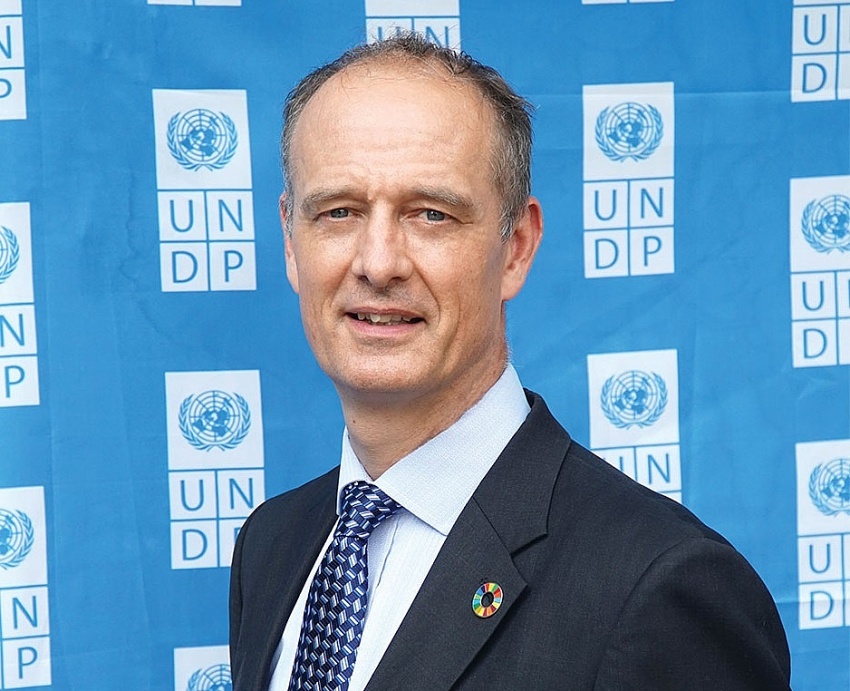
| Patrick Haverman, deputy resident representative of the United Nations Development Programme in Vietnam |
In the context of Vietnam, sustainable development needs to achieve the objectives of stimulating economic development and achieving an environmentally sustainable growth. For the domestic business community, support has to be provided for them to deepen their capabilities to participate in global value chains.
Global consumers are increasingly demanding for more sustainable production methods, greener packaging and logistics, and better working conditions. There are several issues to be considered: capacity building, technology for cost-effective production, and market information. Each area requires a different set of interventions, and the Vietnamese government can support businesses through enabling policies that encourage sustainable business practices.
What opportunities and challenges are there for businesses to pursue sustainable development?
There are numerous opportunities for businesses to pursue sustainable development. These range from sustainable production methods, such as smart agriculture, water conservation, and use of renewable energy, to business ideas that help improve health and education services for people.
We have worked on an initiative called SDG investor mapping. This is essentially a map of potential investment opportunities that are both commercially viable and help deliver the SDGs. We have mapped this for Vietnam and hope to reveal the results soon.
In terms of challenges, there are many. However, sometimes businesses are driven more by profit than the need to be sustainable. Being sustainable can sometimes be expensive for businesses. However, in the medium term, being sustainable will bring more opportunities, as global demand becomes more and more aware of the issue of sustainability, I would encourage businesses present here today to factor sustainability into their bottom line.
The United Nations Development Programme (UNDP) has been strongly boosting cooperation with the Vietnamese government, ministries, and localities nationwide in deploying sustainable development activities including environmental, social, and governance (ESG) criteria. What experiences can you share?
Our work in Vietnam goes beyond ESG. Our activities all share a common objective: to help the Vietnamese government achieve Agenda 2030. We work across three main areas: deliver inclusive growth, increase participation and governance, and climate change.
Throughout these three pillars, we integrate sustainability. For example, with the support from the Canadian government, we work with social impact businesses to create jobs for vulnerable groups including women, people with disabilities, and ethnic minorities, or to develop products and services for these groups.
With the support from the Japanese government, we work with the Vietnam Chamber of Commerce and Industry to promote responsible businesses and human rights in Vietnam. With support from the Green Climate Fund, we implement projects that promote smart agriculture, better water management, and nature-based solutions.
What are the upcoming sustainable development/ESG plans that the UNDP will continue to implement in Vietnam?
In addition to the aforementioned examples, we are actively supporting the Vietnamese government with the energy transition. We were pleased to cooperate with VIR in July this year on an important roundtable on financing and governance accelerators for the energy transition.
This is an important topic for the short term and the long term. For Vietnam to achieve net-zero carbon emissions as committed, the country needs to go beyond greening the energy sector. It needs to make sure that other industries are also greening themselves and becoming more sustainable. For example, transportation must be more energy efficient; construction needs to be using more sustainable materials and agriculture has to be more regenerative. All sectors must work together.
Therefore, the role of the government is vital in coordinating and spearheading the sustainable initiative. The government is in a perfect position to create a consensus among sector ministries to join a common objective of sustainable development.