VIETNAM CHAMBER OF COMMERCE AND INDUSTRY
Liên Đoàn Thương Mại Và Công Nghiệp Việt Nam
Tue, May 26, 2026, 15:26:00
Counterfeit textbooks seriously affect educational ecosystem
Nguyen Chi Binh, deputy general director of Vietnam Education Publishing House (VEPH), stated that counterfeit textbooks not only cause economic losses to publishers but also seriously impact the entire educational ecosystem.
“Counterfeit textbooks infringe intellectual property rights, undermine authors’ motivation for creativity, reduce state budget revenues, and disrupt the publishing market. Even minor errors in symbols, content, or data can lead to misunderstandings and have long-term consequences for learners,” he said.
In reality, counterfeit books are becoming increasingly sophisticated and difficult to identify with the naked eye. Many parents, driven by cost-saving concerns or lack of information, unintentionally purchase low-quality books, resulting in both financial loss and negative educational consequences, Binh added.

According to the executive, for publishers in general and VEPH in particular, counterfeit books cause direct economic damage and reduced revenues because such publications are often sold at high discounts since they do not incur costs such as copyright fees, pilot teaching programs, promotional activities, or training courses.
Beyond economic losses, counterfeit textbooks seriously damage the reputation and brand of VEPH due to poor printing quality and errors in content and presentation, he noted.
Teachers and students are also unable to access digital learning materials provided by the publisher. Readers who unknowingly purchase these publications may lose trust in the overall quality of books.
To deal with this situation, VEPH leaders believe that improving the legal framework is one of the key solutions to addressing the problem at its root. However, legal measures alone are not sufficient; coordinated efforts from authorities, businesses and society as a whole are also required.
To raise public awareness, especially among teachers, parents, and students, regarding how to identify genuine and counterfeit textbooks, Binh said the publishing house has implemented a range of measures.
First, it has strengthened communication and awareness campaigns about the harmful effects of counterfeit and pirated books through exhibitions demonstrating how to distinguish genuine books from fake ones.
Second, VEPH has regularly sent staff to training programs on anti-piracy measures and seminars on combating counterfeit and pirated books.
Third, through the publisher’s communication channels and other mass media platforms, the publisher has advised teachers, parents, and students to purchase books from its official distribution system and authorized local school equipment and book companies, rather than from unverified sources in the market, in order to avoid counterfeit and pirated books.
Stronger penalties needed for printing and distributing counterfeit books
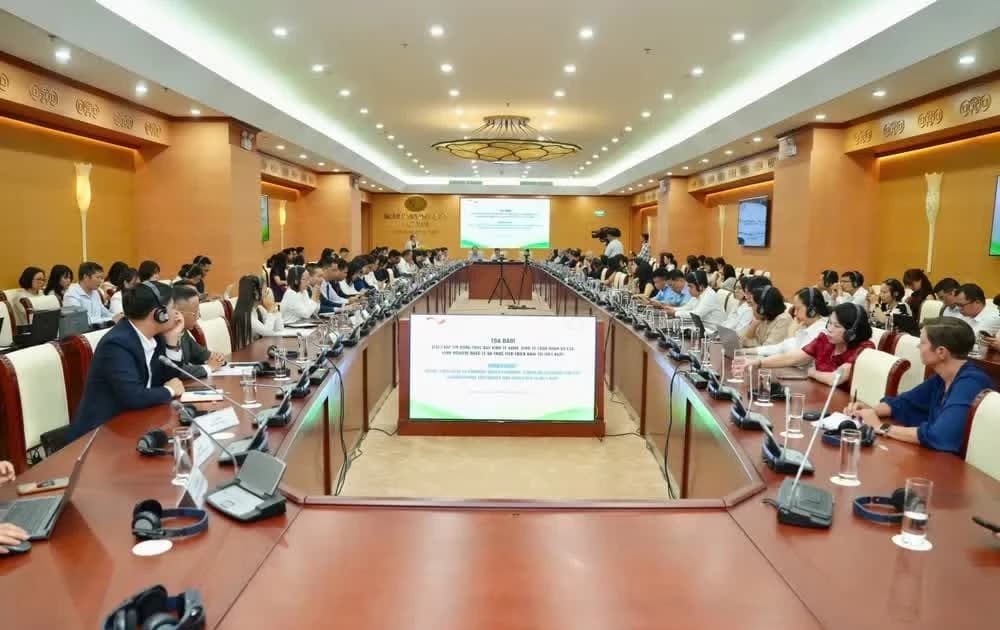
From a legal perspective, lawyer Nong Thi Tho, director of VITAM Law, observed that current regulations still contain certain loopholes, particularly regarding the control of book trading activities in the digital environment.

Coordination between authorities and e-commerce platforms has not been truly effective, allowing many infringing products to remain available.
According to the lawyer, penalties for printing and distributing counterfeit books should be increased, and criminal liability should even be considered for serious or organized violations. “Clearer regulations are needed regarding the responsibilities of e-commerce platforms in reviewing and removing infringing products to prevent them from becoming distribution channels for pirated books,” she said.
Technological solutions should also be implemented to help identify genuine and counterfeit books, such as anti-counterfeit labels and QR codes for traceability. However, these measures can only be effective when accompanied by improved consumer awareness, Tho added.