VIETNAM CHAMBER OF COMMERCE AND INDUSTRY
Liên Đoàn Thương Mại Và Công Nghiệp Việt Nam
Fri, Oct 23, 2020, 00:05:00
The total registered investment capital abroad of 23 state-owned enterprises and enterprises with dominant state capital is US$12.2 billion, and they have disbursed more US$6.1 billion. In 2019, there was a loss of US$154 million and in 2018 the loss was US$352 million.

23 State-owned enterprises are investing in 123 projects abroad.
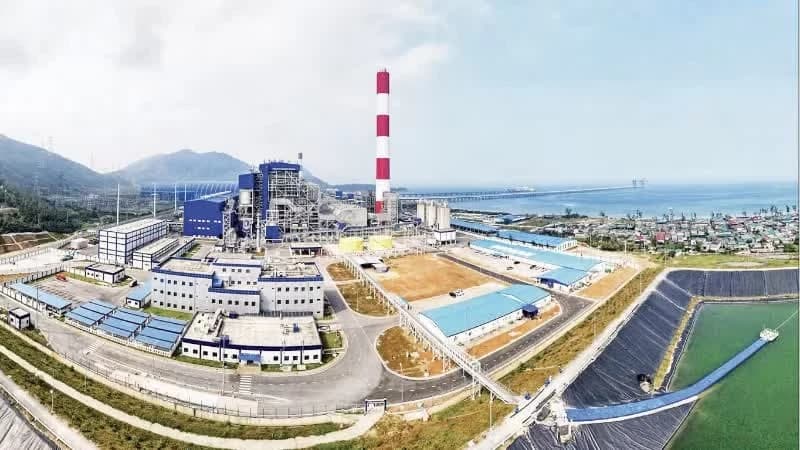
Photo: Internet.
PVN takes the lead
There are remarkable numbers in the Government's report on the implementation of the National Assembly's resolutions related to the completion and acceleration of the implementation of policies and laws on the management and use of capital and assets of state-owned enterprises and SOE equitization.
Accordingly, as of December 31, 2019, there were 23 SOEs and SOEs dominated by state capital withinvestment projects abroad, implementing investments in 123 projects, mainly focusing in the telecommunications field, exploration and exploitation of oil and gas, planting rubber trees, exploiting minerals and aviation.
The total registered capital for outward investment is US$12.2 billion, of which the three largest investment groups include: Vietnam National Oil and Gas Group (PVN) with US$6.8 billion (accounting for 56%), Military Telecom Industry Group (Viettel) with nearly US$3 billion (accounting for 25%), Vietnam Rubber Industry Group (VRG) withUS$1.4 billion (accounting for 12%).
In 2019, enterprises with outward investment capital totaled US$273 million, mainly concentrated in three enterprises with a large amount of offshore investment (PVN was US$72 million; Viettel was US$188 million and VRG was US$13 million).
As of December 31, 2019, the total outward investment capital of enterprises was US$6.1 billion (equal to 50.47% of the total registered outward investment capital); the remaining amount to continue to invest abroad is more than US$6 billion.
Of which, the enterprise accounting for the largest proportion is PVN with accumulated overseas investment capital of US$3.1 billion (accounting for 51%), Viettel ranked secondwith US$1.8 billion (accounting for 29%). VRG ranked thirdwith US$936 million (accounting for 15%).
Regarding the recovery of investment capital and remittance of money, the Government's report said that in 2019, for overseas investment projects that have been reported, the remittance amount is US$434 million, concentrated mainly in PVN (US$300 million) and Viettel (US$114 million). Of which, income from profits and dividends are distributed and interest on loans is US$234 million.
To December 31, 2019, nine enterprises had revenues from overseas projects transferred back to Vietnam with the amount of nearly US$3 billion, equaling 48.6% of the implemented investment capital.
In 2019, losses incurred US$154 million
The Government's report shows that, as of December 31, 2019, there were 19 SOEs and state-owned enterprises with overseas investment projects that have production and business activities with revenue and total revenue in 2019 of overseas projects were estimated at US$7.18 billion. Of which, main revenue is from the industries including oil and gas, petroleum trading, telecommunications, rubber planting and processing.
In 2019, the total profit of foreign investment projects reached US$583 million, equaling 107% compared to 2018 (US$548 million).
Meanwhile, the total losses incurred in 2019 of offshore investment projects reporting a loss was US$154 million, equaling 45% of the total losses in 2018 (US$352 million).
According to the Government's assessment, the telecommunications, oil and gas business, and oil and gas services are the fields with projects generating profits; the fields of oil and gas exploration, exploration, and exploitation have low interest rates (11% and 17%). Of which, the field of oil and gas exploration and prospecting has a high investment value but many projects are unsuccessful, stopped or rescheduled.
The Government also said that outward investment activities in 2019 compared to 2018 did not have many positive changes and did not meet investment expectations. Beside the objective reasons (such as politics, investment policies in the host country), the subjective cause is the issue of management capacity, risk management, market forecasting capacity and experience in offshore investment.