VIETNAM CHAMBER OF COMMERCE AND INDUSTRY
Liên Đoàn Thương Mại Và Công Nghiệp Việt Nam
Wed, Aug 26, 2026, 15:29:00
Against this backdrop, Keith Lee, cloud business director at Sangfor Technologies, and Jimmy Pham, country sales director at Sangfor Technologies Vietnam, share with VIR’s Linh Vy their perspectives on where Vietnam's AI infrastructure stands today.
 |
| Keith Lee, cloud business director at Sangfor Technologies |
Lee brings over a decade of experience across cloud, HCI, storage and cybersecurity in international markets, with an increasing focus on helping enterprises build AI-ready infrastructure, while Pham brings an on-the-ground understanding of Vietnam’s enterprise technology landscape, including the infrastructure, security and deployment challenges organisations face as they scale AI adoption.
Vietnam has emerged as one of the region's fastest-growing AI markets, with adoption exceeding expectations in many sectors. Where do you see the country's most critical infrastructure issues today?
 |
| Jimmy Pham, country sales director at Sangfor Technologies Vietnam |
Pham: Vietnam is currently one of Southeast Asia's fastest-growing markets for digital and AI transformation with over 8 per cent growth in 2025. While it is not yet comparable with more mature markets such as Singapore and Malaysia, the pace of development is strong.
However, Vietnam remains at an early stage of its AI transformation journey. The immediate priorities are to centralise data, strengthen data security, and build knowledge bases that enable AI systems to learn from relevant organisational data and deliver practical applications.
Centralised, well-managed data is the foundation for effective AI deployment. Without it, even advanced AI infrastructure cannot operate efficiently. It is like driving a high-performance car on a poor road: the vehicle may be powerful, but the infrastructure limits its performance.
Data security is equally critical. Many enterprises remain cautious about using public AI platforms because they cannot expose sensitive corporate data to external systems. They therefore need secure environments in which data can be processed, and AI models deployed, without compromising confidentiality.
Apart from technicalities, cost is also very important factor. Many Vietnamese manufacturers export their goods to Middle East, Europe and American markets. Since 2022, Broadcom, the parent company of VMware, increased the prices for VMware licensing. These manufacturers are using VMware virtualisation, and increase in prices broke their backbone to remain sustainable on commercial aspect. That’s why enterprises look for VMware alternatives, and Sangfor is one of the best choices for VMware migration.
Power is another challenge, although it is not unique to Vietnam. AI servers and GPUs require significantly more electricity than traditional workloads. Rather than focusing solely on hardware investment, enterprises should also improve infrastructure utilisation. Optimising software and workloads can reduce both hardware and energy costs. For example, our ACI, cloud, and storage solutions have helped customers in education and healthcare reduce infrastructure costs by 30–50 per cent.
Compliance is also increasingly important, particularly for enterprises serving government and other highly regulated sectors.
Can Vietnam scale AI infrastructure without putting excessive strain on its power system or compromising energy security for other sectors?
Lee: Vietnam's power system could become a constraint given AI's high electricity requirements. However, available data suggests that the country has relatively strong power-generation fundamentals compared with many neighbouring markets and has made significant progress in renewable energy, particularly solar and wind.
Sangfor’s AI enabled cloud infrastructure plays very important role here. The key issue is not simply how much electricity is generated, but how AI infrastructure is designed and distributed. investors should avoid concentrating all AI data centres in a single location. Distributing high-availability infrastructure across different locations would provide greater resilience if one city experiences a power disruption.
Energy efficiency is equally important. Alongside renewable energy and storage, operators need to invest in advanced cooling technologies, particularly liquid cooling, while improving server utilisation. More efficient use of servers can reduce both power consumption and unnecessary capital expenditure.
Is cybersecurity keeping pace with AI investment, and which areas need the most attention in the coming years?
Pham: Cybersecurity needs to be considered from the beginning of the AI transformation journey. Once data is centralised, a ransomware attack can potentially compromise an organisation's entire data environment. At the same time, cybercriminals are increasingly using AI to automate scanning and attacks, making threats faster and more sophisticated.
Enterprises therefore must adopt a proactive approach to protecting their data. They should comply with government security requirements, implement appropriate security layers, and establish reliable backup and disaster-recovery systems.
Another important issue is the use of legitimate software and properly licensed systems. Sangfor has supported customers who were operating outdated systems or using unlicensed software and had limited awareness of cybersecurity risks. Once a ransomware attack occurred, recovering the data became extremely difficult. In numerous instances, attackers demanded significant payments, without any guarantee that the data would actually be restored.
What should organisations prioritise specifically when designing cybersecurity for AI infrastructure?
Lee: Four areas should be prioritised: protecting AI data, models and application interfaces; strengthening identity and access management; segmenting networks and systems; and establishing immutable backups and disaster-recovery capabilities.
Any data or interface exposed to the public should be protected by appropriate security gateways, including firewalls, endpoint security, and other cybersecurity controls. Organisations also need clear rules governing who can access specific models, applications, and datasets, with access-control and role-based permissions ensuring that users only have access to what they are authorised to use.
Network and system segmentation, both physical and virtual, is also important to prevent a breach in one part of the environment from compromising the entire system.
Finally, organisations need immutable backups and disaster-recovery capabilities. Cyberattacks can encrypt data or take critical systems offline, making the ability to restore operations quickly essential.
Cybersecurity should not be treated as an additional layer added after an AI platform has been built. It needs to be incorporated into the architecture from the outset. When we design AI platforms and data-centre infrastructure for customers, cybersecurity requirements are integrated into the overall architecture rather than treated as a separate component.
Where will Vietnam stand in the regional AI infrastructure race in the next two to three years, and what will determine whether it turns potential into competitive advantage?
Lee: Vietnam has a strong opportunity to emerge as a leading AI infrastructure market in the region, and Sangfor proudly contributes to the growth. The country has many of the building blocks required, including power, cooling, cybersecurity, and data-storage capabilities.
Vietnam’s 2025 growth rate is massive over 8 per cent. Multinational enterprises are growing rapidly, and they are facing global competition to stay profitable. Here Sangfor has very powerful market positioning. Our Hyperconverged Infrastructure is ideal VMware alternative, that reduces TCO by 50-70 per cent and our memory tiering reduces the DRAM costs by 40-49 per cent. Improving server utilisation can reduce both capital and energy costs, while secure storage and locally deployed infrastructure can help organisations manage the growing volume and sensitivity of AI-generated data.
Data sovereignty is also likely to become increasingly important as organisations seek to keep sensitive information within domestic or controlled environments rather than relying exclusively on public AI platforms.
Ultimately, Vietnam's ability to develop a competitive AI infrastructure ecosystem will depend on how effectively these elements are brought together. Building a secure, scalable, and high-performance AI environment requires hardware and data centres along with efficient power and cooling systems, strong cybersecurity, appropriate governance, quality data, and skilled professionals.
Pham: From our perspective, healthcare and education are two key sectors with significant potential to benefit from AI infrastructure.
In healthcare, Vietnam could make substantial progress towards smart healthcare over the next three years. Securely connected patient data could allow medical records and test results to be reused across hospitals, reducing unnecessary repeat procedures. AI could then analyse this data to support doctors and patients.
We have already seen cases where digital transformation reduced patient waiting times by at least 30 per cent, improving operational efficiency and enabling hospitals to serve more patients. So, using Sangfor’s solutions, healthcare industries stay more financially and technically efficient and can serve the patients with more efficiency. We consider this an opportunity to serve humanity.
Universities are also undergoing significant transformation. Beyond administrative digitalisation, they increasingly need infrastructure to support research and new technologies.
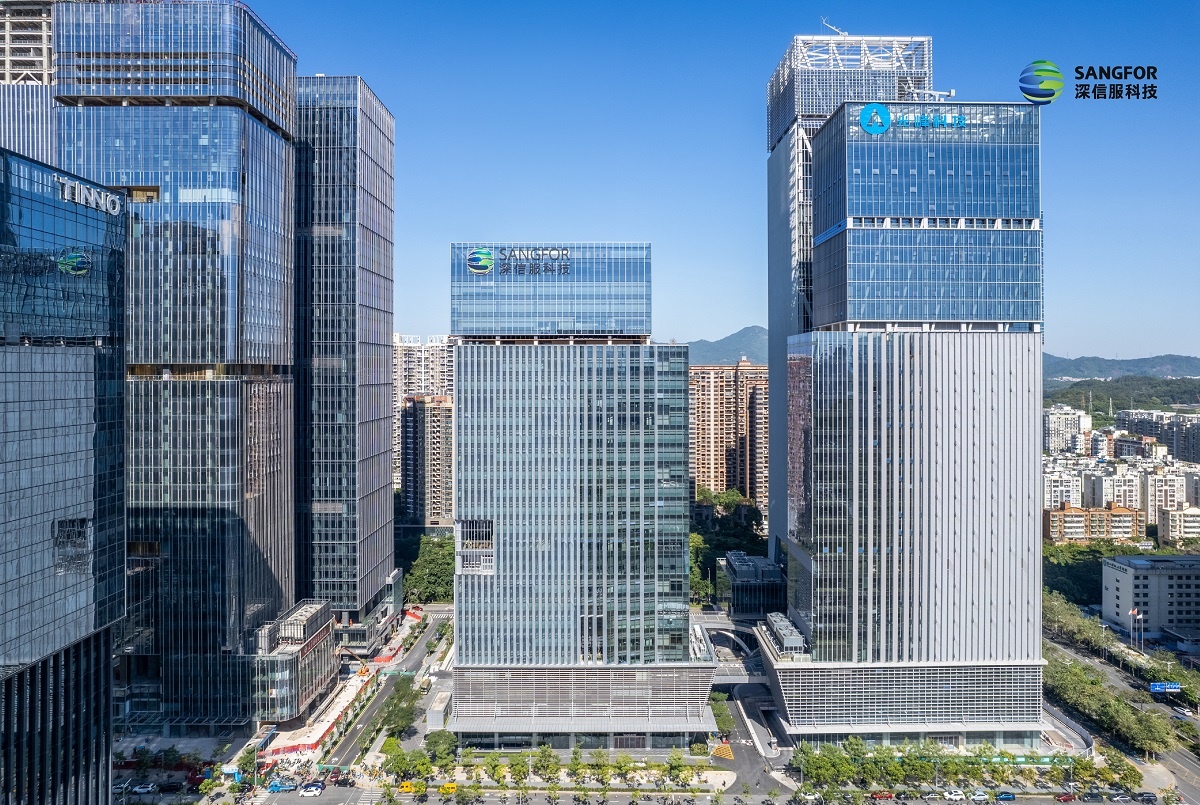 |
| Sangfor Techonologies supports organisations in moving beyond fragmented IT environments towards more integrated infrastructure that can simplify operations, strengthen security and scale with new digital workloads |
Sangfor’s main advantage is advanced technology, VMware similar architecture for easy VMware to Sangfor migration and benefitting 50-70 per cent in TCO, Memory Tiering feature that reduces 40-49 per cent of DRAM cost, integration with Veeam, Cohesity for Data backups and Disaster Recovery, Compliance, local on-premises cloud, fantastic support in local languages and many more.
Over the next three years, I expect further progress towards digital universities, including more integrated digital libraries and data systems.
Another important development could be greater data sovereignty. Vietnam has an opportunity to store more strategic data domestically and develop private AI environments rather than relying exclusively on public AI platforms.
| Sangfor Technologies has built more than two decades of experience across cloud computing, cybersecurity and enterprise infrastructure. Ranked among the world's top five hyperconverged infrastructure software vendors by revenue in Gartner's 2024 market share report, Sangfor has also built an extensive international presence across Asia-Pacific, Europe, the Middle East and Latin America. This exposure to different stages of cloud and infrastructure development gives the company a broader lens through which to assess Vietnam's readiness for the next phase of AI adoption. |