VIETNAM CHAMBER OF COMMERCE AND INDUSTRY
Liên Đoàn Thương Mại Và Công Nghiệp Việt Nam
Fri, Nov 29, 2024, 06:48:00
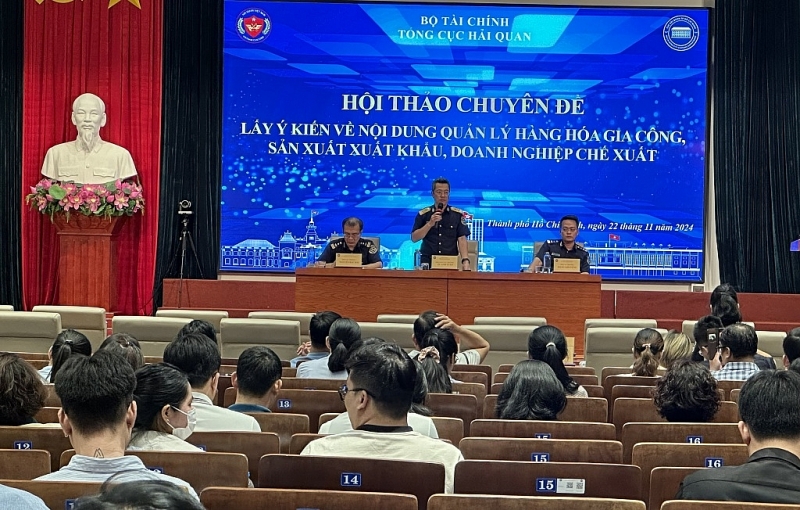 |
| Deputy Director General of Vietnam Customs Au Anh Tuan chaired the workshop. Photo: T.H |
On November 22, 2024, more than 300 enterprises participated in a specialized workshop in Ho Chi Minh City. The event, organized by the General Department of Vietnam Customs, focused on gathering feedback on proposed regulatory amendments for processing, EP, and EPE activities.
Deputy Director General Au Anh Tuan emphasized the vital role of these enterprises, citing statistics showing that processing, EP, and EPE activities account for 60% of Vietnam's total import-export turnover, significantly contributing to the economy and job creation.
The importance of this sector to the economy cannot be overstated. Through this workshop, we hope enterprises will carefully review the proposed amendments and provide practical feedback. This will ensure the changes both facilitate business operations and strengthen state management.
In response to challenges arising from outdated regulations, the drafting committee of the General Department of Vietnam Customs has prepared a draft decree amending Decree No. 08/2015/ND-CP and draft circulars amending Circular No. 38/2015/TT-BTC and Circular No. 39/2018/TT-BTC. These updates aim to address inconsistencies and align with international agreements to which Vietnam is a party.
Among the key proposals is the abolition of Article 35, Clause 1(c) of Decree No. 08/2015/ND-CP, which currently regulates transactions where Vietnamese enterprises buy goods from foreign entities without a physical presence in Vietnam. In such cases, foreign entities designate delivery or receipt within Vietnam.
During the workshop, Ms. Hoang Thi Thuy, Head of Supervisory Management Division 2 of the General Department of Vietnam Customs, provided an overview of the proposed amendments. She highlighted that the drafts have been widely shared with the business community for feedback.
Addressing concerns raised by businesses regarding the removal of Article 35, Deputy Director General Au Anh Tuan clarified the rationale behind the proposal.
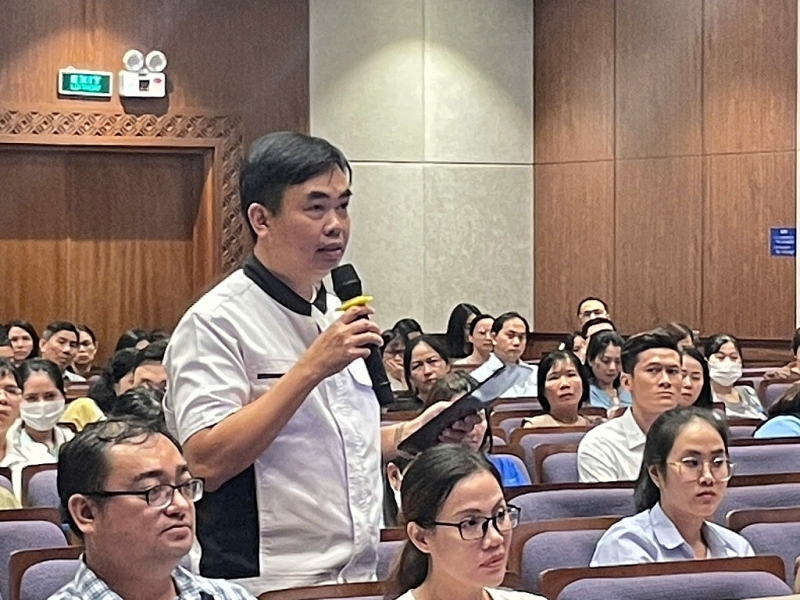 |
| Businesses give comments at the workshop |
He noted that the draft amendments had undergone evaluation by the Ministry of Justice and were submitted to the Government twice in 2021 and 2022. However, disagreements among ministries, particularly the Ministry of Industry and Trade and the Ministry of Justice, regarding legal grounds for "on-spot import-export" activities, delayed approval.
The General Department of Vietnam Customs reviewed the issue and found that existing laws such as the Commercial Law 2005, Law on Foreign Trade Management, and Decree No. 69/2018/ND-CP permit Vietnamese enterprises to engage in specific on-spot import-export activities, such as exporting or importing processed goods, leased or loaned machinery, surplus materials, and waste products.
However, the Customs Law 2001 and other laws do not address on-spot import-export activities related to goods purchased from foreign traders but delivered domestically.
Meanwhile on-spot import-export activities have been practiced since 1998 and were later incorporated into various decrees and circulars, inconsistencies remain between trade and customs laws versus tax regulations.
“In essence, on-spot import-export involves domestic transactions without moving goods across borders. Such transactions are essentially domestic sales and should be managed as such by local tax authorities rather than customs,” Tuan explained.
The Deputy Director General emphasized the need for a comprehensive evaluation of on-the-spot import-export practices to propose amendments that reflect the true nature of these transactions.
In addition to discussing on-the-spot import-export regulations, businesses provided detailed feedback on specific provisions related to processing and EP activities. Deputy Director General Au Anh Tuan affirmed that the General Department of Vietnam Customs would carefully review and address these contributions to refine the draft decree and submit it for Government approval by late 2024 or early 2025.
“This collaborative effort will ensure that the final amendments strike a balance between facilitating business operations and maintaining robust state management,” Tuan concluded.