VIETNAM CHAMBER OF COMMERCE AND INDUSTRY
Liên Đoàn Thương Mại Và Công Nghiệp Việt Nam
Mon, Mar 11, 2024, 08:17:00
According to the Ministry of Planning and Investment (MPI), the semiconductor industry has opened up many opportunities for all countries, including Vietnam, in terms of growth in demand and exports. Specifically, the development of new technologies such as artificial intelligence, autonomous vehicles, and Internet of Things (IoT) is creating a high demand for semiconductor components. Additionally, chip production can create significant export opportunities, especially when many countries are seeking secure and independent supply sources in the semiconductor field.
 |
| The Ministry of Planning and Investment is making a High-quality Workforce Development Plan until 2030 - photo: vnuhcm.edu.vn |
However, alongside opportunities, the semiconductor industry presents challenges for businesses and governments, including Vietnam. These challenges can be summarized in four areas:
1) High investment costs
Chip production requires significant investment, including specialized infrastructure and complex manufacturing facilities. In reality, building a chip fabrication plant can cost up to US$50 billion.
2) Fierce international competition
The semiconductor industry faces high competition, especially from China, the US, and Europe. These nations/regions have announced plans with investments ranging from US$50-150 billion in their chip sectors.
3) Technological challenges
The increasing complexity of semiconductor technology demands substantial investment in research and development (R&D) to maintain competitiveness.
4) High demand for highly skilled workforce
The semiconductor industry requires a workforce with advanced skills and expertise. Currently, Vietnam’s human resources are still in the early stages, with skills and qualifications not yet meeting the demands of businesses.
To ensure that the semiconductor industry in Vietnam develops to its full potential, the MPI is focusing on enhancing the quality of the workforce. Specifically, the ministry is making a High-quality Workforce Development Plan until 2030.
“The plan will provide a comprehensive overview of the workforce for Vietnam’s semiconductor industry, aiming to have 50,000 skilled workers in the sector by 2030. The goal is to ensure an adequate supply of workforce for domestic semiconductor businesses and also to export labor to other developed markets,” stated Minister of Planning and Investment Nguyen Chi Dung.
Alongside these efforts, the MPI has also established specific mechanisms and policies to attract and leverage foreign investment. The issuance of the Government’s Decree 94/2020/ND-CP, specifically for the Vietnam National Innovation Center, introduces policies and incentives for businesses within the innovation ecosystem. This includes semiconductor companies that wish to invest in the Vietnamese market. Under this decree, semiconductor businesses can enjoy various benefits, such as a corporate income tax rate of 10 percent for 30 years from the first year of revenue, tax exemptions for four years, and a 50 percent reduction in tax payments for up to nine subsequent years from the year taxable income is generated. Additionally, they are eligible for import tax exemptions on raw materials, supplies, and components that are not yet domestically produced for a period of five years from the start of production.
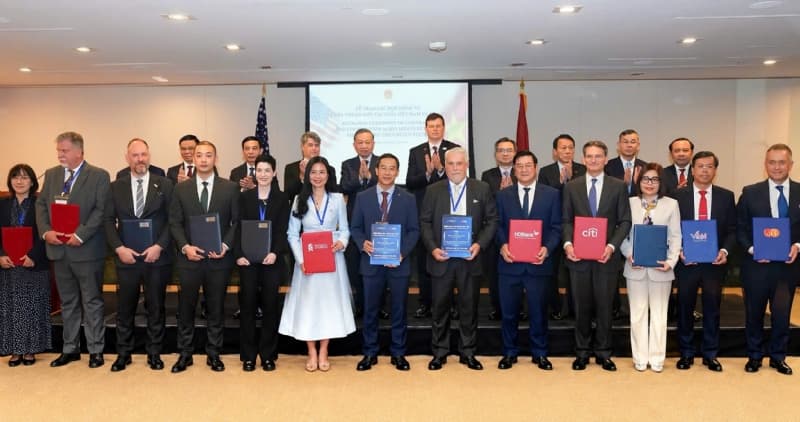
Vietnam has invested in the establishment of R&D centers to create a favorable environment for Vietnamese researchers and businesses to access new technologies. During his visit to the US in September 2023, Prime Minister Pham Minh Chinh witnessed the signing of a memorandum of understanding between the Vietnam National Innovation Center (NIC) and Cadence Design Systems and Arizona State University (ASU) to establish an incubation and integrated circuit design research center in the Hoa Lac High-Tech Park.