VIETNAM CHAMBER OF COMMERCE AND INDUSTRY
Liên Đoàn Thương Mại Và Công Nghiệp Việt Nam
Wed, Aug 06, 2025, 07:16:00
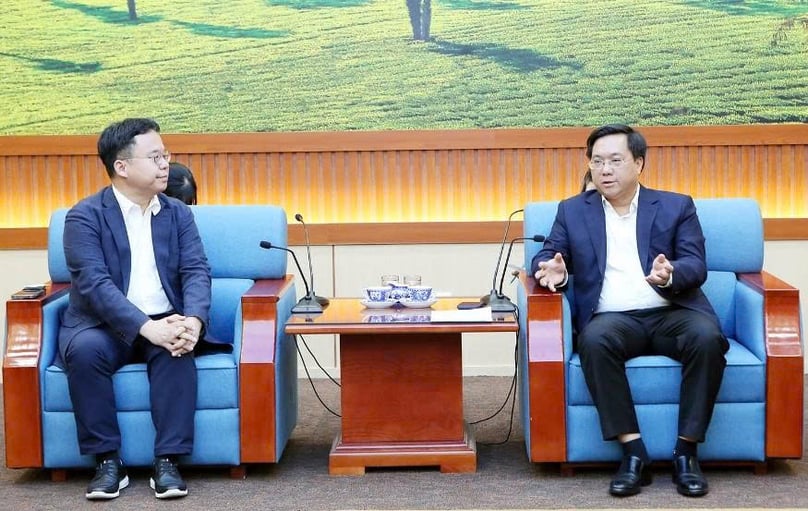
At a Friday working session with local authorities led by Chairman of the provincial People’s Committee Tran Duy Dong, Lee said his firm wants to partner with businesses involved in electric motorbikes and battery technology in Phu Tho province to develop a local electric two-wheeler (E2W) ecosystem and support efforts to reduce greenhouse gas emissions.
LGES is also focusing on developing partnerships in the field of artificial intelligence (AI), he added.
Vinh Phuc (home to Toyota and Honda plants and some of their suppliers), Hoa Binh, and Phu Tho were recently merged to form the new Phu Tho province, which borders Lao Cai, Ninh Binh, Son La, Thai Nguyen, Thanh Hoa, Tuyen Quang, and Hanoi.
Welcoming the Korean company’s intention, Dong instructed the province’s Investment Promotion and Support Center and Department of Finance to provide the most favorable conditions for its investment.
Founded in 1999, LGES was South Korea’s first lithium-ion battery manufacturer and is now the world’s second largest EV battery supplier with a 21.2% market share.
The company provides battery products to global automakers such as Ford, Chrysler, Audi, Renault, Volvo, and SAIC Motor, and supplies batteries to Tesla, General Motors, and Hyundai. It also manufactures batteries for laptops, smartphones, and smartwatches.
Phu Tho has planned a total of 57 industrial parks by 2030, covering nearly 13,400 hectares. As of end-2024, the province had attracted 720 FDI projects, primarily from South Korea and Japan, with total registered capital reaching approximately $12.5 billion.
Under a directive issued on July 12, Prime Minister Pham Minh Chinh asked Hanoi to ban gasoline-powered motorbikes from its downtown core starting July 2026, part of a sweeping plan to cut emissions and improve air quality.
The ban will apply to all fossil fuel-powered motorbikes and scooters operating within Ring Road 1, which covers the central districts, including Hanoi’s Old Quarter.
By 2028, the restrictions will expand to include gasoline-powered private cars within Ring Roads 1 and 2. By 2030, the city aims to restrict all personal fossil fuel vehicles inside Ring Road 3, which forms the outer ring of the capital and connects to major highways leading to neighboring provinces.
Meanwhile, Hanoi will roll out financial incentives for companies that build or assemble EVs.