
VIETNAM CHAMBER OF COMMERCE AND INDUSTRY
Liên Đoàn Thương Mại Và Công Nghiệp Việt Nam
Fri, Nov 20, 2026, 15:15:00
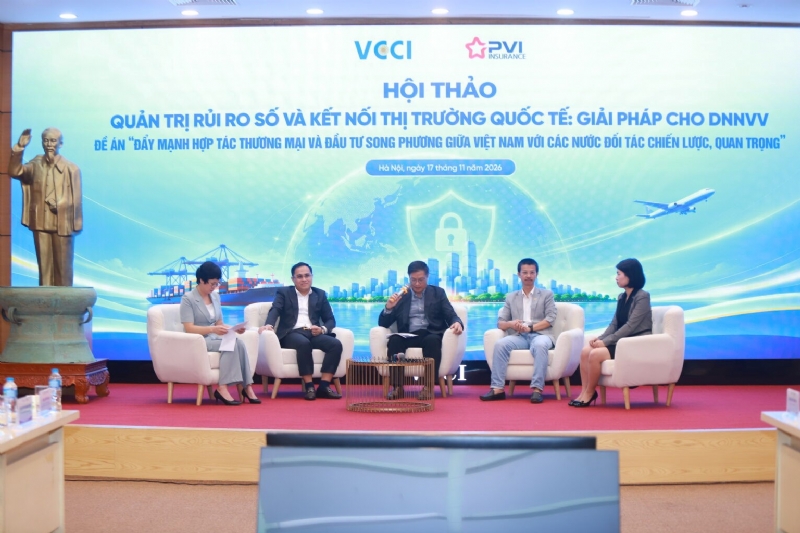
These were among the main issues discussed by experts at the seminar “Digital Risk Management and International Market Connectivity: Solutions for Small and Medium-sized Enterprises,” jointly organized by the Vietnam Chamber of Commerce and Industry (VCCI) and PVI Insurance Corporation (PVI Insurance) in Hanoi on November 17, 2026. The event attracted more than 100 businesses.

Overview of the event
As digital transformation becomes more widespread, data and technology are playing an increasingly important role in production and business operations. However, while digitalization creates opportunities to expand markets and improve operational efficiency, it also exposes businesses to new risks related to cybersecurity, data security and legal liability. Notably, these risks arise not only from targeted attacks but can also result from weaknesses in management procedures and businesses’ own technology use practices.
According to figures from the Vietnam National Cybersecurity Association presented at the seminar, Vietnam recorded approximately 552,000 cyberattacks in 2025. Among surveyed businesses, 52.3% reported financial losses from cyberattacks, while approximately 25.5 million accounts were exposed, up 76% from the previous year. These figures reflect the scale of cybersecurity risks, particularly for SMEs, which often have limited technological resources, few dedicated personnel and limited incident response capabilities.
Speaking at the seminar, Tran Thi Thanh Tam, Director of VCCI's SME Support Center, stressed that digital technology creates opportunities for businesses to reach customers, find partners and participate more deeply in global value chains. However, to make the most of these opportunities, businesses need to pay greater attention to data protection, risk control and building trust with partners.
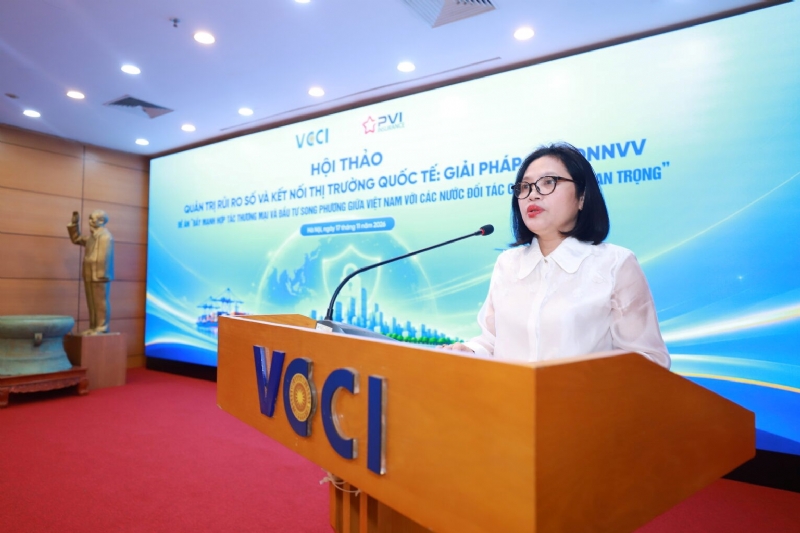
Tran Thi Thanh Tam, Director of VCCI's SME Support Center, speaks at the seminar
From a professional perspective, Ngo Viet Khoi, an information security and online risk training expert at Vietnam Data Security Joint Stock Company (VNDS), pointed out that some of the main weaknesses of SMEs lie in their personnel and management processes. Using personal devices for work, sharing login credentials without proper security measures, failing to manage user accounts and lacking incident response plans can all create vulnerabilities in data protection systems.
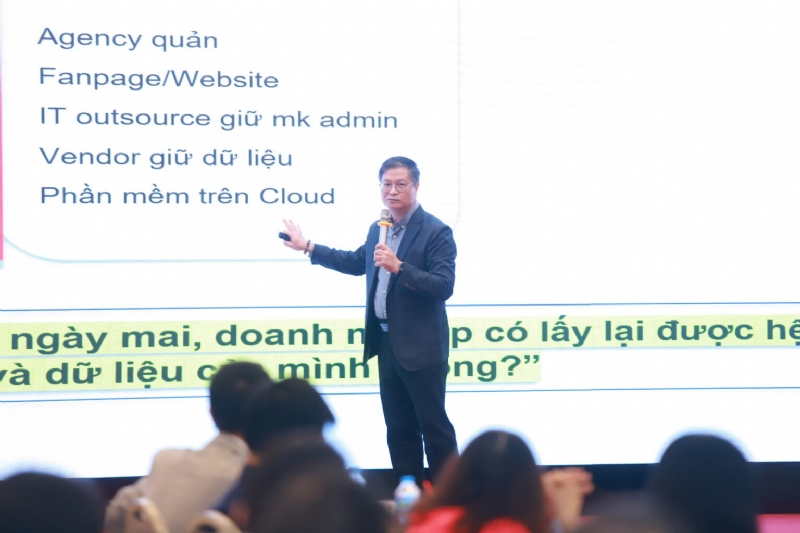
Ngo Viet Khoi from Vietnam Data Security Joint Stock Company (VNDS) delivers a presentation at the seminar
The rapid development of artificial intelligence also presents new challenges, as employees may use external AI tools for work without appropriate controls. Uploading customer information, internal documents or business data to these platforms may expose sensitive information beyond the company's control.
The discussions at the seminar showed that data protection is no longer solely the responsibility of the information technology department but must also be incorporated into corporate governance and management strategies.
Alongside technological risks, new legal requirements are also requiring businesses to improve their data management systems proactively. The Law on Personal Data Protection No. 91/2025/QH15, effective January 1, 2026, and the Law on Cybersecurity No. 116/2025/QH15, effective July 1, 2026, set out important requirements for information protection and cybersecurity.
At the seminar, Captain Nguyen Tien Duc, an officer of the General Advisory Division, Department of Cyber Security, Ministry of Public Security, discussed key considerations for implementing these laws, from reviewing information systems and determining security levels to assigning management responsibilities, controlling user accounts and developing incident response procedures. His presentation gave businesses further guidance on translating legal requirements into practical measures in their daily operations.
Beyond Prevention: Preparing Financial Resources for Digital Risks
One issue raised at the seminar was that even with investments in technology and security measures, businesses can hardly eliminate cybersecurity risks entirely. When an incident occurs, losses may go beyond data loss to include system recovery costs, business interruptions, crisis management expenses and legal liability to customers and partners.
From a financial risk management perspective, a representative of PVI Insurance Corporation said that insurance should be viewed as a complementary part of an overall risk management system. In addition to investing in people, technology and internal control procedures, businesses need appropriate financial arrangements to ensure they can respond to and recover from incidents that exceed their own capacity to manage.
At the event, PVI Insurance introduced PVI Cyber Shield SME, a cybersecurity insurance solution for SMEs designed to help reduce the financial impact of cybersecurity incidents.
Subject to the policy's coverage and conditions, the solution can cover expenses related to incident investigation and response, data recovery, fees for technical experts, crisis management consultancy and the handling of legal liabilities to relevant parties. By transferring part of their risks to an insurer, businesses can better plan for potential costs, ease unexpected financial pressure and focus their resources on restoring operations.
Importantly, insurance is not intended to replace cybersecurity solutions but to complement them as part of an overall approach combining prevention, control, response and financial protection. This is one of the approaches PVI Insurance advocates to help SMEs strengthen their ability to cope with increasingly complex digital risks.
Alongside risk management, the seminar also covered market research, customer acquisition and the assessment of foreign partners, helping businesses improve their effectiveness in establishing international trade connections.

Amid deeper international integration, risk management capabilities, information security and legal compliance are becoming increasingly important to building business partnerships. Businesses that can control data, maintain stable operations and respond proactively to incidents are better positioned to build credibility, meet partners' requirements and participate more deeply in international supply chains.
By jointly organizing the seminar with VCCI, PVI Insurance helped make risk management knowledge and solutions more accessible to SMEs while raising awareness of the role of insurance in the modern business environment.
Beyond providing financial support when losses occur, appropriate insurance solutions can also form part of a long-term risk management strategy, helping businesses better prepare for unexpected developments.

PVI Insurance introduces its PVI Cyber Shield SME cybersecurity insurance solution at the seminar
The seminar conveyed an important message: digital risk management is not just about protecting technology systems but also about safeguarding business continuity, brand reputation and growth opportunities. Greater awareness, legal compliance, improved management procedures and financial protection tools together provide a foundation for SMEs to grow safely and sustainably while integrating more confidently into international markets.