VIETNAM CHAMBER OF COMMERCE AND INDUSTRY
Liên Đoàn Thương Mại Và Công Nghiệp Việt Nam
Fri, Aug 08, 2025, 08:43:00
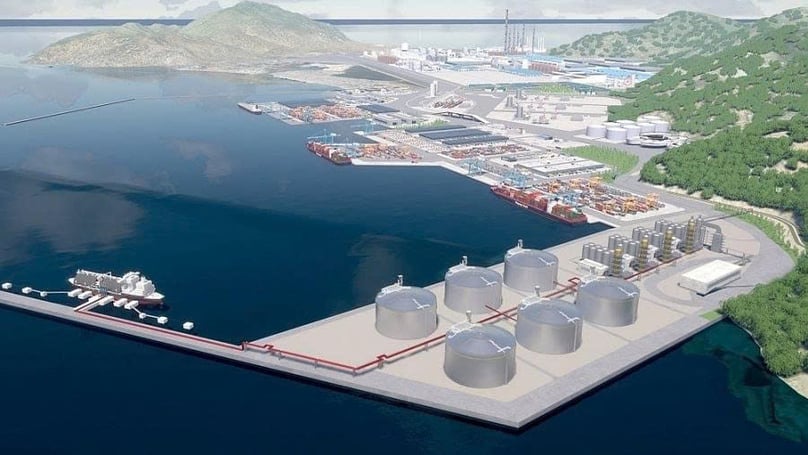
The Ministry of Industry and Trade (MoIT) recently requested localities to review and report any difficulties and obstacles in implementing such projects under the revised plan, with a deadline of July 29, 2025.
Cumbersome procedures, hesitant investors
The government approved PDP VIII in April 1, 2024 under Decision No. 262/QĐ-TTg and then issued Decision No. 768/QĐ-TTg on April 15, 2025 on adjustments to the plan.
It was followed by the MoIT’s issuance of an implementation plan on May 30, 2025. However, actual implementation at the local level has revealed numerous legal and procedural bottlenecks, causing trouble for both authorities and investors.
One of the key challenges is the requirement to select investors for land-using power projects through a bidding process. This has created a "chicken-or-egg" dilemma for many investors - even if they win the bid, there’s no guarantee they can proceed with the project, resulting in reluctance to commit further.
Provinces such as Quang Tri and Ha Tinh have proactively submitted proposals urging the government to issue tailored regulations that reflect the technical characteristics of renewable energy projects, especially wind power. A major concern is the legal requirement to prepare a 1/2000 zoning plan as a prerequisite for organizing bidding processes.
According to the Quang Tri provincial People’s Committee, wind power projects often cannot identify exact turbine locations, transmission routes, or related infrastructure in the early stages. Therefore, preparing a detailed or zoning plan at such a scale for submission to competent authorities is highly impractical and costly.
“Preparing 1/2000 zoning plans for all areas with wind potential would not only burden local budgets but also carry high risk. If no investor shows interest after the plan is approved, the land remains idle, money is lost, and the wind still blows,” local media quoted a Quang Tri official as saying.
The province also proposed clearer guidance on making detailed and zoning plans for rural areas that are neither part of established rural residential zones nor functional areas, especially as it relates to project bidding in accordance with Article 126 of the 2024 Land Law.
In response, the Ministry of Construction asked local authorities to direct relevant agencies to prepare detailed planning as required by current construction regulations.
Grid connection concerns
Another major concern raised by investors involves grid connection plans. Earlier government decisions (262/QĐ-TTg and 768/QĐ-TTg) did not require detailed connection methods for each project. However, Decision 1509/QĐ-BCT introduced a new column specifying connection plans, which many projects lack.
One investor told local media that their project was included in both the PDP VIII and its implementation plan, but without a connection plan, the Vietnam Electricity (EVN) and its regional power corporations refused to process the paperwork.
Though the local government submitted two written requests to the MoIT to add a 110 kV grid connection plan, the ministry responded that adjustments would have to wait until after administrative mergers were completed. As a result, the investor cannot finalize the feasibility study because the connection plan is yet to be added.
Large projects lose investment appeal
Recent bidding rounds for large-scale LNG power projects have also shown signs of declining investor interest.
The Nghi Son LNG project in Thanh Hoa received no bid submissions, while the Ca Na LNG project in former Ninh Thuan province (now Khanh Hoa) attracted only one bidder - a stark contrast to earlier stages when at least five parties had expressed interest.
According to Thanh Hoa province, the bidding process is time-consuming and does not guarantee the selection of a capable, experienced investor. Notably, South Korea’s SK Group has submitted a proposal to be directly appointed as the investor for both the Nghi Son and Ca Na LNG projects.
Energy expert Phan Xuan Duong was quoted by local media as saying that LNG power projects are complex and large in scale, involving difficult negotiations and tight financing conditions. External funding requires high standards, while power prices must still fall within Vietnam’s regulated pricing framework - all of which reduces financial feasibility.
Financial strain and investment effectiveness
Expert Dao Nhat Dinh highlighted that during the dry season of 2025, lower-than-expected electricity demand due to cooler weather and rainfall caused underutilization of coal-fired power plants. Some plants offered electricity at zero pricing but were still not dispatched, undermining investment returns and causing financial imbalance.
Additionally, some thermal power plants are still waiting for reimbursement of foreign exchange differences accrued from 2019 to 2024, totaling hundreds of billions of VND (VND100 billion = $3.82 million). Despite this, they still have to borrow from banks to purchase fuel and meet the requirements of the National Load Dispatch Center (NSMO).
“The cash flow challenges facing independent power producers could significantly impact decisions to invest in new generation projects, especially capital-intensive ones like offshore wind or LNG,” Dinh was quoted by local media as saying.
“This is one of the main reasons why, over the past three years, no major power generation project has broken ground nationwide. If these obstacles are not addressed soon, the risk of failing to implement the Adjusted PDP VIII will become real,” he warned.