VIETNAM CHAMBER OF COMMERCE AND INDUSTRY
Liên Đoàn Thương Mại Và Công Nghiệp Việt Nam
Sat, Aug 22, 2026, 11:38:00
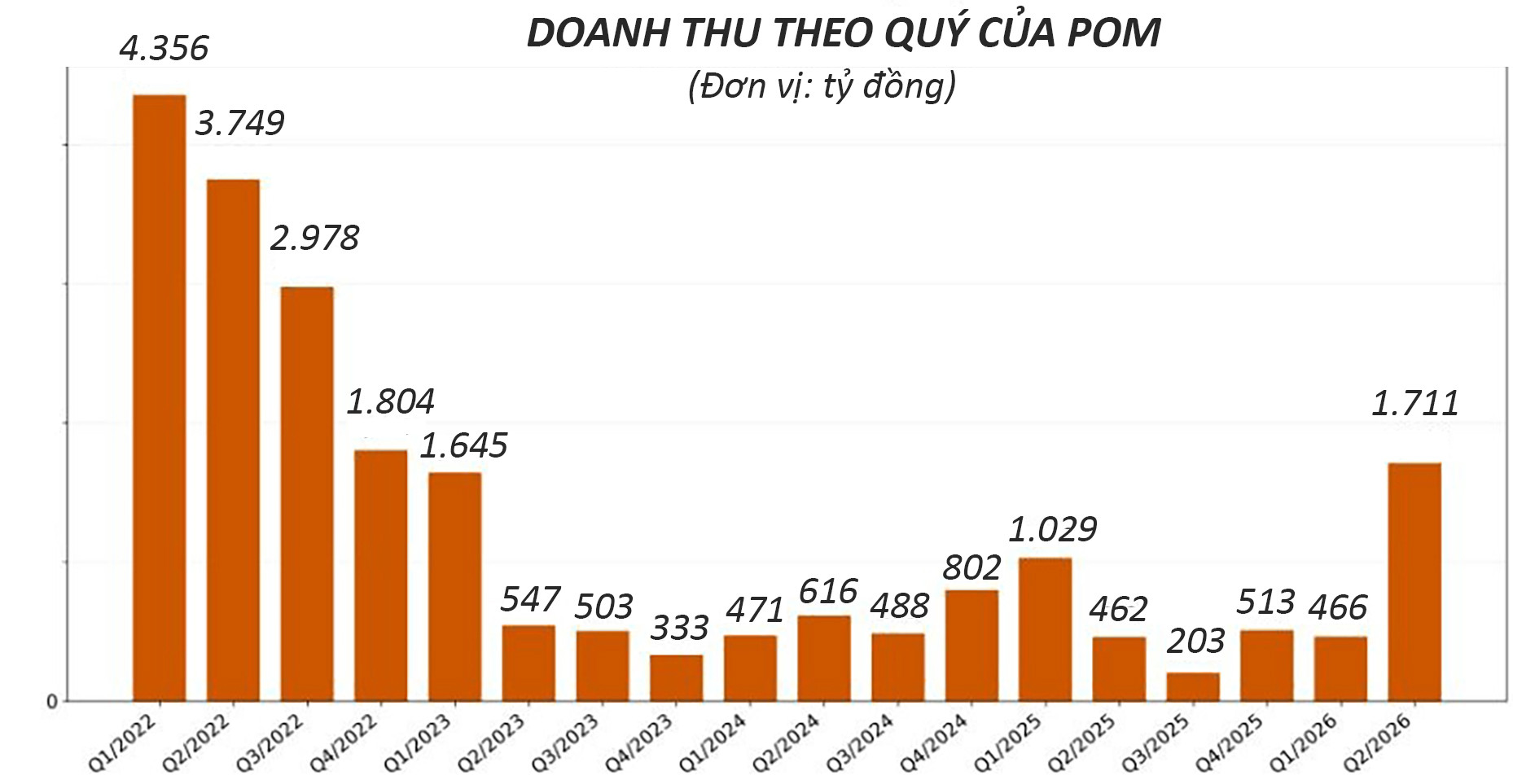
Chart showing POM's quarterly revenue over the years. Source: Financial Statements
POM has been making efforts to resume production, control financial costs, and move toward clearing accumulated losses, but it also faces numerous challenges.
Prolonged Accumulated Losses
According to the financial statements for Q2/2026, POM recorded revenue of nearly 1,711 billion VND, a 270.5% increase compared to the same period last year, and a net loss of 146.13 billion VND. Notably, in Q2, although gross profit increased—helping offset a portion of incurred expenses—POM still recorded a loss due to high financial expenses, primarily consisting of interest payments and late payment penalties owed to suppliers.
Cumulatively in the first half of 2026, POM recorded revenue of 2,176 billion VND, up 46% year-over-year, alongside a loss of 325 billion VND. This 6-month loss raised POM's total accumulated losses to 3,808.8 billion VND, equivalent to 136.19% of its charter capital. Consequently, POM reported a negative equity of 947.7 billion VND.
According to POM's management, a primary cause of the current crisis stems from a heavy investment in a blast furnace project during 2019–2020. The project relied on technology and experts from China right when the COVID-19 pandemic broke out. As a result, execution was prolonged while machinery, equipment, interest rates, and labour costs escalated, placing severe pressure on POM's financial health.
As of June 30, 2026, POM's total liabilities reached over 10,930 billion VND. Major creditors include BIDV Ho Chi Minh City Branch (1,079 billion VND), VietinBank Ho Chi Minh City Branch (2,620 billion VND), Vietcombank (463 billion VND), and several other banks.
Due to continuous losses and heavy debt pressures, POM's Q2/2026 consolidated financial statements received a qualified opinion from auditors regarding its ability to continue as a going concern. For three consecutive years (2023, 2024, and 2025), AFC Vietnam Auditing Company Limited raised doubts about POM's operational sustainability.
Following persistent losses, POM shares have been placed under trading restrictions, allowing transactions only during Friday sessions.
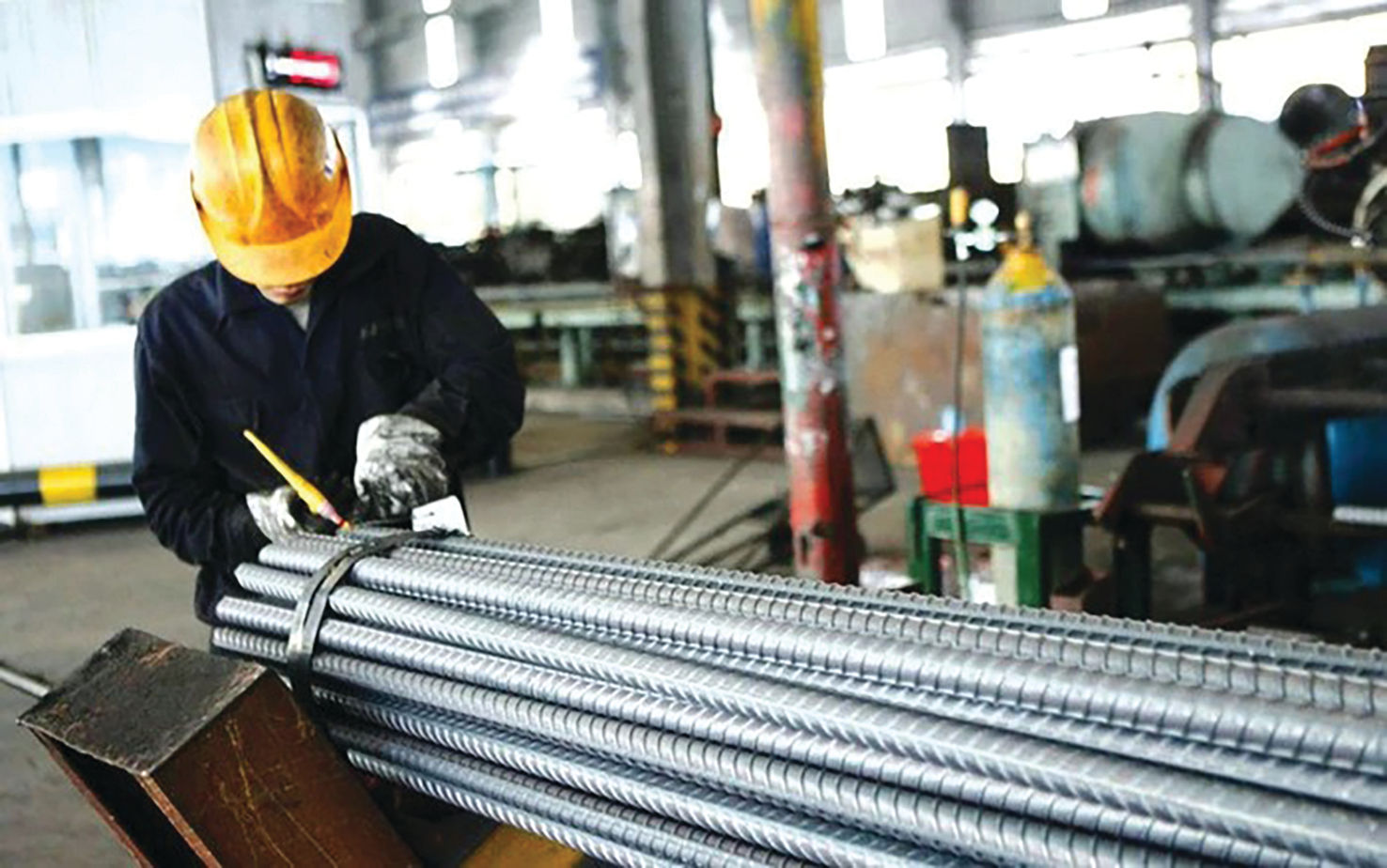
With prolonged losses and heavy debt pressure, POM's Q2/2026 consolidated financial report continues to receive a qualified auditor opinion regarding going concern status. Photo: Illustration
Opportunities Hand-in-Hand with Challenges
In the short term, the company is seeking investors to restructure and restart factory operations. Recently, POM signed a memorandum of understanding with a major professional investor as a strategic partner to restart the blast furnace project, aiming to capture public investment demand in 2026.
Additionally, POM and Vinhomes signed a 2-year agreement to support working capital requirements. Previously, POM collaborated with VinMetal, a member of Vingroup. According to POM's General Meeting of Shareholders documents, VinMetal provided working capital support via a 0% interest loan for up to 2 years, improving cash flow, restoring the supply chain, and stabilising production. Besides capital support, POM is prioritised as a steel supplier for Vingroup ecosystem entities such as VinFast, Vinhomes, and VinSpeed. This serves as a vital anchor for POM to restart after a long disruption.
To date, POM has resumed production at Pomina Steel Plant 1 and Pomina Steel Plant 2 thanks to working capital support from Vingroup's ecosystem. This helped boost Q2/2026 revenue significantly to nearly 1,711 billion VND. However, heavy interest expense pressures prevent the company from returning to profitability just yet.
Despite major hurdles, POM has outlined ambitious production recovery plans for the next two years. At the 2026 Annual General Meeting, POM set a 2026 revenue target of 8,511 billion VND and a 2027 projection of 13,200 billion VND. In terms of volume, POM aims to produce over 666,000 tonnes of steel billets in 2026 and exceed 1 million tonnes in 2027. Construction steel output is targeted at nearly 644,000 tonnes in 2026 and close to 1 million tonnes in 2027.
Reintroducing large-scale production items into business plans shows POM management's expectation that the toughest phase has passed, paving the way to rebuild capacity over the next 2 years.
Positive recent signals have also earned POM commitments from credit institutions to maintain credit limits, restructure loans, and adjust loan terms appropriately.
Nevertheless, POM's recovery outlook remains heavily dependent on restoring production, managing financial costs, and eliminating accumulated losses—a formidable challenge in the period ahead.
3,808.8 billion VND is POM's accumulated loss as of late June 2026, accounting for 136.19% of its total charter capital.