VIETNAM CHAMBER OF COMMERCE AND INDUSTRY
Liên Đoàn Thương Mại Và Công Nghiệp Việt Nam
Fri, Sep 19, 2025, 07:07:00
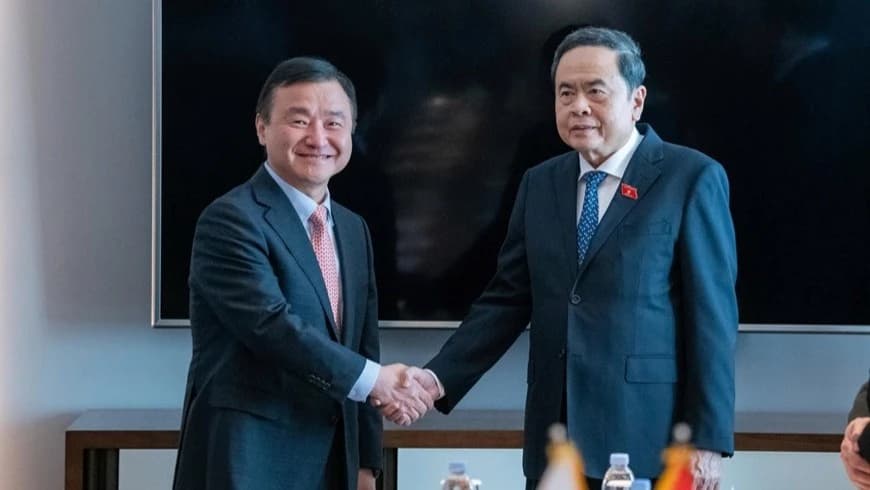
The plan was confirmed at a meeting between Chairman of the Can Tho People's Committee Tran Van Lau and the oil and gas giant's representatives. Similar information was disclosed at a previous meeting in late August.

At the latest meeting, the Vietnam Petroleum Institute (VPI), a unit under Petrovietnam, presented its research and model proposed for the center.
The complex is oriented to become an ecosystem of clean energy, green chemicals, and high-tech services, linked with the Mekong Delta region's agricultural advantages.
According to Petrovietnam, the eco-energy and industrial center model integrates three symbiotic functional clusters, including a clean energy cluster, a green chemicals and fertilizer industry cluster, an agricultural product cluster, logistics, technical services, specialized ports, an HR training and research center, and an ecological urban area.
It is expected that by 2030, Petrovietnam will invest $2.9 billion in projects to produce industrial gas and circular and green products, with a scale of 65 hectares at the O Mon Power Center.
By 2035, it plans to invest $2 billion in projects to supply and distribute gas, build an LNG port terminal, develop a bio-methanol factory etc. on an area of 88 hectares at locations near the O Mon Power Center.
By 2050, Petrovietnam will invest $19.4 billion in renewable energy projects at the Song Hau Industrial Park, the Tran De seaport etc.
Can Tho Chairman Lau noted that the city supports Petrovietnam's plan and emphasized this is a modern, large-scale and new model with a long-term vision until 2050, in line with the city's development strategy after its recent merger with Soc Trang and Hau Giang provinces.
However, to make the project feasible, Lau asked Petrovietnam and local agencies to soon conduct specific research on special mechanisms related to issues like planning and land.
"The group needs to review areas along the Hau River, National Highway 91B, and planned industrial parks and clusters to choose a suitable location for the project," he added.
Petrovietnam chairman Le Manh Hung in late July stated that the giant is studying a large-scale eco-energy and industrial center project in the country which will be a vital driving force of the group's future development and "a matter of survival".
The ecological energy and industrial center includes three main components. First, the energy component includes diverse energy supply and production facilities, from traditional energy (gas, LNG) to new energy and renewable energy (offshore wind power, green hydrogen/ammonia), which will be connected by modern shared infrastructure.
Second, the industrial segment includes supporting and deep processing industrial clusters which will develop largely based on domestic energy and raw materials. The clusters include facilities rated to petrochemicals and refining, chemicals, manufacturing of energy equipment, and production of new materials.
Third, the service component includes a comprehensive support system, providing high-end technical services such as logistics and ports, maintenance and repair (O&M), research and development (R&D), and training of high-quality human resources.