VIETNAM CHAMBER OF COMMERCE AND INDUSTRY
Liên Đoàn Thương Mại Và Công Nghiệp Việt Nam
Mon, Dec 18, 2023, 16:38:00
Last year, Panasonic coined the term 'Gen G', or 'green generation', which was to define the lifestyle of young Vietnamese people, who Panasonic believe are instilled with the energy, enthusiasm, knowledge, and skill sets to 'go green', and promote wellness for themselves and society at large.
Following the success of last year’s campaign, with millions of people inspired by 'green living' storied shared through social media and nearly 70 sustainable initiatives proposed, this year, Panasonic has decided to offer something different to young people. An opportunity to learn more about the importance of carbon footprint reduction – a core aspect of the Japanese giant’s Panasonic Green Impact initiative announced last year.
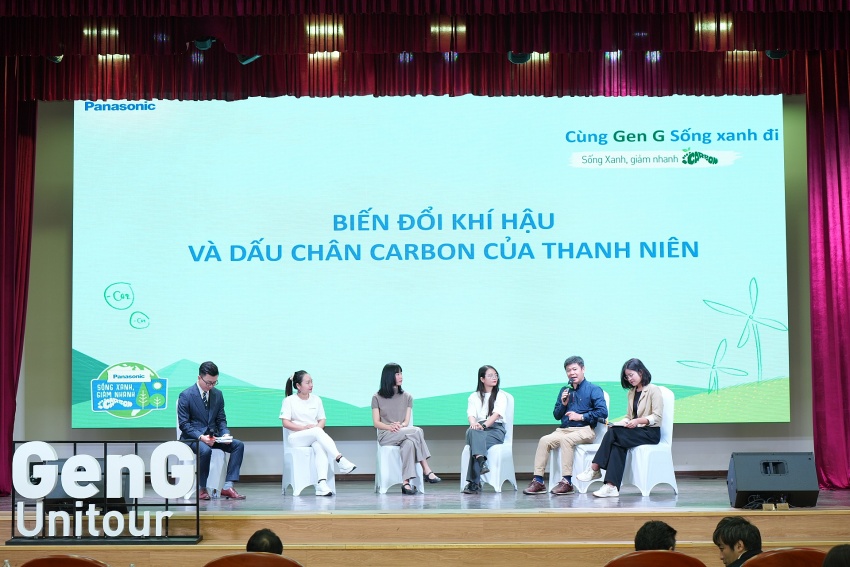
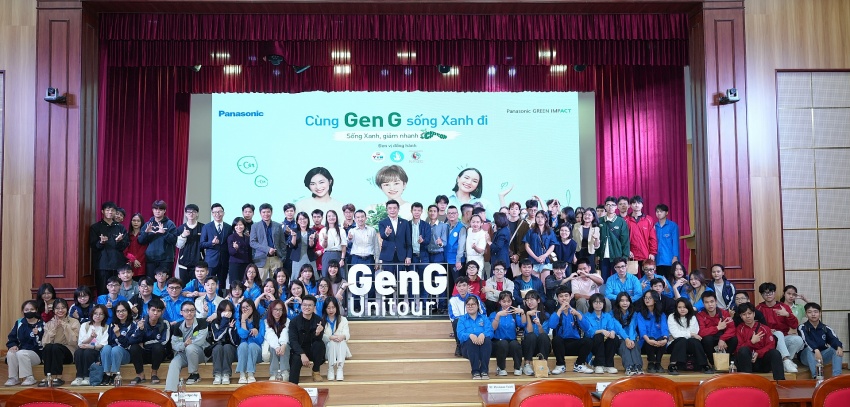
This year's campaign held its launching ceremony on the campus of the National Economics University – one of the biggest and most dynamic universities in Vietnam, and a series of visits to six major universities in Hanoi and Ho Chi Minh City to provide talks to student and inspire them with diverse 'Gen G activities' will be organised from the middle of December to the middle of January.
“With Panasonic Green Impact, our vision is to create impactful strategies that reduce CO2 emissions by more than 300 million tons by 2050. It’s quite difficult for one single brand to create such a large impact, so we need the active participation of many stakeholders, especially the younger generation,” said Marukawa Yoichi, general director of Panasonic Vietnam.
“I was highly impressed with the attitude and effort from the young people last year involved in our campaign. It proved that Vietnamese youth care deeply for the environment and their own wellness, and they have the capability and capacity to be the driving force of our 'Gen G',” he added.
During a talk show at the event, Yeo Shir Ling, general manager of the Environmental Management Department, Panasonic Asia Pacific, said, "Panasonic Group aims to create net-zero CO2 emissions at all its companies, including those in Vietnam, by 2030. This can be achieved in part through our new environmental technologies and energy-efficient products and solutions such as perovskite solar cells and Kinari, a sustainable plastic alternative."
The campaign continues to receive strong support from the Centre for Natural Resources and Environment and Communication under the Ministry of Natural Resources and Environment, the Vietnam Youth Union, and several NGOs that focus on carbon footprint and sustainability issues. The launch event attracted more than four hundred enthusiastic students and young people.