VIETNAM CHAMBER OF COMMERCE AND INDUSTRY
Liên Đoàn Thương Mại Và Công Nghiệp Việt Nam
Mon, Aug 31, 2026, 15:30:00
A “new nest” for billion-dollar investment
At the end of July 2026, Hai Phong held a conference to announce its new economic zones, launch its Free Trade Zone (FTZ), and grant investment registration certificates to a number of projects. The event marked a new phase in the city’s development, centered on three strategic growth areas designed to complement and reinforce one another.
Speaking at the conference, Deputy Prime Minister Le Tien Chau identified these three areas as the Dinh Vu-Cat Hai Economic Zone, the Southern Hai Phong Coastal Economic Zone, and a specialized economic zone (SEZ) in the western part of the city.
The Dinh Vu-Cat Hai EZ will continue to serve as an established hub for industry, seaports and logistics. The Southern Hai Phong Coastal EZ will open up new development space toward the sea, while the SEZ in the west will create room to attract high-tech industries, technology services, and research and development activities.
The Hai Phong FTZ alone covers nearly 6,300 hectares and is located in areas linked to the Dinh Vu-Cat Hai and Southern Hai Phong Coastal EZs. It is designated as an institutional lever and a foundation for connecting Hai Phong’s economic zones into a unified ecosystem.
According to the Deputy PM, if properly developed, these institutions will create a new development map linking the western part of the city to the sea, production to international trade, and capital attraction to technology transfer and the enhancement of Vietnamese companies’ capabilities.
"This would help Hai Phong become a strategic growth pole for the Red River Delta, the northern coastal region and the country as a whole," he noted.
Of the three growth spaces, the Southern Hai Phong Coastal EZ covers about 20,000 hectares and will be developed under a green-growth model, focusing on high-tech industries, seaports, logistics, modern urban areas and integrated services.
A key feature of the zone is Nam Do Son Port, which is planned as a green, smart and duty-free port, connected to road, rail and inland waterway networks as well as logistics hubs.
To the west, the SEZ covers 5,300 hectares and is designed to attract high-tech industries and services such as artificial intelligence, robotics, big data, chemicals, and research and development.
The establishment of the zone will expand Hai Phong’s industrial footprint while making better use of the western part of the city’s land, workforce and production capacity following its July 2025 merger with Hai Duong province.

The appeal of the new growth spaces was quickly reflected in concrete investment decisions. At the conference, Hai Phong granted new investment registration certificates and approved capital increases for 13 projects, with total investment of about $2.6 billion.
It also signed two memoranda of understanding on industrial park infrastructure development, with expected investment of $540 million.
Total registered and committed capital reached about $3.2 billion.
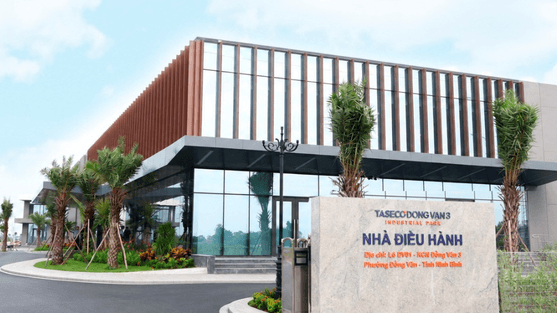
Among them were four new industrial park infrastructure projects: Tien Lang 2, Trung Lap - Phase 1, An Hoa and Gia Loc 3 IPs. They will provide important industrial land and infrastructure, creating the space and facilities needed for the city to attract large-scale projects in the coming years.
From billion-dollar project to semiconductor ecosystem
Among the projects receiving investment registration certificates, the second project of LG Innotek Vietnam Hai Phong Co., Ltd., a member of South Korean chaebol LG, stood out, with total investment of $1 billion at Nam Dinh Vu IP (Zone 2) or DEEP C II Industrial Zones, part of the Hai Phong FTZ.
After about a decade of investment in Trang Due IP, LG Innotek’s decision to once again choose Hai Phong for a new plant producing circuits and semiconductor chips signals the South Korean technology group’s long-term commitment to the city.
The project is expected to significantly expand LG’s high-tech manufacturing ecosystem while providing a foundation for Hai Phong to participate more deeply in the global semiconductor value chain.
Bruno Jaspaert, CEO of DEEP C Industrial Zones, described the move as a very positive signal. The fact that a group like LG has once again chosen Hai Phong as the location for a new investment project shows that it has great confidence in the city’s development potential, he said.

According to Park Hong-keun, CEO of LG Innotek Vietnam Hai Phong Co., Ltd., Hai Phong is one of Vietnam’s most competitive investment destinations and one with the greatest potential for a breakthrough in development.
As a trusted partner accompanying Hai Phong, LG Innotek will continue to contribute more through investment, creating quality jobs, attracting talent, and supporting the city’s sustainable development, he stated.
Besides LG Innotek, companies receiving investment registration certificates this time included names in technology and supporting industries such as Shin-Etsu, Lite-On, and Rorze Robotech.
What stands out is not only the scale of investment but also the clear shift in the project mix toward semiconductors, electronic components, automation, and high-tech materials. These are also sectors that Hai Phong has identified as priorities for the new development phase.
LG Innotek is not the first “eagle” to choose Hai Phong as a manufacturing base. Over the past decade, the city has attracted major groups including Bridgestone, Pegatron, USI, Kyocera, Fuji Xerox, GE, Regina Miracle, Shin-Etsu, and Nipro Pharma.
The LG ecosystem in Hai Phong alone includes major projects by LG Electronics, LG Display, LG Innotek, and LG Chem, with total registered capital running into billions of dollars. LG Display, in particular, has repeatedly increased its investment, bringing the total capital of its project in the city to about $5.65 billion.
The continued expansion of existing investors is a substantive indicator of the quality of Hai Phong’s investment environment. For large-scale projects, decisions to increase capital depend not only on incentives but also on infrastructure capacity, human resources, supply chains, and the local government’s ability to support investors.
The numbers tell the story
Capital attraction figures over the years show Hai Phong’s relatively stable appeal. In 2021, the city attracted about $5.298 billion in foreign direct investment (FDI), ranking first nationwide. The figure exceeded $2 billion in 2022 and reached about $3.5 billion in 2023.
In 2024, industrial parks and economic zones alone lured about $4.35 billion. The whole city attracted more than $4.94 billion, ranking second nationwide. Projects in high-tech, processing and manufacturing, and logistics accounted for more than 77% of investment in the city’s IPs and EZs.
The upward momentum continued in 2026. In the year to July 22, total FDI attracted across the city was estimated at $3.26 billion, up 71.8% from the same period last year. Of the figure, IPs and EZs accounted for 90% or $2.94 billion, while areas outside drew more than $325 million.
As of July 2026, Hai Phong had about 1,868 active FDI projects from 41 countries and territories, with total registered capital of about $54 billion. More than 1,060 of these projects were located in IPs and EZs, with total registered capital of about $45 billion.
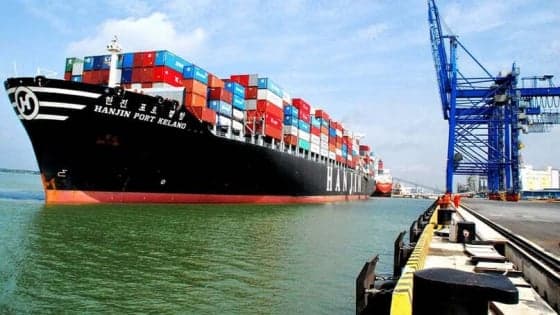
Behind these figures are increasingly distinctive advantages. Hai Phong has the deep-water Lach Huyen port system, a network of expressways connecting Hanoi, Quang Ninh and major manufacturing centers in northern Vietnam, Cat Bi International Airport, and a relatively well-developed network of industrial parks.
In particular, following its merger with Hai Duong, the city has gained additional industrial space and human resources, as well as greater potential to strengthen links with the Hanoi-Hai Phong-Quang Ninh economic corridor and the electronics, mechanical engineering and automotive production chains in the northern key economic region.
However, for these “eagles” to truly form an ecosystem, Hai Phong needs to accelerate land clearance, complete connecting infrastructure, ensure a stable power supply, and develop a high-quality workforce and housing for workers, while increasing the participation of Vietnamese companies in the supply chains of the FDI sector.
With a target of attracting $3.8-4.3 billion in FDI in 2026, the results achieved after seven months show that Hai Phong is moving closer to its goal. But the greater value lies not simply in attracting a few more “eagles,” but in the city’s ability to build an ecosystem capable of retaining major corporations, drawing in supporting businesses, and enabling Vietnamese companies to participate more deeply in global value chains.