VIETNAM CHAMBER OF COMMERCE AND INDUSTRY
Liên Đoàn Thương Mại Và Công Nghiệp Việt Nam
Sat, Jun 08, 2024, 07:46:00
Continued development of foundation industries
According to the deputies, the implementation of the socioeconomic development plan and the State budget in 2023 and in the first months of 2024 showed many positive results. Despite many difficulties, the macroeconomic stability was maintained; inflation was controlled; disbursement of public investment capital and construction of transport infrastructure was promoted, creating the premise for the implementation of the socioeconomic development targets in the 2021-2025 period.
 |
| Deputy Ta Thi Yen from Dien Bien Province - photo: quochoi.vn |
The complex developments of geopolitical differences and conflicts, which have been against globalization and international economic integration, have negatively affected Vietnam’s economy.
In order for the new economic sectors to become a driving force for growth in the coming period based on the advantage of national comparison, Vietnam needs to urgently amend relevant legal regulations, and also adopt very specific mechanisms and policies to translate potential into action.
It is necessary to keep developing foundation industries, such as mechanical engineering, metallurgy, textiles, leather and footwear, as well as the private economic sector, especially when the private investment trend shows signs of significant decline compared to the previous period.
Breakthrough policies needed for processing and manufacturing industry
To effectively implement the socio-economic development plan in 2024, Deputy Nguyen Dai Thang from Hung Yen Province proposed a number of solutions.
 |
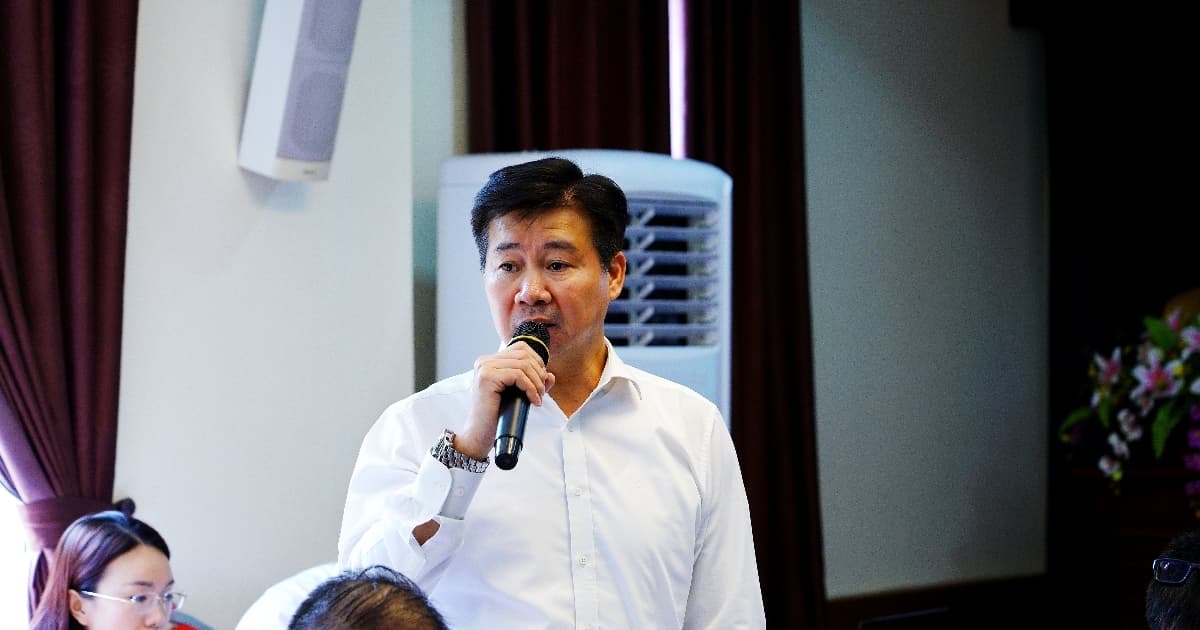
| Deputy Hoang Quoc Khanh from Lai Chau Province - photo: quochoi.vn |
First, Vietnam needs to draft more mechanisms, policies to create breakthroughs in the processing and manufacturing industry, to make it a pillar of the economy.
Second, the country should continue to complete credit policies to further increase the value and efficiency of Vietnam’s rice export supply chain.
Third, Vietnam is to continue to build synchronous transportation infrastructure connected to raw material areas and implement policies to attract investment from all economic sectors in rural agriculture.
In addition to the processing and manufacturing industry, the development of the rural power grid was also discussed at the working session.
Deputy Hoang Quoc Khanh from Lai Chau Province said, to achieve the economic growth target of 6 to 6.5 percent set for this year, creating conditions for enterprises to further develop their businesses is a very important factor, of which building trust in promoting production and business should be the issue of primary concern.
 |
| Deputy Nguyen Dai Thang from Hung Yen Province - photo: quochoi.vn |
Regarding the progress of electricity supply in rural, mountainous and island areas in the 2021-2025 period, so far, according to the Ministry of Industry and Trade, there are still about 160,000 households without access to electricity; the power grid for 715,000 households need renovating in about 3,000 communes with estimated investment capital of over VND29 trillion.
According to electricity connection planning, Lai Chau Province should have over 2,000MW connected to the national grid with 40 large and small hydroelectric plants already in operation, but now 22 villages have not had access to electricity, mainly in remote border communes and mountainous areas, with estimated funding of about VND200 billion, which the province cannot balance on its own.
“Voters asked the State to pay attention to investing in the country’s electricity system so that in 2025 - the 50th anniversary of the liberation of the South and national reunification, people in areas without access to electricity will be able to watch live television programs,” Deputy Hoang Quoc Khanh emphasized.