VIETNAM CHAMBER OF COMMERCE AND INDUSTRY
Liên Đoàn Thương Mại Và Công Nghiệp Việt Nam
Sat, Jun 10, 2023, 15:11:00
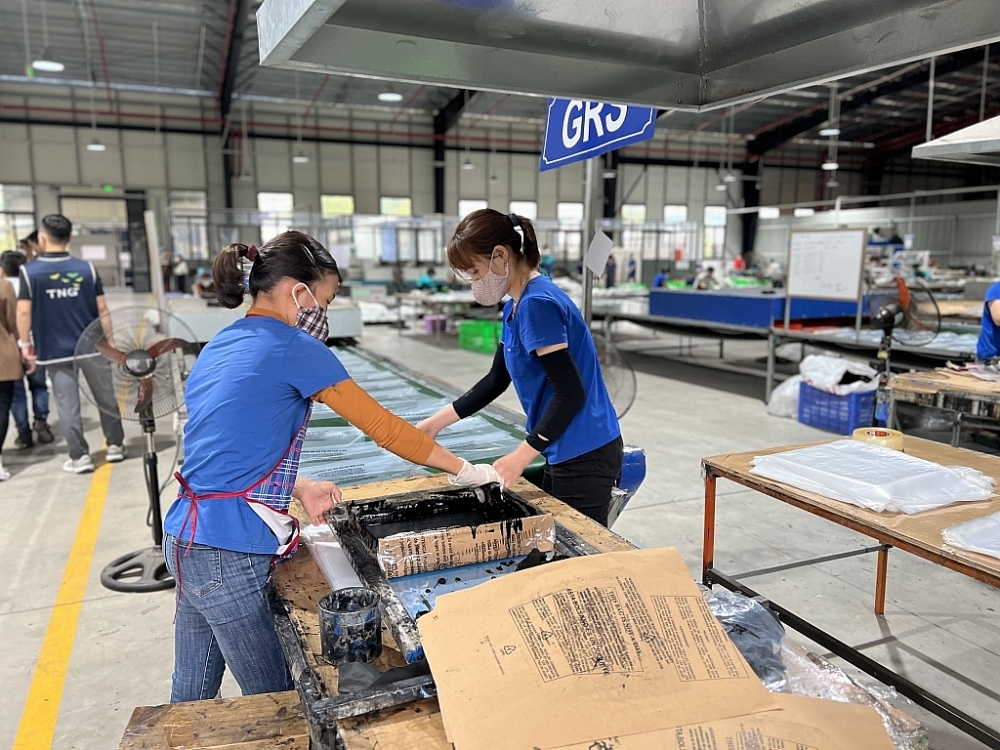 |
| Businesses are going through a particularly difficult situation. Photo: H.Diu |
Business confidence declines
The Private Economic Development Research Board (Board IV) of the Prime Minister's Advisory Council for Administrative Procedure Reform has just reported the results of a survey on the situation of enterprises and some proposals and advice to support businesses and the economy to the Prime Minister.
The survey results show that businesses are going through a particularly difficult situation. Out of 9556 enterprises participating in the survey, 82.3% of enterprises plan to reduce their scale, suspend or stop doing business in the remaining months of 2023. 10.9% of Furthermore, enterprises expect to stop
Among enterprises still operating in 2023, 71.2% are expected to reduce their labour size by more than 5%, of which 22.2% are expected to reduce their labour size by more than 50%. There 80.7% of enterprises expected to reduce revenue by more than 5%, of which the rate of over 50% revenue reduction is 29.4%.
Worryingly, business confidence in the macro-economy and industrialeconomy in this context is particularly low. Up to 81.4% of surveyed enterprises have negative/very negative evaluations of Vietnam's economic prospects in the remaining months of 2023. Very positive/positive assessments only account for 4.2% of businesses surveyed.
Up to 83.7% of enterprises rated the industry's economic outlook in 2023 as negative/very negative, of which 29.6% were negative. In that general "dark" picture, construction industry enterprises; micro, small and medium scale enterprises; non-state enterprises; businesses in Ho Chi Minh City show a more negative rating.
According to Board IV, the greatest difficulties and challenges enterprises are facing are difficulties in orders (59.2%); difficulties in accessing loans (51.1%); carrying out administrative procedures and meeting the provisions of the law (45.3%); risk of criminalizing economic transactions (31.1%).
In that difficult context, the support of the local Government hadnot met the requirements of reality when up to 84% of enterprises rated the operating efficiency and support of the local Government as inefficient.
Creating conditions for businesses to access loans
In the face of reality and through the survey results, Committee IV pointed out that the causes of current difficulties for Vietnamese enterprises come not only from the difficult cycle of the world economy but also from internal problems that cause problems. This is a huge challenge but also opens up great opportunities for the Government to implement radical reforms to improve national competitiveness and economic output in the long term.
From the above fact, the report proposes 4 major problem groups. The first is to reduce costs and improve the competitiveness of enterprises, such as: prolonging the duration of business support policies that have been effective during the Covid-19 period, including a 2% reduction in value tax. Increase until the end of 2025 instead of only 2023.
Labour costs need to be reduced. Specifically, it is necessary to extend, postpone, and reduce fees related to social insuranceand union fees or consider a new personal income tax rate to suit the new context. Bringing corporate income tax for exporting enterprises to 5-10% to create competitiveness with enterprises in other countries.
In addition, it is necessary to create conditions for businesses to access loans, such as: researching preferential credit packages for key production industries and fields, including items for small and medium-sized enterprises. ; do not tighten credit to real estate groups related to the construction of social housing, hospitals, schools, and production infrastructure.
Simultaneously deploying solutions to improve the business investment environment, such as: completing the investigation of current cases soon so enterprises can stabilize their thoughts and focus on production and business. At the same time, there should be a resolution not to criminalize economic and civil relations as in 1997-2000. Limit the inspection and examination of enterprises, production, and business establishments (no more than once a year) and do not issue new documents, creating an additional burden on taxes, fees and administrative procedures.
Board IV also proposed to support enterprises to access the market, such as: promoting the role of economic diplomacy and trade negotiations in the development and diversification of input markets (especially for the garment industry, footwear, and furniture) and output to reduce dependence on traditional markets. Research and build centralized information channels to analyze and forecast economic and international business trends, update development incentives, warn about risks... to support businesses.