VIETNAM CHAMBER OF COMMERCE AND INDUSTRY
Liên Đoàn Thương Mại Và Công Nghiệp Việt Nam
Wed, Dec 10, 2025, 15:13:00
Khoa made the statement at a logistics forum held in Danang city in late November. He added that Vietnam’s total trade in goods is expected to reach $900-920 billion this year, a record high.
At that level, Vietnam would rank among the world’s 18-20 largest trading economies. If current growth momentum is maintained, total trade turnover could exceed $1 trillion by 2026-2027, placing the country in the global top 15-20, Khoa said.
“Vietnam’s logistics industry is entering a journey toward becoming a ‘super sector,’ which requires a synchronized and comprehensive logistics ecosystem,” he noted.

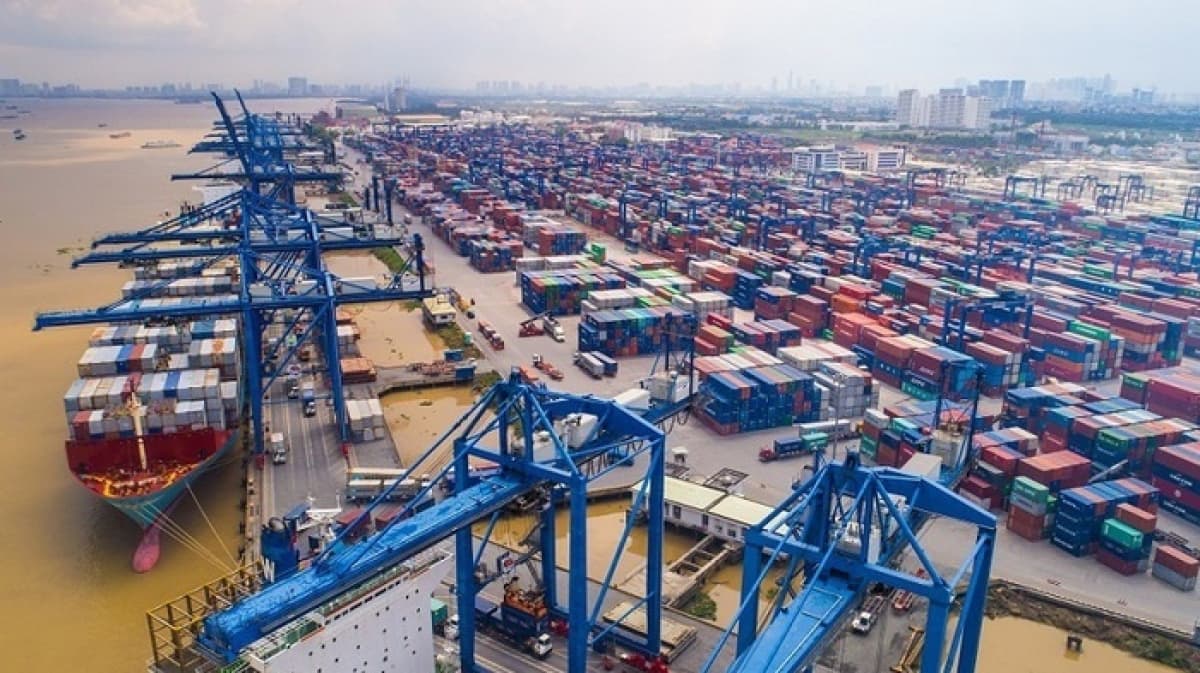
The logistics sector is currently growing at an annual rate of 14.6%, with an estimated market size of $70-80 billion. The country is home to more than 45,000 logistics companies, including over 5,000 with international operations, and ranks among the world’s top 10 emerging logistics markets, according to industry data.
If the sector sustains a targeted growth rate of 5% annually over the next decade, the market could expand to $250-280 billion, placing Vietnam among the world’s 15-20 largest logistics markets and making it a strategic destination for global logistics groups, Khoa said.
“At that scale, logistics will become a ‘super sector,’ serving as a magnet for FDI and accelerating the development of seaports, transshipment hubs, distribution centers, digital and green logistics infrastructure, in line with Vietnam’s goal of creating new growth poles by 2035,” he added.
Khoa also noted that the establishment of free trade zone models in Danang and Hai Phong could create new breakthroughs, positioning Vietnam as a regional gateway for transshipment, deep processing, and next-generation trade, with logistics playing a pivotal role in the country’s ambition to become a regional economic hub.
To support growth, he called for strengthening the national logistics coordination mechanism, expanding the mandate of the National Steering Committee 1899 to cover the entire logistics sector and trade facilitation, and setting up a National Logistics Office under the Ministry of Industry and Trade to coordinate policies and connect with businesses. Khoa proposed making VLA an official member of the steering committee and its working groups.
“Vietnam’s logistics industry is standing at a major turning point and has the potential to become a new star on the global logistics map,” he said.
Thomas Sim, chairman of the International Federation of Freight Forwarders Associations (FIATA), told the forum that global trends such as digitalization, multimodal connectivity, smart ports and customs, green logistics, and digitally skilled labor are reshaping the industry worldwide.
These trends are redefining global competition and opening opportunities for countries that act decisively, Sim said, urging Vietnam to seize opportunities to become a smart multimodal hub in ASEAN, promote digital trade integration, develop free trade zones and future logistics parks, lead in green logistics, tap cross-border e-commerce growth, and build a world-class logistics workforce.

Speaking at the forum, Prime Minister Pham Minh Chinh stressed the need to improve institutional frameworks, streamline administrative procedures, and remove barriers to reduce logistics costs, while accelerating the development of green, digital and smart logistics infrastructure.
He also called for greater international cooperation, workforce development, and mechanisms to mobilize public and private funding, both domestic and foreign, to support the creation of modern, globally integrated logistics services.
The cabinet leader said Vietnam could save $45 billion annually if it lowers logistics costs by around 16% to match the global average.