VIETNAM CHAMBER OF COMMERCE AND INDUSTRY
Liên Đoàn Thương Mại Và Công Nghiệp Việt Nam
Mon, Oct 20, 2025, 11:39:00
Accordingly, in order to contribute ideas to perfect the Draft Law, ensure the rationality and feasibility of the regulations, and ensure the rights and interests of enterprises, this afternoon, October 15, VCCI coordinated with the National Assembly's Committee on Science, Technology and Environment and the Ministry of Science and Technology to organize the Workshop "Contributing ideas to perfect the Draft Law on Artificial Intelligence".

On the afternoon of October 15, VCCI coordinated with the National Assembly's Committee for Science, Technology and Environment and the Ministry of Science and Technology to organize the Workshop "Contributing ideas to perfect the draft Law on Artificial Intelligence"
In his opening speech, Deputy Chairman of the National Assembly's Committee for Science, Technology and Environment - Tran Van Khai emphasized that Vietnam has identified AI as a national priority technology, playing a key role in digital transformation, developing a knowledge-based economy and enhancing national competitiveness. Resolution 57-NQ/TW of the Politburo has set the goal of Vietnam being among the leading countries in the region in AI research, development and application.
"However, the rapid development of AI also poses many challenges in terms of law, ethics, safety and social responsibility, requiring a suitable legal corridor to both control risks and promote innovation," Mr. Khai shared.
At the same time, he said that promptly developing and submitting the Law on Artificial Intelligence to the National Assembly for approval at the next session is very meaningful and urgent.

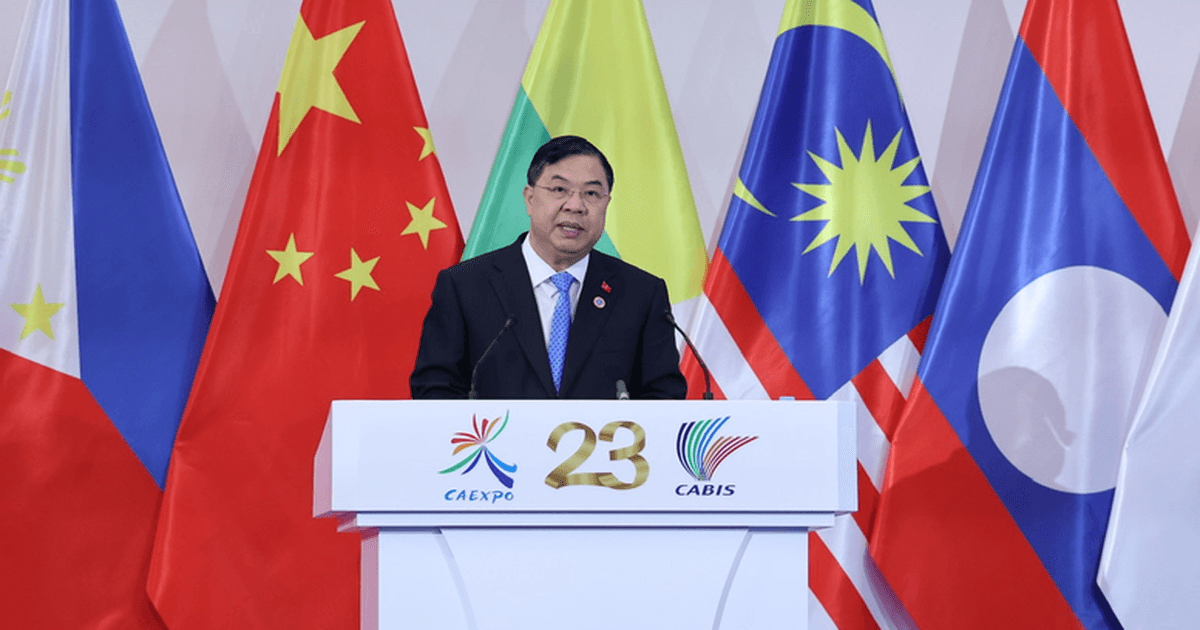
Vice Chairman of the National Assembly's Committee for Science, Technology and Environment - Tran Van Khai delivered the opening speech at the Workshop
According to Mr. Khai, this is one of the first laws in Vietnam in the field of AI, creating a legal foundation for research, development, application and governance of AI in a safe, responsible and humane manner. The draft law is built in the direction of finding a reasonable balance between management and development incentives, ensuring transparency, feasibility and approaching international standards.
Sharing at the Workshop, Mr. Dau Anh Tuan - Deputy Secretary General, Head of the Legal Department of VCCI expressed that the National Assembly and the Government's proactive development of the Law on Artificial Intelligence is a step that demonstrates the mindset of institutional creation, catching up with technological trends and expanding the space for innovation.

Mr. Dau Anh Tuan - Deputy Secretary General, Head of the Legal Department of VCCI shared at the Workshop
“This is the first law in Vietnam that lays the legal foundation for the entire artificial intelligence ecosystem - from development, application, to risk management and protection of people's rights”, Mr. Tuan shared.
According to Mr. Tuan, the Draft Law, although drafted in a short time, has approached many international standards such as: Risk-based management, controlled testing mechanism (sandbox), regulations on ethics and human rights in AI, transparency and labeling of AI-generated content.


Delegates giving comments on the Draft Law at the Workshop
However, in order for the Law to truly come into life and become a driving force for development, Mr. Tuan noted a number of points such as: It is necessary to ensure flexibility and adaptability in the legal framework; minimize administrative barriers for businesses, especially small businesses and startups. At the same time, it is necessary to seriously invest in data and computing infrastructure - this is the "fuel" for the survival of artificial intelligence; clearly define legal responsibilities, especially in the artificial intelligence value chain - from developers, suppliers to deployers.
"The Law's proposal of objective legal responsibility for high-risk systems is appropriate, but it is necessary to clarify the insurance mechanism, liability limits and criteria for allocating risks in a reasonable and enforceable manner," said Mr. Tuan.
At the Workshop, participating in giving comments on the Draft Law, many opinions proposed that it is necessary to clearly define the boundaries of intellectual property rights between developers, suppliers and deployers. There are specific guidelines on labeling AI products, ensuring transparency and verifiability. Flexibility in the pre-test mechanism, avoiding slowing down the product launch progress. Adding regulations on citing AI learning data sources, to make knowledge sources transparent and avoid copyright infringement...