VIETNAM CHAMBER OF COMMERCE AND INDUSTRY
Liên Đoàn Thương Mại Và Công Nghiệp Việt Nam
Fri, Aug 15, 2025, 08:20:00
Investment funds hold sizable bank stock proportions
Banking or financial stocks consistently make up a significant portion of most equity funds’ portfolios, according to disclosures on funds’ websites.
A survey by The Investor also revealed many funds with bank/financial sector holdings exceeding 40% of total assets, including the BaoViet Equity Dynamic Open-Ended Fund (BVFED), United Vietnam ESG Equity Fund (UVEEF), BaoViet Prospect Equity Open-Ended Fund (BVPF), Mirae Asset Vietnam Growth Equity Fund (MAGEFGE), VinaCapital Equity Opportunity Fund (VEOF), and Eastspring Investments Vietnam ESG Equity Fund (EVESG).
Funds with over 30% weight make up the majority, featuring names like Thanh Cong Growth Fund (TCGF), VCBF Tactical Balanced Fund (VCBF-TBF), DC Dividend Focus Equity Fund (DCDE), and VinaCapital Modern Economy Equity Fund (VMEEF).
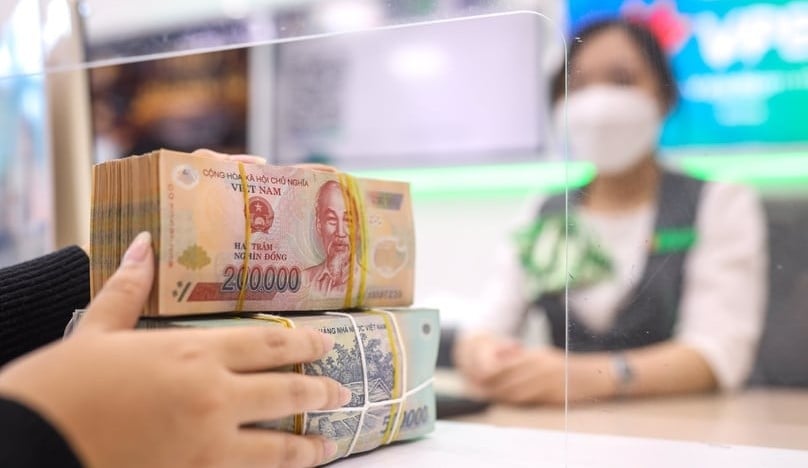
The five stocks with largest portfolio proportions at equity funds are bank stocks, especially those in the VN30 Index which reflects the 30 largest blue chips on the Ho Chi Minh Stock Exchange (HoSE).
Specifically, TCB of Techcombank, STB of Sacombank, and CTG of Vietinbank rank among the top five holdings in the portfolio of DC Dynamic Securities Fund (DCDS) managed by Dragon Capital – a leading foreign-run asset management firm in Vietnam.
Similarly, Vietcombank Fund Management Company Limited (VCBF) - a joint venture between Vietcombank and U.S.-based Franklin Templeton Investments (FTI) - holds significant stakes in MBB of MBBank, STB, and CTG.
Lighthouse Capital (LHCDF) draws attention as its largest portfolio holding is Nam A Bank’s NAB (HoSE), a non-VN30 bank stock.
Huynh Hoang Phuong, an investment-finance expert, explained that in developing Asian economies, including Vietnam, economic growth heavily relies on bank capital, as capital markets are not yet developed well enough.
This dynamic positions the banking sector as the backbone of the economy, with growth closely tied to credit expansion and banking system development, he said.
While the banking industry faces cyclical headwinds during economic downturns, its long-term growth trajectory remains dominant. From 2018 to 2024, the combined profits of 27 banks listed or registered for trading surged 226.4%, reflecting a compound annual growth rate of 21.8%.
Nguyen Duy Anh, portfolio management director at VCBF, noted that equity funds benchmark their returns against specific indices such as the VN-Index that represents the HoSE; VN100 that tracks 100 high-liquidity, large-cap stocks; or VN30, depending on their investment strategies.
The banking sector consistently accounts for 25% to 40% of major Vietnamese indices, making heavy bank stock exposure common in fund portfolios.
Moreover, current valuation metrics for several banks remain relatively attractive, potentially fueling near-term fund performance.
Bright outlook for bank stocks
Bank stocks have posted strong gains in 2025, playing a key role in driving the benchmark VN-Index to repeated record highs. Data from broker Vietcap Securities shows that bank stocks went up 25.87% year-to-date.
Five of the top 10 stocks with most positive impact on the VN-Index are banks, including TCB (contributing 21.9 points), VPBank’s VPB (20.73 points), MBB (14.85 points), CTG (12.34 points), and Saigon-Hanoi Commercial Joint Stock Bank’s SHB (8.76 points).
Looking ahead, Phuong expected bank profits to remain robust in H2, providing strong support for overall market earnings growth. This outlook is supported by rapid industry-wide credit growth of 9.9% in H1, alongside easing pressure on net interest margins (NIM), which are not projected to contract further.
Phuong held that the pressure in H2 will not be significant, as preliminary business results from banks show an improving trend in Q2. Consequently, NIM in H2 is forecast to decline less sharply year-on-year compared to H1.
“Therefore, I believe the banking sector’s earnings in the latter half of 2025 will show solid growth, albeit with some differentiation. Banks with weaker asset quality could benefit from recovery efforts, while state-owned banks may see improved results despite sacrificing significant NIM to support the economy.”
Meanwhile, Duy Anh noted that profit disparities within the banking sector will persist through the remainder of the year, as seen in H1. However, he expected this gap to narrow as major banks shift their business strategies to better align with market conditions, as well as the gradual recovery of the SME sector.
Offering advice to investors on selecting bank stocks, experts emphasized focusing on large banks with strong liquidity, high-quality assets, and solid profit growth.
Phuong outlined key criteria funds consider when selecting bank stocks, noting a preference for large banks due to their strong liquidity, greater sector representation, and distinct competitive advantages.
Asset quality and its future outlook are also closely monitored when curating watchlists. Profit growth plays a vital role in portfolio allocation and rebalancing among bank stocks.
Additionally, Anh of VCBF recommended investors focus on banks leading in technology adoption within their business models, from meeting customer needs and retention to building comprehensive ecosystems that allow customers to handle all transactions via the bank’s app.
He also suggests monitoring banks with strong sales teams and diversified financial services, enabling them to generate non-interest income streams.