VIETNAM CHAMBER OF COMMERCE AND INDUSTRY
Liên Đoàn Thương Mại Và Công Nghiệp Việt Nam
Mon, May 11, 2026, 14:00:00
Intel reaffirms long-term commitment
In their recent meetings with leaders of the Party Central Committee’s Commission for Policies and Strategies and the Ministry of Science and Technology, Intel executives reaffirmed the company’s long-term development plans in Vietnam.

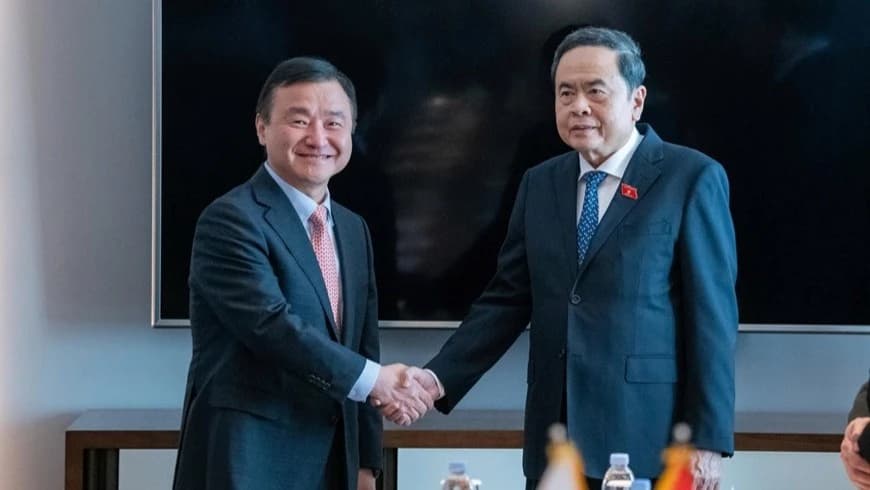
Meeting with Nguyen Kim Son, deputy head of the commission, on Wednesday, Sarah Kemp, Intel's vice president for international government affairs, applauded Vietnam’s semiconductor development strategy, saying the country’s investment environment is becoming increasingly favorable and that FDI inflows into the semiconductor sector show strong potential with major investors such as Samsung and Intel.
The Intel representative said the company has exported around 4 billion chips from Vietnam over the past 20 years, with total export value exceeding $110 billion.
She reaffirmed Intel’s long-term development plans in Vietnam and expressed hope for continued support from Vietnamese authorities.
For his part, Son praised Intel’s role in developing Vietnam’s semiconductor industry, especially as upgraded Vietnam-U.S. relations create new opportunities for cooperation in high technology, innovation, and strategic supply chains.
Vietnam is shifting its growth model away from low-cost labor and assembly toward productivity, technology, innovation, digital transformation, and high-quality human resources. Therefore, the country welcomes reputable long-term technology partners such as Intel, he said.
Son also noted that more than 60% of Intel’s chips are packaged in Vietnam, reflecting the company’s confidence in the country’s investment environment. Vietnam considers semiconductors a strategic priority sector and aims to participate more deeply in Intel’s production chain, he stated.
Proposal for Vietnam’s first chip factory
Welcoming the Intel representatives on Friday, Deputy Minister of Science and Technology Bui Hoang Phuong said the ministry will continue supporting Intel and supply-chain enterprises in expanding high-tech investment in Vietnam, helping position the country as an important link in the global semiconductor value chain.

The Intel delegation shared the firm’s strategic directions in Vietnam, saying it will continue expanding investment, supporting talent development, and helping strengthen the semiconductor ecosystem.
Phuong proposed five key areas of cooperation with Intel: expanding investment, research and production activities in Vietnam; assisting the national center for support of semiconductor chip pilot production; cooperating on Vietnam’s first semiconductor chip manufacturing plant; developing semiconductor talent; and building Vietnam’s semiconductor industry ecosystem.
Lessons from missed opportunities
Intel’s latest signals come as Vietnam works to improve policies supporting high-tech investment.
Previously, according to a report by the former Ministry of Planning and Investment, now part of the Ministry of Finance, Vietnam’s investment incentives have largely relied on corporate income tax and land-rent exemptions. As the global minimum tax reduces the effectiveness of traditional tax incentives, Vietnam needs more competitive support mechanisms, especially for large-scale semiconductor, AI, and high-tech projects.
The report highlighted the urgency for Vietnam to develop more attractive incentive mechanisms to avoid missing the wave of high-tech investment relocation.
Recent developments indicate Vietnam remains an important part of Intel’s global manufacturing network. Intel is relocating a production line for data center chips from Costa Rica to its Vietnam facility, reinforcing the Southeast Asian country’s role in the giant's global supply chain.
The move involves transferring part of Intel’s operations to Intel Products Vietnam (IPV), located in the Saigon Hi-Tech Park (SHTP), according to a report by the park’s management board submitted to the municipal People's Committee.
Alongside manufacturing, Intel is also increasing support for workforce training. The firm has transferred 31 chip assembly and testing devices to SHTP and the Hanoi-based Vietnam National University for semiconductor education and research. The move aims to narrow the gap between training and real-world manufacturing, particularly in chip packaging and testing.
With more than 20 years of operations in Vietnam, semiconductor exports worth over $110 billion, plans to relocate additional production lines to Ho Chi Minh City, and commitments to expand investment, Intel is expected to continue playing a major role in helping Vietnam build semiconductor capabilities, develop high-quality human resources, and integrate more deeply into global technology supply chains.