VIETNAM CHAMBER OF COMMERCE AND INDUSTRY
Liên Đoàn Thương Mại Và Công Nghiệp Việt Nam
Thu, Oct 15, 2026, 16:34:00

From left: Former State President Truong Tan Sang; Nguyen Hoang, Chairman of N&G Group and Chairman of HANSIBA; and other delegates at a visit and survey program at the Vietnam-Japan Techno Park Industrial Complex in HANSSIP, October 2025
Under the leadership of the Party, headed by General Secretary and President To Lam, a number of strategic resolutions have set out specific directions for the country’s development, including Resolution 57-NQ/TW on breakthroughs in science and technology development, innovation and national digital transformation; Resolution 68-NQ/TW on private-sector development; Resolution 10-NQ/TW on the development of the foreign-invested economic sector; Resolution 27-NQ/TW on regional development and the organization of national development spaces in the new period; and Resolution 36-NQ/TW on the strategy for sustainable development of Vietnam’s marine economy to 2030, with a vision to 2045.
Vietnam’s private-sector business community should regard these resolutions not merely as macro-level orientations set by the Party and the State, but as a direct basis for formulating their own strategies for investment, technology, human resources, markets and supply chains. To successfully achieve the national development goals for 2030 and 2045, Vietnam’s industrial sector must make a new leap forward, with supporting industries becoming a genuine foundation for national industrial self-reliance.
First, in terms of the institutional framework, the time has come for supporting industries to be institutionalized at the legislative level. Vietnam should consider developing a dedicated law on supporting industries; alternatively, as the country develops legislation on key industries, there should be a separate, substantive and sufficiently detailed chapter dedicated to supporting industries.
Such a chapter should clearly define policies on credit, land, taxation, R&D, technology transfer, supplier development, workforce training, shared technical centers, linkages between FDI enterprises and Vietnamese businesses, dual-use industries, and mechanisms for developing specialized industrial complexes.
Supporting-industry policy should no longer be limited to short-term assistance programs or fragmented regulations. Enterprises need a stable, long-term legal framework capable of giving them the confidence required to invest in technology over a 10- to 20-year horizon.
At the same time, policies should not be spread too thinly. Priority should be given to enterprises with the potential to become Tier 1 and Tier 2 suppliers to major manufacturing supply chains, providing them with targeted support in technology, capital, industrial land and facilities, human resources, management capabilities and international standards.
Second, in terms of capital, Vietnam should consider establishing a dedicated medium- and long-term credit program for supporting industries and high-tech industries.
Investment in a supporting-industry manufacturing facility requires substantial capital for machinery, production lines, testing laboratories, R&D and workforce training. Yet enterprises often need considerable time to undergo assessment and qualification by international customers before securing stable orders.
There is therefore a need for long-term financing at appropriate interest rates, credit guarantee mechanisms, and collateral valuation methods that better reflect the characteristics of industrial manufacturing.
Third, regarding land and infrastructure, appropriate land reserves within industrial parks should be allocated to Vietnamese supporting-industry enterprises, particularly small and medium-sized enterprises. This could include the development of ready-built factories for lease, shared technical centers, small-scale manufacturing zones, and priority areas for Vietnamese enterprises participating in supply chains. Industrial land should not be viewed merely as a real estate product. For supporting industries, land and infrastructure must be regarded as integral components of a national policy for developing manufacturing capabilities.
Fourth, Vietnam needs dedicated mechanisms for specialized industrial complexes and techno parks. The country could consider piloting several large-scale high-tech and supporting-industry complexes across the North, Central and South, where procedures relating to planning, investment, land, construction, environmental compliance and infrastructure are implemented in a coordinated and interconnected manner under a clearly designated coordinating authority.
The time of enterprises must be regarded as an economic resource. In an era when technology can change within months, if a project takes years merely to complete administrative procedures, its original technology may already be outdated by the time production begins. Vietnam should therefore consider introducing an “investment fast track” for supporting-industry, high-tech and R&D projects, as well as projects capable of developing domestic supply chains. Such a mechanism should be accompanied by transparent post-investment supervision and clearly defined accountability.
Fifth, FDI attraction policies should be more closely linked to the development of Vietnamese enterprises. For major FDI projects receiving significant incentives, investors should be encouraged – or appropriate mechanisms should be established – to implement Vietnamese supplier-development programs, provide technical training, facilitate technology transfer, assist domestic enterprises in meeting required standards, and progressively increase local procurement where Vietnamese suppliers are capable of meeting their requirements.
Sixth, industrial workforce development must be regarded as an integral component of national industrial policy. Enterprises, business associations, vocational institutions, universities and international partners should jointly participate in curriculum development, training delivery and outcome assessment. Training cannot end with the awarding of qualifications. Graduates must be capable of operating equipment, reading and interpreting technical drawings, performing quality control, using engineering software, and working effectively in smart manufacturing environments.
Seventh, Vietnam should consider developing a “National Supporting Industries Demand Map to 2045.” This map should closely align with the country’s development strategy to 2030 and vision to 2045, while being directly linked to plans for strategic industries, key growth regions, emerging economic spaces, the marine economy and dual-use industries. The map should not merely answer the question of what enterprises are producing today. It should also identify technologies that can simultaneously generate value for the civilian economy while contributing to national defense and security and strengthening resilience to supply-chain disruptions. On this basis, Vietnam can determine which groups of enterprises need to be established, upgraded or connected with international partners.
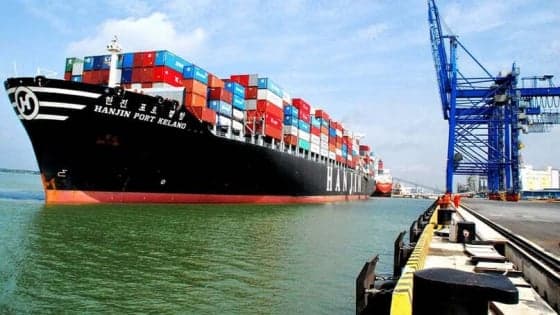
Within this framework, the development of the marine economy deserves particular priority. Vietnam is a maritime nation. Supporting industries must therefore develop capabilities to serve seaports and logistics; shipbuilding and ship repair; marine engineering and equipment; offshore wind power and marine energy; offshore and island infrastructure; marine aquaculture and processing; monitoring and surveillance equipment; corrosion-resistant materials; underwater robots and unmanned vehicles; communications and positioning technologies; and systems supporting maritime safety, search and rescue, national defense and security.
Many of the technologies required across these development spaces have clear dual-use applications. Appropriate development mechanisms are therefore needed to enable Vietnamese enterprises both to participate in large-scale civilian markets and to accumulate the technological, manufacturing and strategic supply-chain capabilities required by the country.
With this approach, supporting industries should no longer be regarded as industries that simply “follow” existing sectors by supplying selected components. Instead, they must become a forward-looking capability that prepares the country for new growth frontiers.
In particular, the development of dual-use industries will not only open new markets for Vietnamese enterprises, but also directly strengthen technological self-reliance, supply-chain adaptability and the resilience of the national economy.
At the same time, the role of the Vietnam Chamber of Commerce and Industry (VCCI) and business associations in policymaking and policy implementation should be further strengthened. During its eighth term, VCCI should continue to reinforce its role as the “common home” of the business community, a bridge between enterprises and policymakers, and a driving force in creating a more enabling environment for Vietnamese businesses.
In this new stage of development, Vietnam needs to shift from the mindset of “helping enterprises overcome difficulties” toward “creating the conditions for Vietnamese enterprises to grow and work alongside the State in implementing national development strategies.” The Party’s resolutions and the State’s policies have established the major strategic directions toward 2030 and 2045. The next critical task is implementation – translating these orientations into concrete action programs for each ministry, sector, locality, business association and enterprise.
For Vietnam’s private-sector business community, this represents both an opportunity and a responsibility. Enterprises must proactively identify strategic sectors, invest in technology, develop human resources, strengthen supply-chain linkages, and progressively master the products and technologies the country needs.
If the State can establish an institutional framework that is both sufficiently strong and responsive; if VCCI and business associations can build sufficiently deep linkages; if enterprises proactively embrace technological innovation; and if international investors genuinely work alongside Vietnamese businesses, I believe supporting industries can become one of the key forces for realizing Vietnam’s national development goals for 2030 and its vision for 2045.
Nguyen Hoang, Member of the VCCI Executive Committee; Chairman of N&G Group; Chairman of the Hanoi Supporting Industries Business Association (HANSIBA)