VIETNAM CHAMBER OF COMMERCE AND INDUSTRY
Liên Đoàn Thương Mại Và Công Nghiệp Việt Nam
Thu, Nov 27, 2025, 13:56:00

Since the beginning of the year, the U.S. Federal Reserve (Fed) has kept interest rates unchanged at 4.5% five times and cut rates by 25 basis points twice at the meetings on September 17 and October 29. Since 2022, the Fed has raised interest rates 11 times, and current rates remain at a 20-year high.
The divergence between Vietnam’s rate-cutting policy and the Fed’s high-rate stance has created a notable gap, pushing the exchange rate upward.
We believe companies with high levels of USD-denominated debt will be adversely affected as USD appreciation leads to foreign-exchange losses. This drives down the profitability of firms borrowing in USD.
However, the degree of impact varies depending on whether a company generates USD revenue or benefits from movements in other foreign currencies to offset FX losses.
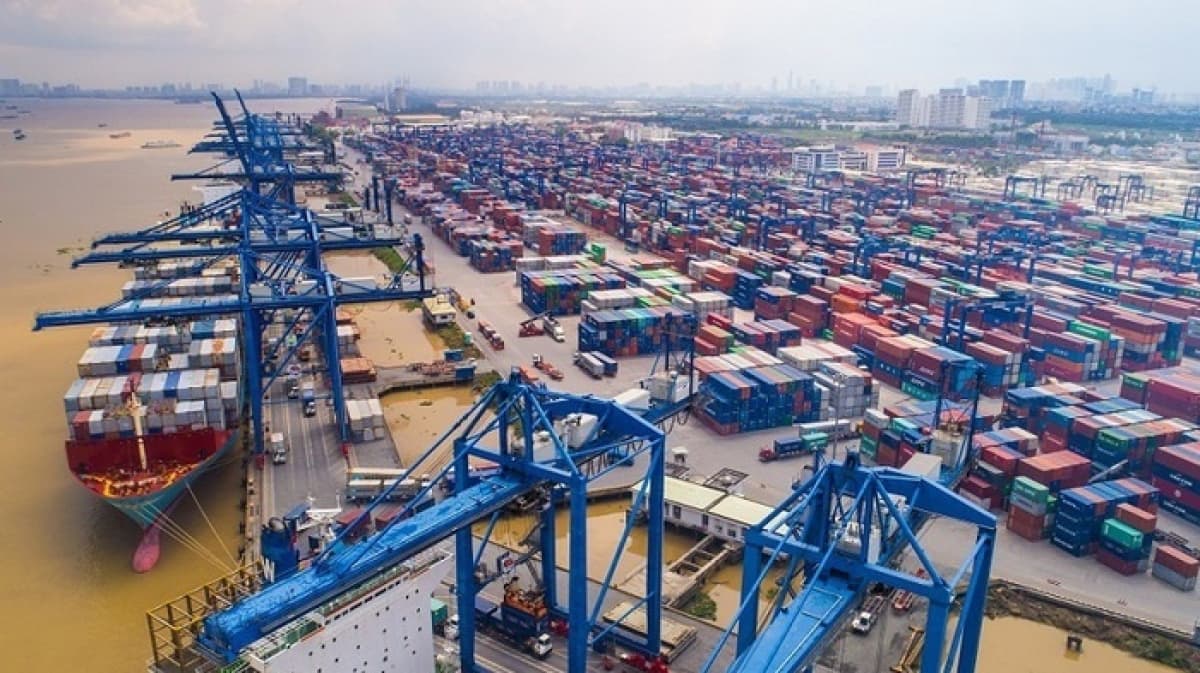
Export-oriented companies with significant foreign-currency revenues will benefit from a rising USD/VND exchange rate. Vietnam’s key export sectors include textiles and garments, seafood, footwear, electronics, agricultural products, rubber, and wood.
Meanwhile, companies relying on USD-denominated imports of raw materials will face challenges due to higher USD prices. Higher import prices may also weaken domestic consumer demand, negatively affecting profitability for import-dependent businesses.
Recent developments in exchange rates
U.S. consumer price index (CPI) data for September showed a 0.3% increase from August 2025, with year-over-year inflation at 3%, far from the Fed’s 2% target for 2025. This may pressure the Fed to maintain high interest rates longer and slow down further rate-cut decisions. At the same time, it supports the U.S. Dollar Index (DXY) - which tracks the USD against six major currencies - remaining anchored at high levels, currently around 100 points.
The divergence between Vietnam’s rate-cutting approach and the Fed’s high-rate stance has widened the interest-rate gap, pushing up the USD/VND exchange rate. Although domestic interest rates have trended slightly higher recently, the SBV continues to pursue a controlled accommodative monetary policy to support growth. However, this stance may face challenges due to exchange-rate pressures.
The Fed is expected to continue cutting interest rates later this year and in 2026, helping narrow the interest-rate gap between Vietnam and the U.S., thereby creating room for Vietnam’s monetary policy to remain accommodative while still maintaining exchange-rate stability - supporting the goal of achieving double-digit economic growth.
On November 14, 2025, the SBV’s central exchange rate was 25,122 VND/USD, near its all-time high. With the ±5% band, commercial banks can trade at up to 26,378 VND/USD or as low as 23,866 VND/USD. From January 2 to November 14, 2025, the central rate rose 3.2%, higher than the 1.8% increase during the same period in 2024.
This trend may continue to affect the business performance of USD borrowers and import-export firms - partly reflected in revenues and financial expenses during the first three quarters of the year - and is expected to show up further in Q4 results.
Impact on listed companies
On October 27, 2025, Vietcombank’s USD selling rate stood at VND26,351, up 3.1% from the beginning of the year.
Companies with USD-denominated debt
Companies with large USD-denominated debt will incur FX losses when the USD appreciates, reducing profitability. However, actual impacts depend on each company’s internal operations, net foreign-currency position, and timing of revenue and cost recognition. Some firms may even benefit from other foreign-currency movements that offset USD losses.
Export-oriented companies
Companies earning foreign-currency revenues from exports benefit when USD/VND rises. Vietnam’s major export sectors include textiles, seafood, footwear, electronics, agricultural products, rubber, and wood.
Regading textiles (MSH, TCM, TNG, STK…), impact is two-sided because they import most raw materials but export finished products. Exchange-rate fluctuations generally have limited impact on overall results.
Seafood (VHC, MPC, IDI…) companies benefit significantly as most revenues come from exports and domestic costs and USD debts are relatively modest.
Rubber and tires (DRC, CSM…) firms typically hold minimal USD debt and are net exporters, thus benefit from USD appreciation.
Food & beverage (VNM) enterprises primarily have domestic revenues and low USD revenue share which mean low sensitivity to exchange rates. They may benefit slightly from some exports or foreign-currency holdings, but face risks from imported raw materials if exchange rates spike.
For steel (NKG, HPG…) companies, impact is mixed. NKG and HPG have large export proportions (65% and 31% of revenue, respectively) but also large USD borrowings, so net effect depends on each firm’s financial structure.
Regarding wood (PTB, ACG…) firms, high export revenue, domestic costs, and low FX debt make them clear beneficiaries of USD appreciation.
Import-dependent companies
Companies importing raw materials in USD face difficulties as USD gains value. Higher import prices in Vietnam may also reduce consumer demand, thereby affecting profitability for import-dependent businesses.