VIETNAM CHAMBER OF COMMERCE AND INDUSTRY
Liên Đoàn Thương Mại Và Công Nghiệp Việt Nam
Fri, Jan 23, 2026, 14:04:00
Nguyen Van Dung, Vice Chairman of the Ho Chi Minh City People’s Committee, made the remarks on Wednesday while meeting with a delegation of Singaporean logistics service companies led by Andrew Chin.
Andrew Chin is chairman of the S.M.A.R.T Entrepreneurship Club and a senior lecturer at the Singapore University of Technology and Design.
 Andrew Chin, chairman of the S.M.A.R.T Entrepreneurship Club, at a meeting with HCMC leaders in the city on January 21, 2026. Photo courtesy of the municipal People's Committee.
The Singaporean delegation said it was exploring investment opportunities in logistics services and seeking to connect with Vietnamese partners.
Delegates also asked city leaders to outline HCMC’s development strategy, including its ambition to become a regional service, finacial and economic hub, as well as investment incentives in finance, infrastructure and logistics.
Dung said that following the merger with Ba Ria-Vung Tau and Binh Duong provinces last July, the new HCMC is classified as a special city, covering about 6,772 square kilometres with a population of more than 14 million.
The city is restructuring its development space under a multi-polar, integrated and “super-connected” approach, mobilizing all available resources to build a modern and synchronized urban infrastructure system. Under this framework, the city plans a model of “three regions - one special zone - three corridors - five pillars”.
The three regions include the former Binh Duong area, focused on high-tech manufacturing; the former Ba Ria-Vung Tau area, oriented towards the marine economy, coastal tourism, clean energy and logistics; and the former HCMC core, positioned as a center for high technology, services and international finance.
Con Dao (in the former Ba Ria-Vung Tau) is designated as a special zone, aimed at developing sustainable, green island tourism and becoming a modern, liveable destination of international and regional standing.
The three development corridors comprise a north-south axis along the Saigon River towards the sea; an eastern corridor linking Ba Ria-Vung Tau and Can Gio; and an east-west corridor connecting Dong Nai and Tay Ninh via National Highway 1A and the Trans-Asia route.
The five pillars are high-tech industry; logistics linked to seaports, airports and free trade zones; the International Financial Center (IFC); tourism and cultural industries; and education, healthcare, and science-technology.
Dung said the city aims to maintain its role as the economic engine of Vietnam’s Southern Key Economic Zone and the country as a whole, while increasing its contribution to national growth.
“Alongside national investment incentives, Ho Chi Minh City will continue to implement special mechanisms and policies to attract domestic and foreign resources, while streamlining administrative procedures to be faster, more transparent and more effective,” he said, adding that upgrading the logistics system is a core priority.
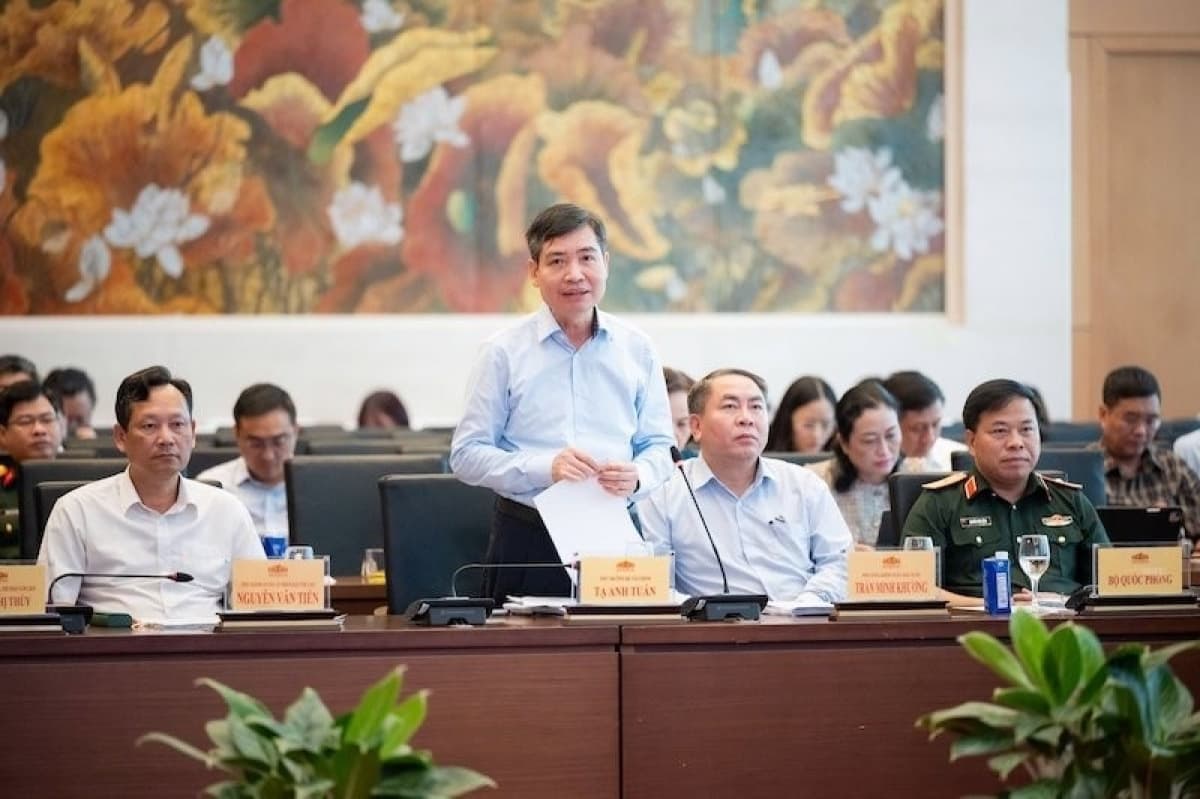
 Nguyen Van Dung, Vice Chairman of the Ho Chi Minh City People’s Committee, at the meeting, HCMC, January 21, 2026. Photo courtesy of the municipal People's Committee.
Metro expansion and IFC progress
Earlier, Dung had met with Matt Western, the UK government’s trade envoy to Vietnam, to discuss urban rail development and the IFC.
Following the merger and expanded administrative boundaries, HCMC plans to develop 27 metro lines with a total length exceeding 1,000 km. Several projects are being accelerated under special mechanisms, including the parliament's Resolution 188.
Dung said construction has begun on Metro Line No. 2 (Ben Thanh-Tham Luong), spanning 11.3 km, with plans to follow up with a line linking Tan Son Nhat International Airport and the future Long Thanh International Airport.
The city aims to complete six metro lines totalling about 187 km between 2025 and 2030, promoting transit-oriented development (TOD). It also plans to mobilize concessional funding for urban rail projects and earmark around 60,000 hectares for TOD zones in expanded inner-city areas and satellite areas.
On the IFC, Dung said the city is completing facilities and expects to unveil the IFC’s governing body in early February 2026.
He called for continued support from the UK in financial services, IFC operations and workforce training, and urged London to help Vietnam make effective use of the Just Energy Transition Partnership (JETP) to achieve net-zero emissions by 2050.
In response, Western said he appreciated the upgrade of Vietnam-UK relations to a comprehensive strategic partnership. He said the UK delegation included more than 15 companies and financial institutions with experience in metro planning, technology and operations, capable of mobilizing up to $6.5 billion for metro projects.
He praised Vietnam for issuing key regulations for the IFC, including policies on monetary control, capital flow liberalization, and international operating standards, which he said are critical for investor confidence.
To further strengthen the IFC’s legal framework, Western suggested broader application of common law in resolving international financial disputes and removing age limits for judges to attract high-quality personnel to specialized courts.
Vietnam aims to launch its International Financial Center (IFC) in Ho Chi Minh City by no later than February 9, Prime Minister Pham Minh Chinh said on January 16, adding that an international arbitration center and a specialized court would be inaugurated at the same time.
The country has adopted a “one center, two destinations” model for the IFC, with hubs in HCMC and Danang.
On January 9, it launched its IFC in the central city of Danang. The center, inaugurated at Danang Software Park No. 2, is designed to focus on digital finance, sustainable finance, and controlled regulatory sandboxes for new financial products and business models, officials said.
Twelve companies, including several foreign-invested firms, have officially joined the center in Danang. Membership certificates were awarded to the 12 companies on the same day.