VIETNAM CHAMBER OF COMMERCE AND INDUSTRY
Liên Đoàn Thương Mại Và Công Nghiệp Việt Nam
Mon, Dec 29, 2025, 12:18:00
 Architect Truong Van Quang, deputy secretary general of the Vietnam Urban Planning and Development Association (VUPDA). Photo courtesy of Reatimes/Trong Hieu.
Capital from investors in the northern region, especially Hanoi, has been strongly shifting into the southern real estate market. What is your assessment of the underlying driving force behind this strong "southward migration" of capital?
This strong "southward migration" of capital is due to several reasons. Real estate prices in the North are currently too high. Meanwhile, the South, after the restructuring of territorial space and the redistribution of production forces, has become the most dynamic economic region in the country with many development poles, opening up opportunities for multilateral, comprehensive, and highly integrated business and investment.
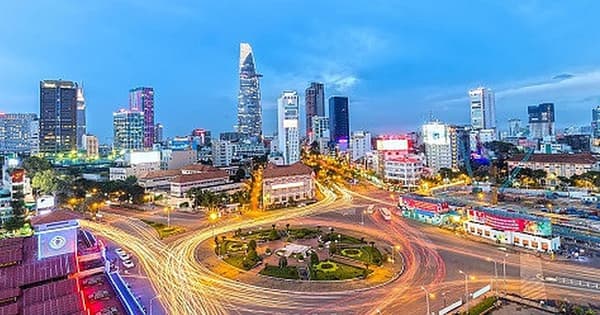
The new HCMC (after the merger with Ba Ria-Vung Tau and Binh Duong provinces) will become a regional-scale center for finance, services, trade, logistics, high-tech industries, and coastal tourism, with a development orientation based on digital technology; a green economy; environmental sustainability; and a harmonious, interconnected and open society embodying the advanced values of Asia and the world.
As the "economic heart" of the country, HCMC has become a leading megacity in Southeast Asia and Asia, with over 14 million inhabitants, accounting for approximately 24% of the national GDP. The city possesses a "soft" ecosystem, with distinctive mechanisms and policies.
Therefore, the HCMC real estate market will certainly benefit, becoming the most attractive destination for investment capital at present. In fact, investors from the North, especially Hanoi, account for a large proportion of investors in the southern real estate market.
What are the core factors that contribute to the enduring appeal and continuous value appreciation of the luxury real estate segment in the heart of Ho Chi Minh City?
The attractiveness of the luxury real estate segment in the central area of HCMC is shaped by several factors.
Firstly, the vision for HCMC's future development is to become an "international megacity" - a smart, green, and innovative city, exemplary not only in terms of economic strength but also in its richness of culture, art, sports, entertainment, and a modern, dynamic, youthful, and fresh lifestyle.
Secondly, the city benefits from distinctive mechanisms and policies (the Politburo's Resolution 31-NQ/TW; the parliament's Resolution 98/2023/QH15).
Thirdly, HCMC has a prime location and a well-compiled urban development plan (the Prime Minister's Decision No. 1125/QD-TTg: Approving the revised master plan for HCMC until 2040, with a vision to 2060).
Fourth, HCMC has a comprehensively planned and modern transport infrastructure system, capable of flexibly connecting the city with neighboring localities, the whole country, and internationally according to strategic priorities; strengthening connections between areas within the city to organize urban activities efficiently; and developing the city according to the orientation of public transport development.
Fifth, it has a high-class living ecosystem, a modern, ecological, and sustainable city with diverse amenities.
The value of luxury real estate in the heart of HCMC tends to increase sustainably due to the above advantages and the pressure from limited land supply, scarcity of supply, and continuously increasing demand from the superior economic efficiency and quality of life that this segment offers.
As Ho Chi Minh City aims to become a world-class megacity, what essential requirements and trends must luxury real estate projects in the city center meet to not only attract high-quality investment but also create a sustainable, civilized community with international standards?
Technical infrastructure and institutions are necessary conditions, however, the sufficient condition for the successful development of HCMC's central urban area is to create "soft" infrastructure - a high-quality living and working environment to attract talent, experts, and international investors to settle and work there.
Social infrastructure (schools, hospitals, sports facilities, public amenities, etc.) is a fundamental and mandatory requirement for the sustainable development of residential communities. Projects must be built according to the criteria of "Integrated - smart - TOD - green - civilized and friendly".
In particular, it is necessary to create attractiveness through the uniqueness or "personality" of the project. It is essential to promote the value of the diverse architectural, landscape, and ecological space of the city, especially the distinctive values of a riverside and coastal urban area, and to adapt to climate change.
What will the presence of foreign experts and investors living, working, and investing in the International Financial Center impact Ho Chi Minh City's luxury property market? And their impact on the formation of an elite residential community in next-generation financial city models?
HCMC is an attractive destination, a hub for talent and entrepreneurs from both Vietnam and abroad, a center for startups and innovation, and a breeding ground for cutting-edge trends and models, especially with the presence of the International Financial Center.
HCMC is not only the economic engine of the nation but will also become a modern metropolis with significant influence within the global network of cities. It will form a community of global elite residents, including entrepreneurs and professionals from many countries around the world.
I believe that rental prices will be very attractive for investors. The value of the apartments will increase significantly and sustainably as infrastructure develops over time.
Vietnam on December 21 announced the establishment of its International Financial Center (IFC), with Prime Minister Pham Minh Chinh pledging to fast-track the resolution of investor difficulties through a “special process”.
The IFC is located in both HCMC and Danang, following the model of “one center, two destinations,” according to a resolution adopted by the country’s legislature in June.
HCMC will serve as the main hub, focusing on large-scale financial markets including securities, bonds, banking, fund management, and listing services. Danang will prioritize financial services related to logistics, maritime activities, free trade, and supply chains for industrial and agricultural sectors.