VIETNAM CHAMBER OF COMMERCE AND INDUSTRY
Liên Đoàn Thương Mại Và Công Nghiệp Việt Nam
Mon, Aug 04, 2025, 08:42:00
Speaking at the “Green transformation and recycling Day 2025” Forum on Thursday, Duoc emphasized that green transformation is not only a strategic pathway to ensure economic security but also a key to attracting investment and export opportunities.
He stressed that this transition is essential for improving competitiveness and maintaining HCMC’s role as Vietnam’s economic powerhouse. “HCMC must adopt a forward-thinking mindset. It’s not just about isolated green projects - we need strategic initiatives that form part of a broader, sustainable development framework.”
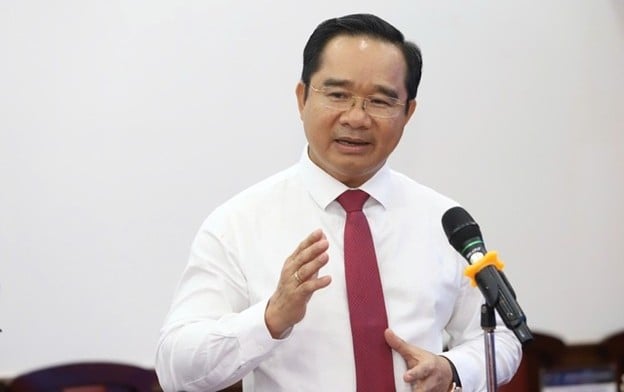 Chairman of the municipal People’s Committee, Nguyen Van Duoc. Photo courtesy of Thanh Nien (Young People) newspaper.
In terms of infrastructure, Duoc stressed the need to shift from a construction-oriented approach to building a smart, sustainable ecosystem, with green energy development at the core.
He cited Metro Line 1 as an example: “It should not be seen as just a transportation project. It must serve as the backbone of a multi-modal public transport network, integrating electric buses, waterway systems, and eco-friendly personal mobility solutions to support the city’s green transition,” he said.
Duoc also called for a shift from a traditional waste-processing mindset to one that views waste as a resource. Reducing waste, promoting reuse, and implementing source-level waste sorting should be foundational practices.
Waste-to-energy plants, he noted, should serve not only to treat pollution but also to generate power - laying the groundwork for a modern recycling industry.
The plan to build an EV battery recycling center, he reiterated, is a proactive step toward embedding the city into the global green supply chain.
To support this vision, HCMC will prioritize investment in international-standard research centers (Centers of Excellence), as well as startups developing technologies in environmental protection, energy, and new materials.
Duoc urged the business community to view compliance with environmental regulations and green standards not as a burden, but as an opportunity to innovate, expand markets, and enhance their brand reputation.
However, the city’s green transformation is not without challenges.
Dinh Hong Ky, chairman of the HCMC Green Business Association (HGBA), pointed out that increasingly strict international regulations - such as the EU’s Carbon Border Adjustment Mechanism (CBAM), ESG standards, emissions caps, and supply chain transparency requirements from the U.S., Japan, and Europe - are creating major obstacles for Vietnamese businesses.
Another concern is the rise of “greenwashing,” where companies declare ESG or carbon neutrality commitments without providing credible data or evidence. “This creates market distortion and unfair competition. It undermines consumer and investor confidence, and damages trust in the green transformation process,” Ky warned.
He also highlighted the critical role of advanced technologies - such as AI, IoT, blockchain, and renewable energy - in supporting green initiatives. However, he noted that high upfront costs pose significant barriers, especially for small and medium-sized enterprises (SMEs).
"AI helps improve efficiency, but it also comes with its own paradoxes. It can lead to job losses, data misuse, and - without proper integration and regulation - it could even contradict the goals of sustainability,” he explained.
Perhaps most concerning, Ky said, is that up to 90% of domestic enterprises are not truly ready for the green journey. Many struggle with limited capital, a shortage of skilled professionals, and weak data collection and analytics - key components for meeting ESG requirements.