VIETNAM CHAMBER OF COMMERCE AND INDUSTRY
Liên Đoàn Thương Mại Và Công Nghiệp Việt Nam
Wed, Feb 04, 2026, 15:10:00
HiHUB has three founding shareholders: the Hanoi municipal government, Hanoi University of Science and Technology, and CMC Corporation. The remaining 30% stake is held by the two partners.
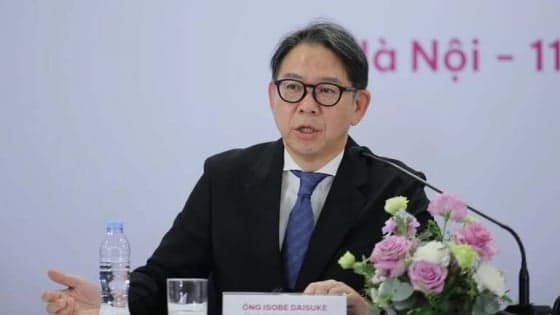
Speaking at the launching ceremony in Hanoi on Thursday, Vice Chairman of Hanoi, Truong Viet Dung, said the creation of HiHUB “is not simply about adding another unit,” but about establishing a new model in which the state sets direction and businesses take the lead in operations. "The approach shifts from budget allocations to co-investment and risk sharing, and from fragmented support programs to ecosystem coordination".

Unlike traditional public administrative units, HiHUB will operate as a joint stock company with state capital under modern corporate governance standards, including financial transparency, risk controls, and accountability to shareholders and the law.
HiHUB will serve as a coordinating hub, channeling urban development challenges to universities and research institutes, linking startups with investors and markets, and pairing technological initiatives with controlled pilot mechanisms. Data is expected to serve as the foundation for tangible products and intellectual property.
Issues in areas such as smart cities, digital healthcare, digital education, digital culture, environment, and urban security will be framed as “open problem statements,” inviting enterprises and research institutions to collaborate on solutions.
“The city aims to manage state capital under modern, transparent standards without stifling creativity; to control risks while accepting experimentation within defined limits,” Dung said.
HiHUB chairman Tran Quang Hung said Hanoi has an opportunity to position itself as a controlled testing hub for new technologies and business models targeting global innovators. He cited the city’s large domestic market and young, innovation-receptive population as competitive advantages.
“If leveraged effectively, Hanoi can attract capital, technology and international expertise, while enabling young Vietnamese founders to scale up more quickly,” Hung noted.
HiHUB’s first strategic priority is to shift mindset, he added, emphasizing that Hanoi should not rely solely on local resources but actively attract the global innovation community to test advanced technologies and business models in the city.
Potential focus areas include artificial intelligence applications, autonomous vehicles, financial technology, digital assets, and creative industries linked to Hanoi’s cultural identity.
The second strategic pillar centers on external engagement, with HiHUB aiming to create favorable conditions for overseas Vietnamese professionals and technology firms to return, work and launch startups. The center also intends to coordinate and safeguard key domestic creative industries.
To implement its vision, HiHUB plans a four-phase development model. In its final stage, the center aims to become a magnet for domestic and foreign investment funds. At that point, its capital would serve not only for direct investment but also as a form of credit enhancement to mobilize broader social capital.