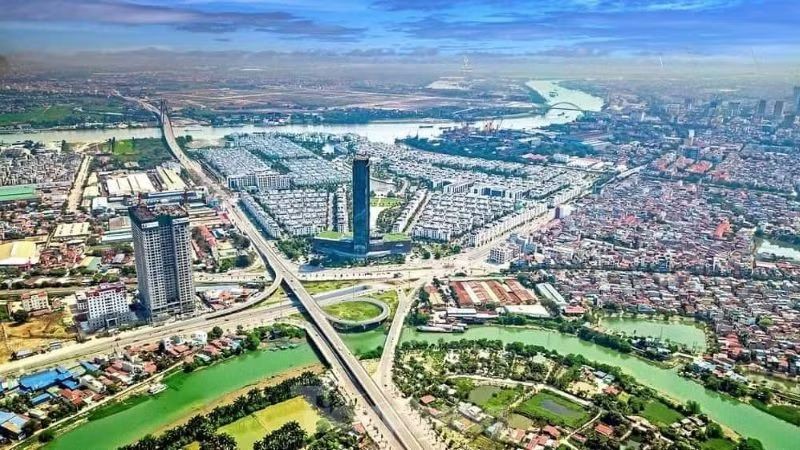
At the same time, the city's urban expansion towards the northern bank of the Cam River is laying the foundation for a modern, multi-centred metropolitan area that is expected to become increasingly integrated into regional and global development over the coming decade.
According to Do Huu Huynh, Chairman of the Hai Phong Real Estate Association, Hai Phong has become an increasingly attractive destination for investment capital. This is underpinned by the city's consistently strong economic growth, its well-developed and highly connected transport infrastructure, significant remaining growth potential and favourable conditions for long-term investment strategies.
According to Do Thu Hang, Senior Director of Advisory Services at Savills Ha Noi, Hai Phong currently possesses numerous advantages in attracting foreign investment. Foremost among these are its integrated transport infrastructure, including a deep-water seaport, an international airport and convenient connectivity with the capital city of Ha Noi. In addition, expressway links to the Chinese border provide further strategic advantages for trade and logistics.
Hai Phong also benefits from preferential policies associated with the development of its economic zones. These zones offer a range of tax incentives for businesses, creating favourable conditions for enterprises to invest, lease land and expand their manufacturing operations.
Currently, the market has seen the participation of many foreign investors with extensive expertise in developing and operating port logistics services. Compared to some other localities with potential for developing deep-water ports, Hai Phong has an advantage in that it has already formed a relatively complete ecosystem for port operation and logistics services.
Furthermore, the city still has substantial land reserves available for the continued expansion of port-related industries and services. Hai Phong has also succeeded in attracting many of the world's leading manufacturing groups, as well as major regional investors. This has created a positive spillover effect, drawing in a growing network of supporting and satellite manufacturers.
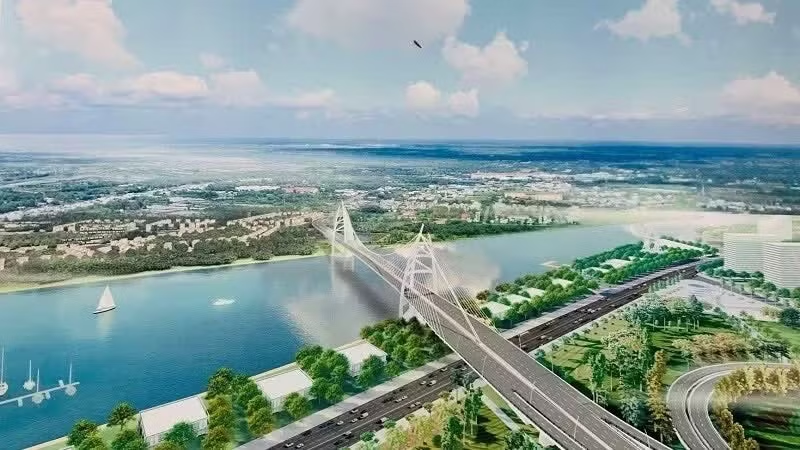
For Hai Phong, in the shift towards the area north of the Cam River, it is crucial to ensure a balance between urban development and sustainable elements, including green buildings, sustainable development, and attractive landscapes. The Cam River itself represents a valuable natural asset that could be leveraged to create an attractive riverside environment along both banks, enhancing the city's appeal as a modern and liveable urban centre.
With its strategic geographical location, well-developed infrastructure and investment-friendly policies, Hai Phong is widely regarded as having considerable potential to attract foreign direct investment (FDI). These advantages also help optimise land lease costs and reduce transportation expenses, making the city an increasingly attractive destination for overseas investors.
Notably, Hai Phong's urban expansion towards the northern bank of the Cam River is seen as an inevitable step. The primary reason is that the Thuy Nguyen area possesses extensive land reserves and offers all the necessary conditions for the development of the city's new administrative centre, including headquarters of departments, branches, and branches, and expand new urban areas.
This lays the groundwork for the formation of a new urban area across the river, acting as a counterweight to the existing city center. In reality, the current state of Hai Phong is largely based on long-term planning, while the transportation infrastructure has gradually become inadequate to meet the demands of the new development phase.
"This is precisely why the administrative centre is being relocated and why both residents and development activities are gradually shifting towards the northern bank of the Cam River. If the area is planned and developed in a comprehensive and well-structured manner, Cam River is expected to evolve into a modern urban district comparable to many leading cities around the world and the region," said Do Thu Hang.
There are many successful models of cities developed on both sides of rivers around the world, such as Singapore with the Marina Bay area, or Shanghai with urban areas developed on the other side of the river. These are all examples with similar characteristics. However, to achieve that, Hai Phong needs to make great efforts in investing in planning, improving the quality of construction, and attracting appropriate investment resources.
Hang further noted that, as Hai Phong undergoes this urban transformation, it will be crucial to strike a balance between urban expansion and sustainable elements including green buildings, sustainable development, and attractive landscapes. The Cam River itself is a valuable natural asset that could be harnessed to create an impressive riverside landscape along both banks.
To realise this potential, Hai Phong will need to continue refining its urban planning and stepping up investment in the years ahead. Only through well-planned and sustained development can the northern bank of the Cam River evolve into a successful new urban centre comparable with leading riverfront cities across the region and around the world.