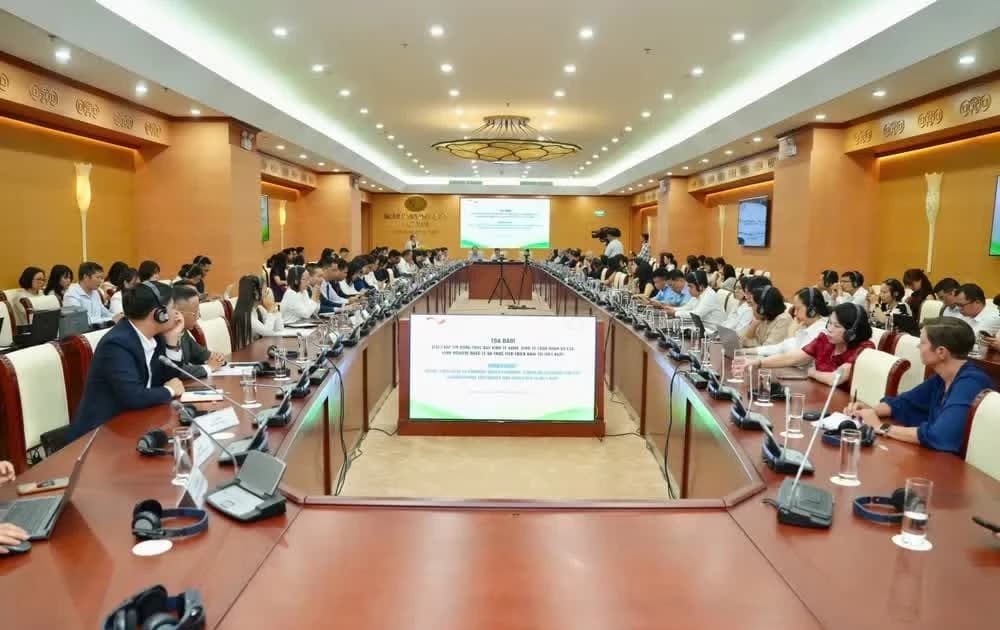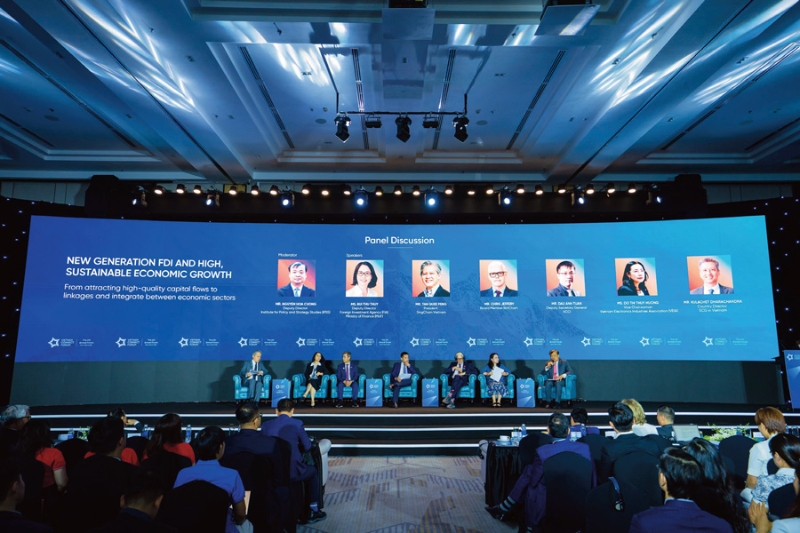
After four decades of successfully drawing in FDI, Vietnam now stands at a crucial juncture. The era of prioritizing sheer volume of capital inflows has given way to a more discerning approach focused on high-value contributions. Policymakers, industry leaders, and investors convened at the Vietnam Connect Forum 2026 to chart this transformation, emphasizing technology transfer, supply chain integration, and mutual growth between foreign and domestic enterprises.
From quantity to quality
Ms. Bui Thu Thuy, Deputy Director of the Foreign Investment Agency at the Ministry of Finance, articulated this strategic pivot quite clearly. “After 40 years of attracting foreign capital, Vietnam can no longer rely on old approaches to FDI attraction,” she said. “In the past, the priority was to secure as much investment as possible to support development. Today, however, Vietnam needs more than capital; it needs knowledge, technology, modern management practices, and the ability to meet global standards in order to move up the international value chain.”
This new strategy marks a departure from broad-based incentives toward the selective attraction of high-tech and strategic projects with strong spillover effects. Vietnam seeks deeper contributions from FDI in workforce development and boosting the capabilities of domestic enterprises. “Moving forward, Vietnam’s FDI attraction model will shift from being broad-based to more selective, prioritizing high-tech and strategic technology projects with strong spillover effects,” Ms. Thuy explained. “The country will also move away from relying heavily on tax incentives.”
After more than 20 years working in this field, she believes that strengthening links between FDI and domestic enterprises remains one of the biggest challenges. However, this cannot come from only one side. “FDI firms must share technical standards and supply chain opportunities, while domestic enterprises, bolstered by recent policies like Politburo Resolution No. 68-NQ/TW on private sector development, need to enhance governance and adaptability,” she continued. “For these enterprises to participate in strategic technology sectors and integrate more deeply into global value chains, they must be given opportunities to grow alongside FDI enterprises.”
The strategy also tailors approaches by locality - a high-tech focus in growth hubs and appropriate investments elsewhere - while prioritizing infrastructure in transport, digital, data, and energy sectors, which are vital for semiconductors and advanced manufacturing. Ultimately, FDI enterprises are viewed as long-term partners.
More importantly, she added, the next phase requires stronger collaboration. FDI enterprises are an integral part of Vietnam’s economy and are expected not only to benefit from the investment environment but also to grow alongside the country. Investment policy is gradually shifting from incentives toward support and partnership. “The ultimate expectation is that foreign corporations will see Vietnam not simply as a production base but as a second home for long-term development, shared responsibility, and meaningful contributions to economic growth,” Ms. Thuy said.
Overcoming barriers
While Vietnam’s FDI success story is well-documented, the links between foreign giants and local suppliers remains a stubborn bottleneck. Domestic firms, predominantly small and medium-sized enterprises (SMEs), face numerous hurdles in technology, scale, trust, and ecosystem integration. Forum participants delved into these challenges with pragmatic optimism, urging a shift in mindset and proactive collaboration.
Ms. Do Thi Thuy Huong, Vice Chairwoman of the Vietnam Electronics Industries Association, pinpointed the core issue. “Vietnam has been highly successful in attracting FDI, but the level of links between the FDI sector and domestic enterprises remains a major bottleneck,” she said. “The most critical constraint lies not only in technology or capital, but in the ability of Vietnamese enterprises to consistently and sustainably meet international standards.”
She described the “trust barrier” as particularly insidious. Global corporations hesitate on technology transfer due to concerns over sustained quality. “FDI enterprises may be willing to transfer technology, but they remain concerned about whether Vietnamese businesses can sustainably meet international standards in practice,” she explained. Many local firms excel at prototypes but falter in mass production consistency or synchronized deliveries. Fragmented ecosystems further complicate matters, forcing FDI players to source suppliers piecemeal.
She added that Vietnamese enterprises also lack strong ecosystem links. While FDI enterprises require a complete supply chain, from components and materials to logistics, domestic companies still tend to operate in fragmented and disconnected ways. “As a result, FDI enterprises are forced to search for suppliers individually, limiting the effectiveness of supply chain integration,” she said. “At the same time, domestic enterprises themselves often do not know one another well enough to jointly fulfill large orders.”
To become a high-value link in global supply chains, she continued, Vietnamese enterprises must first change their development mindset. “We cannot approach global supply chains with a short-term perspective or compete solely on low cost,” she believes.
She outlined three pillars for sustainable development: green transition, digital transformation with robust data governance, and investment in people. “Rather than waiting for FDI companies to find them, domestic businesses need to demonstrate their capabilities and actively seek partnerships,” she said. “This should be viewed as a win-win relationship, in which both sides are prepared to move forward together, develop together, and achieve shared prosperity.”
Mr. Dau Anh Tuan, Deputy Secretary General of the Vietnam Chamber of Commerce and Industry (VCCI), reinforced these points with survey data. “One finding is somewhat concerning: the proportion of small-scale FDI enterprises continues to rise,” he noted. Major players like Samsung and Intel often import their supplier ecosystems, limiting local opportunities. Capital access poses another major obstacle. “Vietnamese companies still rely heavily on bank loans with relatively high interest rates and short repayment periods,” he said. Foreign competitors invest upfront, while local players wait for secured contracts, putting them at a disadvantage.
Legal and governance gaps exacerbate the issue. “The current legal framework does not allow enterprises to use factories or machinery attached to land as collateral for loans from foreign financial institutions,” he explained. Transparency in corporate governance and talent attraction also lag behind.
Mr. Tuan therefore called for policy evolution. “The upcoming Politburo resolution on FDI will introduce a range of policy measures to incentivize foreign investors and major corporations to increase the participation of Vietnamese enterprises in their supply chains,” he said. Unlocking diverse financing channels beyond land collateral is also essential to fuel growth.
These insights painted a picture of maturing domestic enterprises ready for deeper integration, provided systemic barriers are addressed through collaboration and reform.
Foreign perspectives on Vietnam’s potential
Foreign investors brought valuable external viewpoints to the Forum, framing Vietnam as a promising yet competitive destination requiring sustained partnerships. Their messages centered on trust, quality, sustainability, and holistic ecosystem development.
Mr. Chris Jeffery, Board Member at the British Chamber of Commerce in Vietnam, expressed enthusiasm about Vietnam’s high-value ambitions. “From the UK’s perspective, this is a fantastic time and a tremendous opportunity,” he said. “Vietnam’s ambition is clearly focused on high-value services, innovation, and creation, which aligns closely with the UK’s strengths and experience as a country.”
He emphasized foundations for initiatives like the International Financial Center. “The structures, regulations, and supporting frameworks must be built not only for today but for tomorrow as well,” he said. Talent development and environmental, social, and governance (ESG) principles are necessary. “Vietnamese professionals should be at the forefront of driving these major developments in the future,” he added.
To attract FDI, he continued, Vietnam must compete globally. Investors today are looking for long-term partnerships rather than short-term transactions. Stability is essential, and the key word is partnership. In many ways, partnership resembles a marriage - it is built on trust, understanding, and shared commitment. Those elements are fundamental to success. Long-term commitments do not happen overnight, but if these foundations are in place, the rest will follow. Sustainable growth may not always be fast, but it is the right path forward.
Mr. Kulachet Dharachandra, Country Director of the SCG Group in Vietnam, spoke of its 30-year success story with deep local ties. SCG operates around 50 factories in the country, with $7 billion invested, collaborating with partners like PTSC and FPT. “I believe there is a shared future between FDI enterprises and Vietnamese companies,” he affirmed. “Vietnam is at a very exciting moment - a turning point toward the quality of investment.”
He highlighted three quality pillars: talent (spending on people not as an expense, but as an investment), products and processes through innovation (for e.g., low-carbon solutions), and capabilities via smart manufacturing, automation, and AI. “One positive aspect of Vietnam is the government’s clear commitment and direction, particularly in relation to net-zero and green transition goals,” he said. “At the policy level, the roadmap is becoming increasingly clear. The next challenge, however, lies in execution.”
Mr. Tan Quee Peng, President of the Singapore Chamber of Commerce in Vietnam, noted Vietnam’s strengths: stability, a young workforce, trade agreements, and infrastructure progress. Singapore, the country’s largest source of FDI, sees potential beyond manufacturing. “Investors are looking for resilience, innovation, sustainability, and ecosystem integration,” he noted.
In this regard, Vietnam has much to offer, though there are areas where improvements can be made, such as regulatory predictability, transparency, execution, competitiveness, and consistency in implementation. As some participants mentioned, policies implemented in one locality should be applied consistently in all others to avoid ambiguity. Transparent and stable regulations, as well as efficient licensing procedures, are important.
Another point is services. In today’s environment, services are fluid, and competition is global. Investors are no longer looking only at Vietnam in isolation, but at what value the country can offer relative to others. “Singapore sees Vietnam as a long-term partner,” he told the gathering. The question is what value proposition Vietnam can bring to this partnership. It is not only about meeting production targets, but also about anticipating market shifts and offering value-added, innovative solutions.”
Infrastructure remains another common concern - transport links, high-speed railways, logistics networks, and broader planning. Sustainability goes beyond meeting ESG targets. “As an architect myself, I believe transport planning, power planning, and master planning must align with long-term development goals and infrastructure networks,” he said.
Additionally, talent and skills are critical. Vietnam’s workforce is increasingly capable, but the focus must go beyond production. Investors are increasingly looking for talent that can manage complex processes.
Another important issue is the link between FDI enterprises and domestic companies. On one hand are large multinational corporations, while on the other is a significant SME base. Strengthening these links is important.
Lastly, sustainability and green financing are increasingly important, as many multinationals are facing stricter carbon-related and compliance obligations. Vietnam’s policies and frameworks should align with these developments.
The Vietnam Connect Forum 2026 underscored a collective commitment: Vietnam as a high-tech, innovative hub where FDI and domestic enterprises thrive together. Challenges persist - trust, capabilities, capital, infrastructure - but solutions lie in proactive partnerships, policy innovation, and quality focus.
Vietnam’s FDI strategy promises not just economic growth but also a resilient, inclusive future where foreign and domestic players view each other as true partners in prosperity. “We take a long-term view,” said Mr. Tan. “Alignment among top leadership and a commitment to continuous improvement and innovation are essential.”