
VIETNAM CHAMBER OF COMMERCE AND INDUSTRY
Liên Đoàn Thương Mại Và Công Nghiệp Việt Nam
Wed, Aug 12, 2026, 14:32:00
Vietnam’s economy showed many bright spots during the first seven months of the year. The most notable point to highlight is foreign direct investment (FDI) capital, which continued to accelerate steadily after seven months. This affirms investors' confidence and commitment to the Vietnamese market.
Rapid Increase in Disbursed FDI
Specifically, disbursed FDI grew by 11.8% in the first seven months of 2026 to USD 15.2 billion, accelerating from 11.2% in the first six months. Coupled with a 58% surge in registered FDI commitments, total FDI reached USD 38.1 billion (61% in 6M2026). Strong FDI commitments indicate a very positive reserve of capital inflow. New investment commitments (newly registered FDI) more than doubled (2.1 times) in value and rose 7.8% in project count. Capital additions for existing projects increased 4.4% compared to a year earlier.
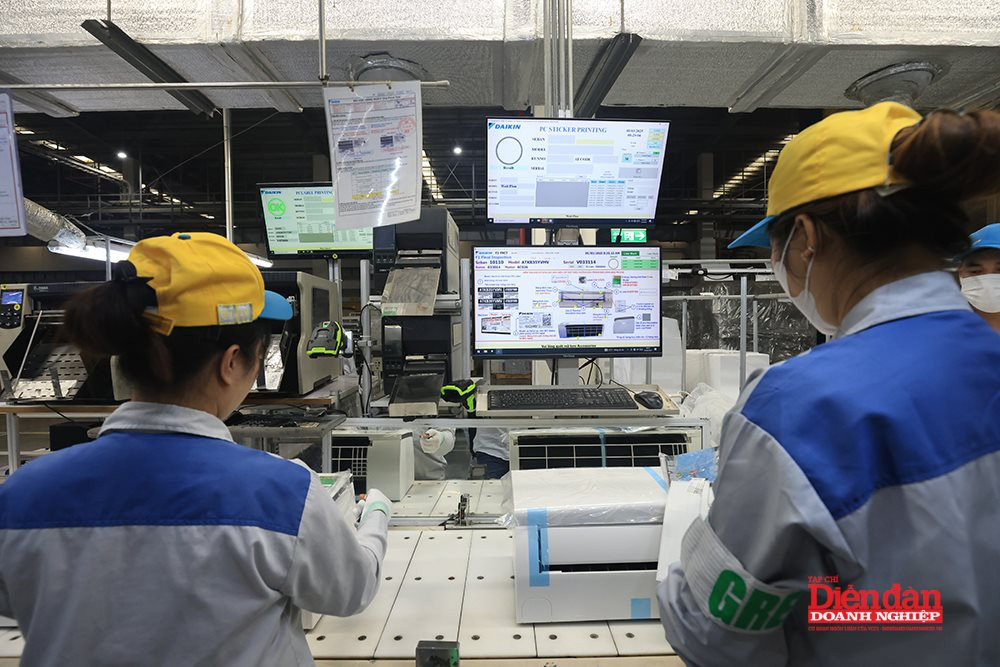
In the first six months of 2026 alone, total registered FDI reached USD 38.6 billion, up 61% compared to the same period last year. (Photo: Quoc Tuan)
Manufacturing remained the sector receiving the largest share of newly registered capital, despite dropping to 55% from 61.9% in the first half of 2026. Simultaneously, electronics manufacturing saw strong capital injections into Thai Nguyen. Electricity, gas, water, and air conditioning production and distribution formed the second-largest sector for newly registered capital (14.9%). This likely reflects energy-related investments, such as gas power, transmission, and utilities. Consequently, a clear increase in investment across the energy supply chain aligns with the national strategy to strengthen Vietnam's energy sovereignty.
Vietnam is enhancing the reliability of its energy infrastructure, further supporting efforts to attract energy-sensitive and power-intensive investments such as semiconductors, data centers, and advanced high-tech projects. The strategic guidance on foreign investment in June (Resolution 10-NQ/TW), prioritizing "high-quality" FDI inflows, goes hand in hand with key policy reforms. Combining an overhaul of tax incentive conditions with accelerated infrastructure development will contribute to the economy's momentum.
Public Investment and Fiscal Space to Support Objectives
In July, public investment disbursement from the state budget accelerated with a 25.9% year-on-year increase (compared to 13.9% in June), marking the highest growth rate since October 2025. Year-to-date, public investment rose 18.4% to VND 445.5 trillion, equivalent to 39% of the annual target (7M2025: 37% of the annual plan; 6M2026: 31% of the annual plan). The government and relevant agencies are reallocating state budget funds to key infrastructure projects to ensure construction readiness, which will continue to accelerate public investment disbursement.
Notably, draft laws under consideration at the ongoing First Extraordinary Session of the 16th National Assembly include amendments to the Land Law, Housing Law, and Real Estate Business Law, alongside the consolidated State Budget Law integrating public investment regulations into a single statute. If passed in the coming period, these laws will hold significant importance in improving public investment execution and infrastructure spending by 2027.
The GDP growth forecast for 2026 has been raised while keeping the 2027 forecast unchanged. In the first half of 2026, the economy grew by 8.2%. Growth in the second half of the year has historically been stronger. This trend is expected to continue in the second half to achieve the full-year GDP growth target of 10%.
The growth momentum is expected to be maintained, driven by exports and manufacturing boosted by strong AI-related electronics demand, rising capital expenditure from China, and increased FDI implementation.
Public investment is set to accelerate in the second half of the year with ambitious government infrastructure plans and ongoing mega-projects.
Furthermore, consumer demand is likely to remain resilient, backed by fiscal support, a robust labor market, and stable inflation. Ample fiscal space, reflected in a year-to-date budget surplus of VND 470 trillion (nearly USD 18 billion), provides room for targeted support measures.
On the monetary side, the State Bank of Vietnam (SBV) is actively boosting credit growth and liquidity amid elevated market interest rates. Credit growth reached 8.4% year-to-date (compared to the end of December), with the SBV setting an annual target of 16%.
According to SBV leadership, the central bank is preparing a VND 220 trillion (USD 8.4 billion) preferential loan package for small and medium-sized enterprises (SMEs) and priority sectors. Additionally, commercial banks have been allowed to include 50% (up from 20%) of State Treasury term deposits when calculating loan-to-deposit ratios from August 1 until July 2028, with potential further studies on incorporating State Treasury deposits into total mobilized funds.
The SBV is expected to hold policy interest rates unchanged for the remainder of the year. Along with fiscal space and targeted support measures, flexible fiscal-monetary coordination will yield positive effects toward high growth targets.