VIETNAM CHAMBER OF COMMERCE AND INDUSTRY
Liên Đoàn Thương Mại Và Công Nghiệp Việt Nam
Thu, Sep 17, 2026, 22:26:00
On the occasion of the third Ho Chi Minh City Friendship Dialogue 2026 (FD 2026), Mr. Chonkar Kunal, Head of International Relations and Education at Palmerston North City Council, New Zealand, and Mr. Kim Young-kyun, Director of the Gangwon Department of Foreign Affairs, Republic of Korea, spoke to The World and Vietnam Report about untapped potential for cooperation and how urban diplomacy can translate friendship into tangible outcomes that contribute to the city's growth momentum.
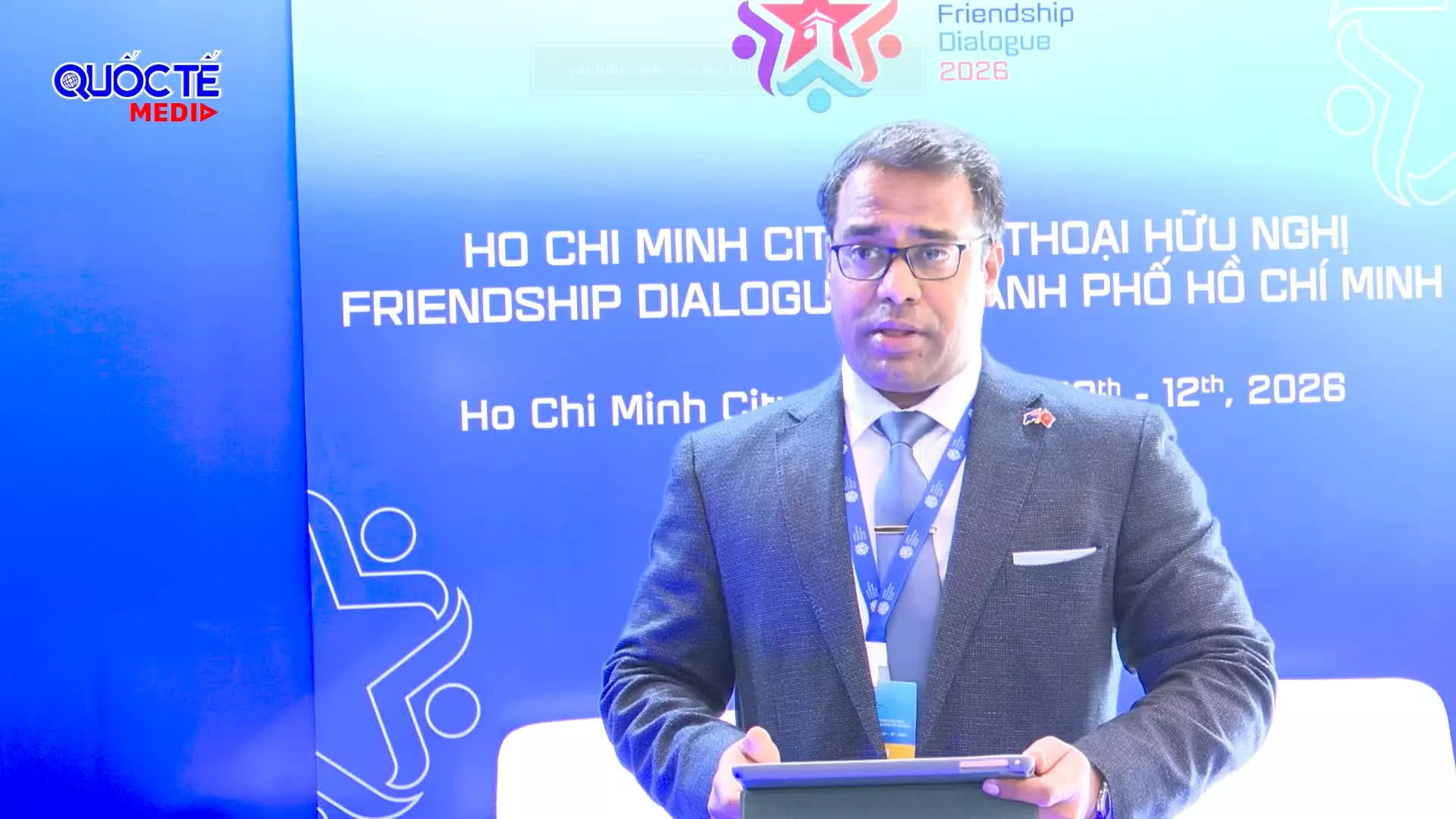 |
| Mr. Chonkar Kunal, Head of International Relations and Education at Palmerston North City Council, New Zealand, speaks to The World and Vietnam Report on the sidelines of the third Ho Chi Minh City Friendship Dialogue 2026. (Photo: Thanh Long) |
As global supply chains undergo restructuring, digital transformation gathers pace and emerging industries reshape the drivers of growth, cities are assuming a more prominent role in international connectivity. Urban diplomacy is consequently expanding beyond traditional exchanges and friendship activities to mobilise resources for development.
For Ho Chi Minh City, the emergence of a broader development space is creating greater scope to expand its network of partners and pursue cooperation models aligned with the respective strengths of different localities.
From the perspective of a knowledge city, Mr. Chonkar Kunal, Head of International Relations and Education at Palmerston North City Council, said the potential for cooperation between New Zealand and Vietnam, as well as between Palmerston North and Ho Chi Minh City, extends well beyond traditional trade.
The elevation of bilateral ties to a Comprehensive Strategic Partnership in 2025 provides a stronger foundation for translating bilateral relations into practical outcomes for communities, businesses, universities and younger generations.
As a university and knowledge city, home to Massey University and a strong education and research ecosystem, Palmerston North can complement Ho Chi Minh City's ambition to build itself into a regional centre for science, technology and innovation.
“There are opportunities to build deeper partnerships among universities, students, vocational education and research, particularly in STEM, digital skills, agriculture and food technology”, the Palmerston North representative said.
According to Mr. Chonkar Kunal, these connections are also aligned with the priorities of the ASEAN-New Zealand cooperation programme for 2026-2030, while providing a foundation for the two localities to broaden cooperation from education to other areas of development.
Another area highlighted by the Palmerston North representative is agriculture, food and agri-technology. New Zealand has strengths in high-value food production, agricultural technology and sustainable farming, while Vietnam is accelerating agricultural modernisation. The scope for cooperation therefore lies not only in the exchange of products, but also in sharing knowledge, technology and capabilities.
The differences in scale and characteristics between the two cities can also create complementary strengths. While Ho Chi Minh City has the scale and ambition to become a regional hub for technology, finance and innovation, Palmerston North has its own strengths in research, agriculture, food, logistics and quality of life.
“The opportunity can be described as ‘from friendship to substantive partnership’, connecting the scale and dynamism of Ho Chi Minh City with Palmerston North's strengths in knowledge, innovation and regional expertise”, Mr. Chonkar Kunal said.
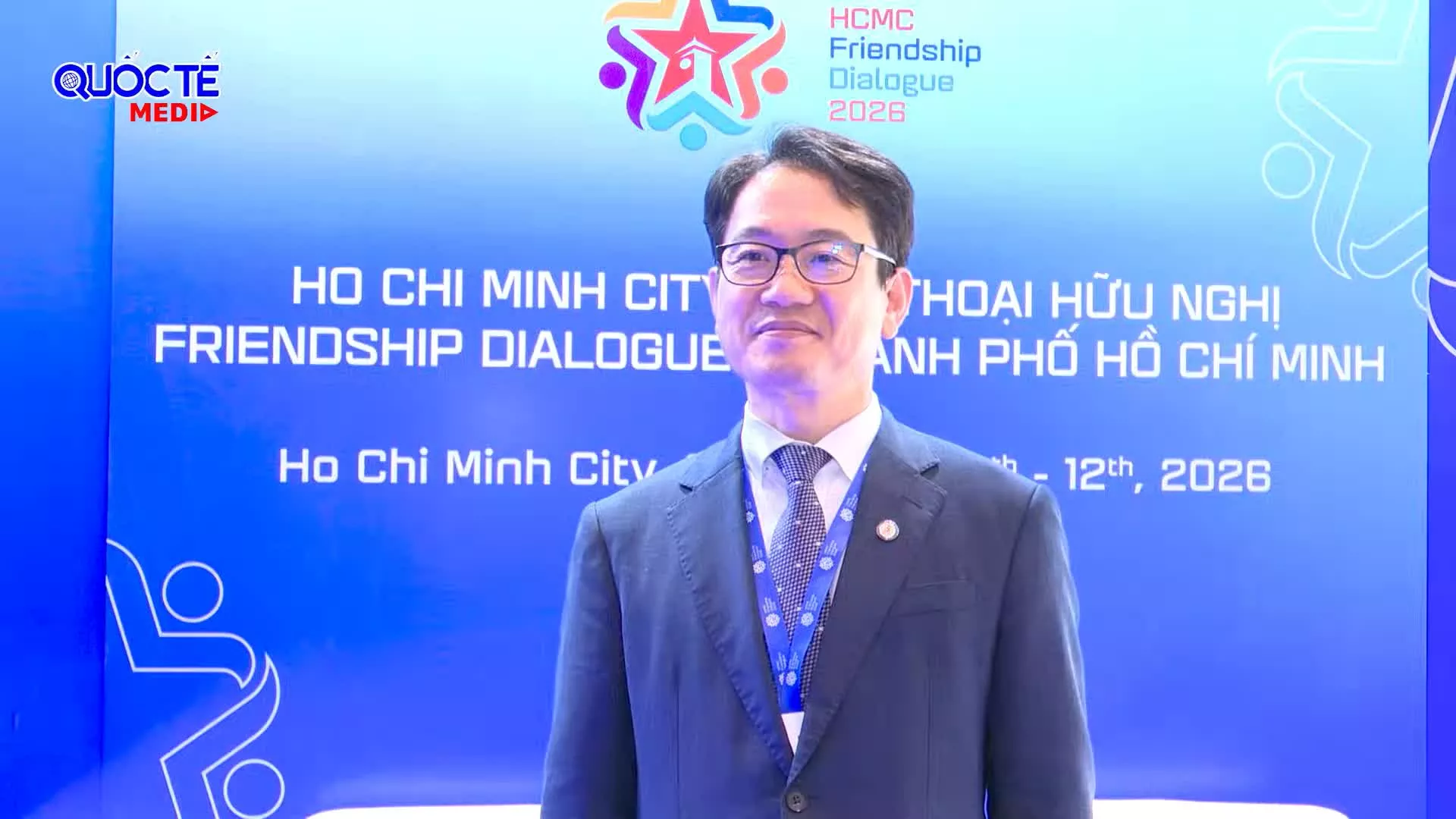 |
| Mr. Kim Young-kyun, Director of the Gangwon Department of Foreign Affairs, Republic of Korea, highlights the role of local diplomacy in expanding cooperation, mobilising resources and generating tangible benefits for businesses and communities. (Photo: Thanh Long) |
A similar approach was outlined from a different perspective by Mr. Kim Young-kyun, Director of the Gangwon Department of Foreign Affairs, Republic of Korea. According to the Korean representative, both Ho Chi Minh City and Gangwon are entering a new stage of development, requiring each locality to take a more proactive approach to leveraging its strengths and identifying new drivers of growth.
Gangwon underwent a major institutional transformation in June 2023, when it became “Gangwon State” with special self-governing status. Building on this foundation, the province is promoting future-oriented sectors such as smart biotechnology, medical devices, semiconductors, advanced materials, clean energy and tourism.
Similarly, following its recent administrative merger, Ho Chi Minh City now has a larger economic space, bringing together strengths in finance and services, industry and manufacturing, as well as seaports and logistics. This provides a basis for the two sides to expand cooperation in industry and investment, healthcare, digital technology and artificial intelligence (AI), tourism, and exchanges involving young people and talent.
Importantly, Mr. Kim Young-kyun noted that major global shifts are increasing the role of local governments. Supply-chain restructuring, climate change, digital transformation and the emergence of new industries are generating challenges that central governments cannot address effectively on their own.
According to the Korean representative, urban diplomacy can complement national diplomacy by responding more flexibly to local needs while bringing international cooperation closer to areas directly connected with people's lives, including the economy, industry, innovation, the environment, education and culture.
Against this backdrop, Gangwon also seeks to broaden its relationship with Ho Chi Minh City beyond traditional friendship exchanges towards a form of local diplomacy capable of generating tangible benefits for businesses and communities.
To translate the potential for cooperation into concrete outcomes, Mr. Kim Young-kyun said the most important priority is to establish mechanisms that directly connect the relevant stakeholders. The two localities could promote joint research, exchanges between universities and research institutes, links among small and medium-sized enterprises, as well as economic delegations focused on strategic industries.
Business forums and networking activities held alongside major exhibitions and trade fairs could also create additional opportunities for companies on both sides to identify partners and develop specific projects.
From Palmerston North, Mr. Chonkar Kunal, Head of International Relations and Education at the City Council, stressed the importance of business missions, business networking, cultural exchanges and youth engagement. According to the New Zealand representative, relationships built through such activities can gradually develop into cooperation in trade, investment and institutional partnerships.
A notable milestone in Ho Chi Minh City-Gangwon relations will come in 2027, when the two localities mark the 10th anniversary of their friendship and exchanges. Mr. Kim Young-kyun expressed hope that the occasion could serve as a starting point for a deeper phase of cooperation built around specific shared objectives.
From initial connections to joint projects, both local representatives stressed the need to translate friendship into substantive cooperation. As Mr. Chonkar Kunal put it, this is a journey “from friendship to substantive partnership”, while Kim Young-kyun emphasised the goal of “results-oriented local diplomacy”.
Urban diplomacy can thus serve as a channel for mobilising resources, advancing cooperation and generating fresh momentum for the city's development.