VIETNAM CHAMBER OF COMMERCE AND INDUSTRY
Liên Đoàn Thương Mại Và Công Nghiệp Việt Nam
Sat, Aug 16, 2025, 07:45:00
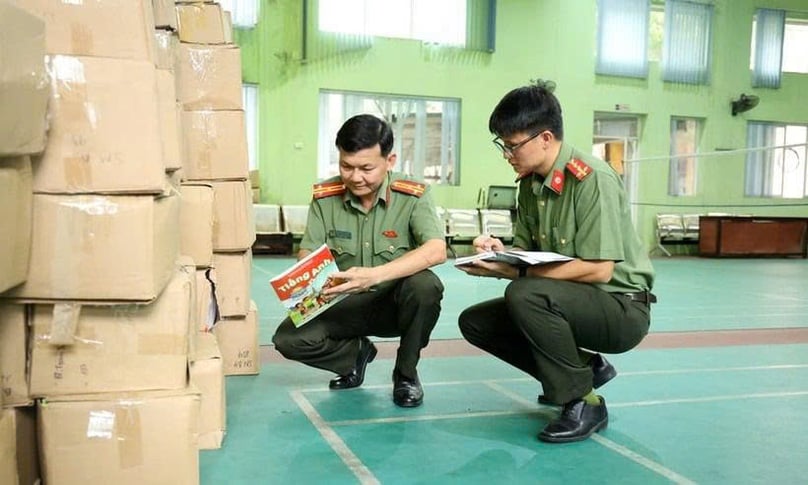
The seizure came after the security investigation agency (SIA) of the provincial Department of Public Security had officially launched a criminal investigation and detained three suspects involved in a large-scale, interprovincial counterfeit textbook production and distribution network.
Three suspects investigated for producing, trading fake books
The individuals charged with "producing and trading counterfeit goods" include Ngo Thi Phuong Lan (born in 1976, residing in Thanh Xuan district, Hanoi), director of Northern Print Technology Investment Co., Ltd. She was identified as the ringleader who organized the large-scale printing of counterfeit textbooks.
The two others are Nguyen Thi Tuyen (born in1989), owner of Hang Thang Bookstore; and Ta Ngoc Long (born in 1998), owner of Phu Thinh Bookstore. Both bookstore owners reside in Bac Giang ward, Bac Ninh province.
Police held that the fake textbook trade was particularly active ahead of the new school year. In response, the SIA’s internal political security division, in coordination with relevant agencies, launched an operation to investigate and dismantle the ring.
Investigations revealed that the network extended beyond Bac Ninh to Hanoi. Multiple security agencies, including the Ministry of Public Security’s internal political security department, quickly conducted information gathering in the service of the investigation.
From July 29 to August 3, law enforcement forces carried out emergency searches at eight locations and summoned 12 individuals in Bac Ninh and Hanoi for questioning.
Searches of printing workshops, warehouses, and bookstores led to the seizure of 2,300 cartons containing more than 185,000 fake English-language textbooks, valued at over VND8 billion ($304,450) based on cover prices.
Authorities also confiscated 27 printing plates, one color printer, two trucks, and various materials and equipment used in the production and transportation of fake books. The total value of seized evidence is estimated at around VND15 billion ($570,850).
Initial findings indicate that Ngo Thi Phuong Lan was the mastermind who printed fake textbooks in bulk and distributed them to Nguyen Thi Tuyen and Ta Ngoc Long. These books were further supplied to various dealers and schools in Bac Ninh and Hanoi.
The ring operated under the guise of legal businesses and used sophisticated tactics. The production sites were located in remote areas with limited traffic and visibility. Distribution was carried out via social media platforms and unofficial sales channels, with fake textbooks sold at 20-30% lower prices than genuine ones.
Authorities continue to expand the investigation.
Warning against counterfeit textbooks ahead of new school year
In light of this case, Bac Ninh police urge the public, especially parents, not to purchase textbooks of unknown origin from sidewalk vendors, temporary markets, or online sources offering suspiciously low prices.
Fake textbooks are often poorly printed, contain errors or missing pages, and can negatively impact students' learning.
Consumers are encouraged to buy from official bookstores, authorized dealers, or the Vietnam Education Publishing House’s distribution channels. When detecting any signs of suspected counterfeit books, they should report them to authorities for prompt prevention, helping ensure a safe and healthy educational environment.
Counterfeit textbooks are often printed and circulated quickly right after the school year ends and just before the next begins. These fake products pose a serious threat to reading culture, undermine public trust in publishing, and create broader cultural, economic, and social consequences.
In 2024 alone, Vietnam Education Publishing House collaborated with authorities to uncover 15 counterfeit book cases across eight provinces and cities, involving millions of fake books with a total listed value of nearly VND60 billion ($2.28 million).
The publisher has long cooperated actively with law enforcement and regulatory bodies to combat counterfeit educational publications, placing strong emphasis on regular training programs to enhance staff capacity in identifying and preventing counterfeiting.