VIETNAM CHAMBER OF COMMERCE AND INDUSTRY
Liên Đoàn Thương Mại Và Công Nghiệp Việt Nam
Thu, Jun 18, 2026, 16:24:00

As Da Nang expands southward, how will it reorganize its key growth sectors to create a more integrated economy and strengthen its position in regional and global value chains?
Following the southward expansion of its development space, Da Nang now covers 11,859.59 sq km and has a population of approximately 2.869 million. Its 215 km coastline is the longest in the country. Building on this foundation, along with new socio-economic development orientations, national and regional planning frameworks, and special policy mechanisms, the city has reviewed and revised its 2021-2030 Master Plan, with a vision to 2050 (Decision 773/QD-UBND dated February 28, 2026).
Under this plan, Da Nang is organizing its development space into three zones connected by economic corridors and growth clusters to maximize the strengths of each area, minimize conflicts among key development sectors, and create an integrated and sustainable development model. The Eastern Zone, which includes coastal and lowland areas, has been identified as the main growth area, covering the Da Nang, Hoi An, Dien Ban urban corridor, South Hoi An (Duy Xuyen and Thang Binh), and Tam Ky and Nui Thanh.
This area combines strong advantages in human resources, governance, and infrastructure, supported by an integrated transport network that includes the seaports of Lien Chieu, Tien Sa, Chu Lai, and Ky Ha; Da Nang and Chu Lai international airports; and key transport routes such as expressways, national highways, and the North-South railway. It is also home to economic zones, industrial parks, high-tech parks, digital technology parks, and major centers for education, research, healthcare, and culture, making it a multifunctional hub for industry, services, science and technology, and innovation across the Central and Central Highlands regions.
This development model is built around three growth clusters: (i) the Northern Cluster (Da Nang, Hoi An, and Dien Ban), focused on services, trade, finance, tourism, and innovation, with plans to develop a free trade zone and an international financial center; (ii) the South Hoi An Cluster (Duy Xuyen, Thang Binh, and Que Son), focused on tourism and services associated with world heritage sites such as Hoi An and My Son; and (iii) the Southern Cluster (Chu Lai, Tam Ky, and Nui Thanh), serving as an industrial and logistics hub anchored by the Chu Lai Open Economic Zone and the automotive mechanical engineering industry, while gradually shifting toward green and high-tech industries.
These growth clusters are linked through North-South economic corridors along National Highway 1A, expressways, coastal roads, and the North-South railway. Connectivity is also being strengthened through East-West corridors, including National Highways 14B, 14D, 14E, and others, connecting mountainous areas, the Central Highlands, and neighboring localities such as Hue and Quang Ngai.
Building on this foundation, the city is developing a coastal urban corridor centered on the growth clusters of Da Nang, Hoi An, Dien Ban, South Hoi An, and Tam Ky, Nui Thanh. The model combines compact urban development in core areas with ecological cities and satellite urban centers. Commercial, financial, and tourism activities will be concentrated in urban and coastal areas, while industrial activities will be located in industrial parks, high-tech parks, digital technology parks, and logistics centers.
At the same time, the city is continuing to improve multimodal transport infrastructure, develop economic corridors, and strengthen regional connectivity, creating an integrated economic ecosystem that can participate more deeply in regional and global value chains.

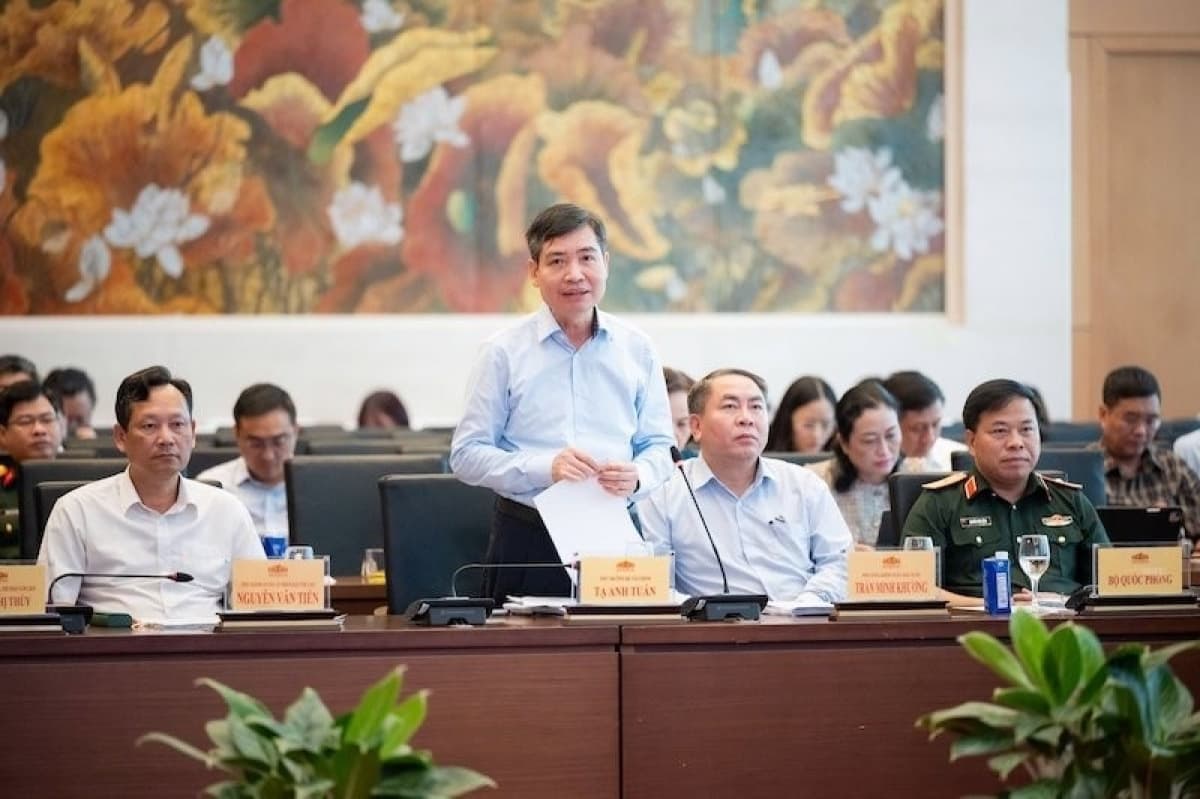
In December 2025, Da Nang Party Secretary Le Ngoc Quang and Sekong Province Standing Deputy Party Secretary Sisanga Keodouangdi exchange a cooperation agreement in the presence of General Secretary To Lam and Lao General Secretary and President Thoongloun Sisoulith during the celebration of the 50th anniversary of Laos National Day
Based on this new development framework, which growth drivers and strategic industry clusters will lead Da Nang’s development in the coming years? How will the city build integrated ecosystems rather than attract standalone projects?
Based on this new development framework, the city has identified several growth drivers and strategic industry clusters to lead development in the coming years.
(1) Marine economy, logistics, and international port services: With a 215 km coastline, an integrated seaport system comprising Lien Chieu, Tien Sa, Chu Lai, and Ky Ha, and the international airports of Da Nang and Chu Lai, the city views the marine economy as a strategic pillar. At the same time, it is developing a regional and international logistics hub connected to East-West corridors, the North-South Expressway, the national railway network, and modern logistics infrastructure, including inland container depots (ICDs), bonded warehouses, air cargo facilities, and digital logistics systems.
(2) High-tech industry, manufacturing, and green industry: The city is prioritizing high-value industries with strong potential to integrate into global supply chains, including semiconductors, artificial intelligence, information technology, electronics, precision engineering, automobile manufacturing and assembly, smart equipment, and supporting industries. Key development hubs include Da Nang High-Tech Park, digital technology parks, the Chu Lai Open Economic Zone, and the Chu Lai-THACO automotive mechanical engineering cluster. At the same time, the city is promoting the transition toward eco-industrial parks, green manufacturing, and a circular economy.
(3) International Financial Center, free trade zone, and digital economy: This is a key growth driver aimed at strengthening the city's position as a regional hub for high-value services. The city is focusing on developing a free trade zone linked to the Da Nang International Financial Center while promoting finance, fintech, data centers, cloud computing, and digital economy platforms.
(4) High-quality tourism, cultural industries, and the night-time economy: Tourism development follows the “one destination, many experiences” model, connecting the coastal urban corridor of Da Nang, Hoi An, South Hoi An, and Tam Ky with heritage destinations such as Hoi An, My Son, and Cu Lao Cham. Priority areas include luxury resort tourism, MICE tourism, eco-tourism, cultural and heritage tourism, entertainment services, and the night-time economy.
(5) Innovation, science and technology, and high-quality human resource development: The city aims to become a regional innovation hub by strengthening links among universities, research institutes, R&D centers, technology companies, investment funds, and the startup ecosystem.
To build interconnected ecosystems rather than attract isolated projects, the city is focusing on: (i) organizing development space around growth clusters and economic corridors to strengthen linkages across sectors; (ii) attracting leading enterprises and strategic investors to serve as anchor institutions; (iii) making comprehensive investments in strategic infrastructure, including seaports, logistics facilities, airports, digital infrastructure, energy systems, and multimodal transport networks; (iv) developing specialized zones such as the free trade zone, high-tech parks, innovation centers, logistics hubs, and eco-industrial parks; (v) strengthening cooperation among businesses, research institutions, and universities to support technology transfer and workforce development; and (vi) refining special policies and mechanisms while advancing reforms to improve the investment environment.
Through these efforts, Da Nang aims not only to expand its economy but also to build an integrated development ecosystem with strong spillover effects, deeper integration into regional and global value chains, and greater international competitiveness.

As Da Nang develops new growth drivers, what role will the International Financial Center play in the city's economic strategy, and how is it preparing to meet international standards?
Da Nang has identified the International Financial Center as a new growth driver that will attract international investment, mobilize medium- and long-term capital for the economy, and support sustainable double-digit growth. Built around technology and innovation, the Financial Center will prioritize new financial models, including regulatory sandboxes for fintech, asset tokenization, carbon trading, and other activities linked to digital technology value chains and green finance.
The International Financial Center ecosystem is being designed to integrate closely with the free trade zone, seaports, airports, logistics infrastructure, and new urban and resort developments, creating a comprehensive platform for modern financial services.
To meet international standards, the city is implementing a broad range of measures. On the institutional side, the Executive Agency of the International Financial Center is reviewing and developing management and licensing frameworks aligned with international practices, while proposing timely solutions for issues beyond its authority. On infrastructure, the city is investing in a financial data center, preparing to connect electronic payment systems, and developing a carbon trading center and an international commodities exchange during the pilot phase. On human resources, the city has established cooperation agreements with experts who previously held leadership positions at international financial centers, helping bring global expertise into the project from the outset while ensuring transparency and stability.
Thank you very much!